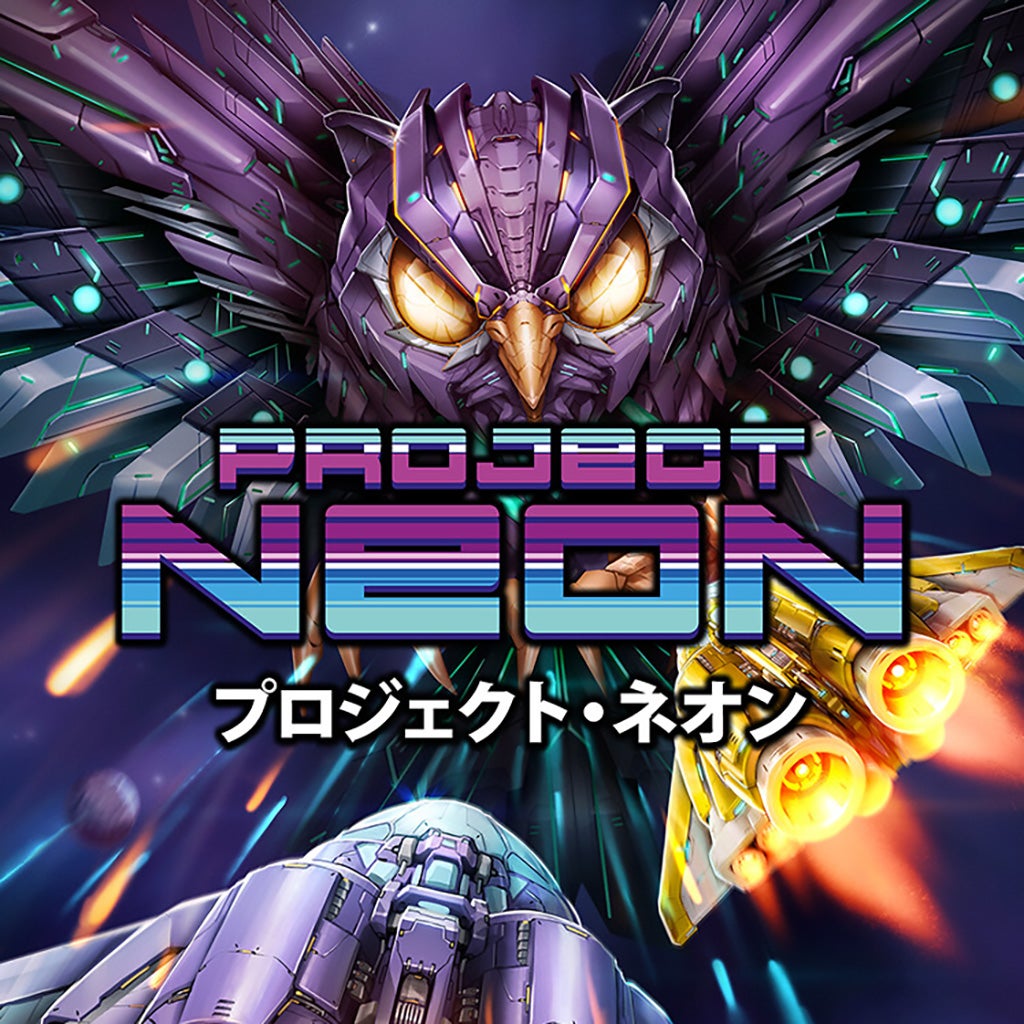
There is something timeless about a great shoot ’em up. Long before sprawling open worlds and cinematic storytelling became the industry’s biggest selling points, there was a simple thrill in weaving through impossible curtains of bullets, with only reflexes and determination standing between victory and an explosive defeat. Project Neon embraces that philosophy wholeheartedly. Rather than chasing modern trends, developer FULLSET delivers an unapologetically old-school arcade experience that wears its inspirations proudly, offering a fast, demanding adventure that feels as though it has travelled directly from the golden age of 16-bit shooters.
Its premise is wonderfully pulpy. Earth has reached the brink of ecological collapse, and humanity’s last hope lies with a brilliant scientist who abandoned the planet years ago after losing faith in mankind. Unfortunately, convincing him to return is far from straightforward. Hidden away behind an enormous planetary defence network surrounding Mars, players must dismantle four heavily fortified worlds before finally reaching the reluctant saviour. It is classic arcade storytelling, giving just enough context to propel the action without ever slowing the pace.
Pure Arcade Action
Project Neon understands exactly what makes classic shoot ’em ups so addictive. Every stage immediately throws players into tightly designed encounters where memorisation, positioning and split-second reactions matter just as much as raw reflexes. Enemies pour onto the screen in carefully choreographed formations, encouraging players to constantly shift position while maintaining a relentless stream of fire.
Unlike many modern shooters that overwhelm players with upgrade systems and complicated mechanics, Project Neon keeps its focus refreshingly clean. Your attention remains firmly on survival. Learning where enemies appear, recognising attack patterns and exploiting the brief openings during boss encounters become the core of the experience. Every successful run feels earned because the game rarely hands out victories by luck alone.
Difficulty sits comfortably within the traditions of the genre. Newcomers may find themselves overwhelmed during their first attempts, particularly once later stages begin layering environmental hazards alongside increasingly aggressive enemy formations. However, repeated failures gradually become lessons rather than frustrations. Every defeat teaches something valuable, making eventual success immensely satisfying.
Five Worlds Worth Fighting Through
Although the campaign comprises only five major stages, each feels distinct enough to remain memorable. Rather than simply swapping background colours, each planet introduces new hazards, enemy types and visual identities that continually refresh the experience. One world may focus on dense asteroid fields that restrict movement, while another fills the screen with mechanical fortresses that demand precise navigation through narrow gaps.
This steady evolution keeps momentum high throughout the campaign. Players are rarely allowed to settle before another challenge demands a fresh approach. The escalating structure also mirrors the classic arcade formula perfectly, with each completed level feeling like another step towards an increasingly impossible final confrontation.
Boss battles deserve particular praise. These enormous mechanical guardians dominate the screen with elaborate attack patterns that initially seem overwhelming. Yet beneath the visual spectacle lies careful design that rewards observation over panic. Learning safe positions, recognising attack tells and maintaining composure under pressure become essential. Few moments are as satisfying as watching a towering boss explode after surviving what initially felt like an impossible encounter.
Tight Controls Make All the Difference
A shoot ’em up lives or dies by its controls, and thankfully Project Neon rarely puts a foot wrong. Movement feels wonderfully responsive, allowing players to weave through dense bullet patterns with confidence. Every input registers precisely when expected, creating an immediate connection between player and spacecraft that is essential for a game demanding such precision.
Weapon variety adds welcome flexibility without becoming overly complicated. Different ship loadouts encourage experimentation, allowing players to discover combinations that suit their preferred style. Some weapons favour concentrated forward damage for boss encounters, while others provide wider coverage for clearing overwhelming enemy waves. Bomb attacks offer a valuable emergency option, rewarding players who know exactly when to unleash them rather than wasting them at the first sign of danger.
Because the mechanics remain so approachable, players spend more time improving their own abilities rather than wrestling with unnecessary complexity. It is an elegant design philosophy that perfectly suits the arcade experience FULLSET clearly wanted to recreate.
A Love Letter to Sixteen Bit Classics
Visually, Project Neon succeeds through restraint. Rather than chasing photorealism, it celebrates crisp pixel art, colourful explosions and beautifully detailed sprites that instantly evoke the golden era of arcade cabinets and home consoles. Every enemy, projectile and background has been crafted with obvious affection for the classics that inspired it.
The presentation remains clear despite the sheer number of projectiles flying across the screen. Bullets remain clearly distinguishable from the scenery, allowing players to focus entirely on navigating the increasingly chaotic battlefield. This clarity is crucial in a genre where a single misplaced pixel can mean instant failure.
The soundtrack complements the action beautifully. Energetic synthesised tracks maintain an infectious momentum throughout each level, propelling players forward while reinforcing the retro atmosphere. Sound effects deliver punchy explosions and weapon fire that never grow tiresome, even after repeated attempts at difficult stages.
Built for Arcade Enthusiasts
Project Neon includes several thoughtful features that demonstrate an understanding of its audience. TATE mode support is particularly welcome, allowing dedicated fans with vertically mounted displays to enjoy the game as many classic arcade shooters were originally intended. It is a niche feature, certainly, but one that immediately earns respect from genre veterans.
Local co-op play is another excellent addition. Sharing the screen with a friend transforms the experience in enjoyable ways, creating frantic moments of teamwork as both players dodge impossible bullet storms, coordinate bomb use and cover different sections of the battlefield. The increased chaos only adds to the fun, making co-op sessions wonderfully unpredictable.
The game’s relatively concise length also works in its favour. Rather than artificially stretching the experience, Project Neon encourages replayability through mastery. Higher scores, cleaner runs and improved efficiency naturally become the motivation to return, echoing the addictive “one more run” mentality that defined arcade gaming for decades.
Where It Stumbles
Project Neon occasionally feels almost too faithful to its inspirations. Players seeking extensive progression systems, elaborate narratives or generous accessibility options may find its straightforward arcade structure somewhat limiting. Beyond mastering mechanics and chasing higher scores, there is relatively little long-term progression to pursue.
The story, while entertaining, largely remains in the background throughout the campaign. It establishes the mission effectively but rarely develops its intriguing premise beyond brief moments between stages. A little more world-building could have added emotional weight without interrupting the game’s excellent pacing.
Likewise, the steep difficulty curve may discourage players unfamiliar with traditional shoot ’em ups. Veterans will likely relish the challenge, but newcomers should expect plenty of failed attempts before genuine progress begins to emerge.
Final Verdict
Project Neon is exactly the kind of game that reminds us why arcade shooters continue to inspire passionate communities decades after their heyday. It strips away unnecessary distractions and delivers an experience built almost entirely around mechanical excellence. Tight controls, memorable boss encounters, attractive pixel art and rewarding level design combine to create a shooter that feels nostalgic yet surprisingly fresh.
Its greatest strength lies in its confidence. FULLSET never attempts to reinvent the genre because it does not need to. Instead, it refines familiar ideas with care, delivering an experience that respects its influences while remaining enjoyable in its own right. Every stage, every close call and every victorious boss battle captures the satisfying rhythm that made classic shooters so enduring.
Project Neon may not redefine the modern shmup, but it certainly reminds us why the genre refuses to disappear. For anyone who still smiles at the sight of scrolling starfields, screen-filling bosses and perfectly choreographed bullet patterns, this is a journey well worth taking.