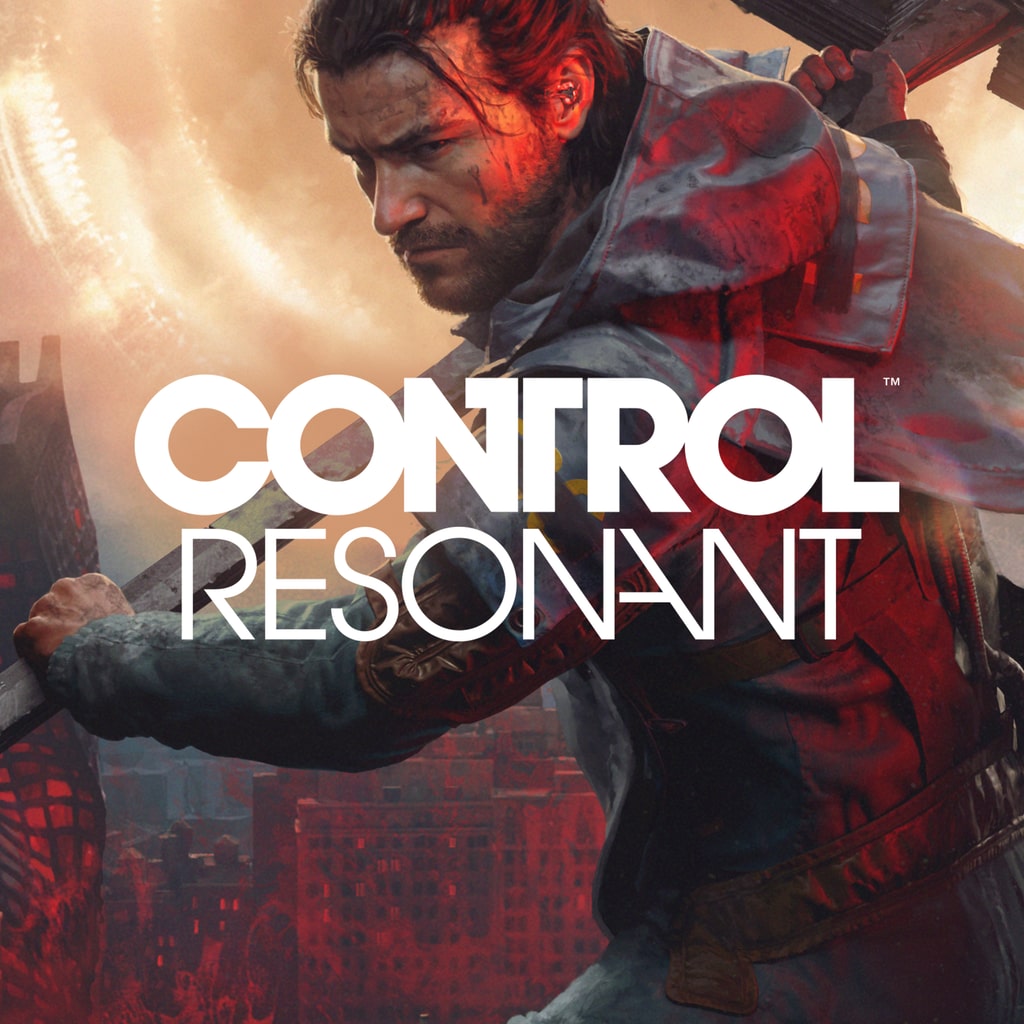
Reality has never been particularly safe in the world of CONTROL, but at least the Oldest House gave you walls to hide behind. Now those walls are gone, the Hiss has spilled into Manhattan, and Dylan Faden has been dragged from years of confinement into a nightmare that makes the original game’s supernatural weirdness look almost quaint. Remedy Entertainment has taken one of its most distinctive games and decided not to play it safe with the sequel, changing the protagonist, dramatically altering the combat, and opening the world beyond the Oldest House.
That is a brave move. It would have been easy to give players more of Jesse Faden, more telekinetic gunplay, and another tour around increasingly strange corridors, but CONTROL Resonant wants something different. Dylan steps into the spotlight as a man trying to understand what has been done to him while becoming something far more dangerous than the person who entered containment all those years ago.
The result is a strange, stylish, and occasionally messy action RPG that does not always get everything right, but when Remedy’s imagination takes over, it produces the kind of moments that remind you why nobody else quite makes games like this.
Welcome To A Broken Manhattan
The biggest change is immediately obvious. The Oldest House is no longer the centre of the experience, as the crisis has spread into Manhattan, turning parts of the city into something that barely resembles the world we know. This is not simply New York with a few supernatural enemies dropped into it, either, because reality itself has become unreliable.
Buildings, streets and environments can shift into impossible configurations, while gravity anomalies can turn familiar spaces into bizarre playgrounds where the difference between floor, wall and ceiling becomes increasingly meaningless. It is the sort of world where you can stop for a moment simply to stare at something because your brain needs a second to work out what it is looking at. Remedy has created a city that feels less like a traditional open world and more like a gigantic supernatural puzzle box.
The move towards a larger, more open environment also changes the rhythm of the game. There is more freedom to explore, more opportunities to wander away from the main story, and more reasons to investigate whatever strange thing has caught your attention. It is not always perfectly navigated, and there are moments when the larger world can leave you wondering where you are supposed to go next. But there is something wonderfully liberating about being let loose in Remedy’s warped version of Manhattan.
Dylan Faden Steps Into The Light
Dylan is an interesting choice for a protagonist because he carries an enormous amount of baggage. He is not simply Jesse’s brother returning for a convenient sequel. His years of confinement have shaped him, and the story spends considerable time exploring what that experience has done to him. There is a vulnerability to Dylan that works surprisingly well alongside his growing abilities.
He is becoming a weapon, but the game never completely loses sight of the person beneath that power. His search for Jesse gives the story an emotional centre, while his attempts to understand his own past add another layer to a character who could easily have been reduced to being “the other Faden”. Instead, Dylan becomes a character with his own identity, fears and motivations.
That emotional side of the story is one of CONTROL Resonant’s strongest qualities. The strange science fiction and paranormal mythology are still here in abundance, but there is a more human story beneath all the madness. Dylan is trying to figure out who he is, what the FBC did to him and whether becoming powerful means losing the last pieces of himself.
Goodbye, Service Weapon
Perhaps the biggest gamble Remedy has taken is changing the combat. The original CONTROL gave Jesse an almost ridiculously satisfying supernatural arsenal, combining her Service Weapon with telekinetic powers to turn offices, concrete walls and assorted pieces of furniture into ammunition. CONTROL Resonant takes a very different path, placing Dylan’s shapeshifting melee weapon, the Aberrant, at the centre of the action.
At first, that feels like a strange decision. After becoming accustomed to throwing objects around the Oldest House, suddenly being much closer to enemies changes the entire relationship you have with combat. Dylan has to get into the thick of things, and the result is a much more aggressive action game.
The Aberrant can transform into different forms, including a brutal two-handed hammer and dual-wielded blades. Switching between these forms gives the combat a satisfying sense of momentum, particularly when you begin combining them with Dylan’s other abilities. It is not just about finding the biggest weapon and hitting everything until it stops moving, because there is a rhythm to the encounters and, once that rhythm clicks, the combat can feel spectacular.
Hit Hard, Move Fast
Movement is every bit as important as the weapon in Dylan’s hands. CONTROL Resonant gives you a much greater sense of freedom when traversing its environments, with gravity-defying movement and abilities that let Dylan move through the world in ways ordinary humans really should not be able to. This becomes particularly enjoyable when exploration and combat begin to overlap.
One moment you can be moving through a distorted section of Manhattan, and the next you are launching yourself around an encounter while trying to avoid attacks from several directions. There is a satisfying physicality to it all, because Dylan does not feel like a character simply walking through a game world. He feels like someone who is gradually learning to manipulate the world around him.
The gravity-shifting environments are particularly impressive because they turn traversal into part of the puzzle. A wall can become a floor, an apparently impossible gap can suddenly become accessible, and an environment that looked completely straightforward can reveal another dimension when reality decides to misbehave. It is one of those ideas that sounds like a gimmick until you are actually moving through one of these spaces and realise how much it changes the way you think.
When The Combat Gets Tough
It would be dishonest to pretend the new combat is perfect. The aggressive melee focus can occasionally expose balancing issues, particularly as enemies grow tougher and encounters demand considerably more from the player. At times, opponents seem to absorb punishment longer than feels necessary, which can interrupt the otherwise excellent flow of the action.
That becomes particularly noticeable when the game has done such a good job of making Dylan feel fast and powerful. Nothing kills the feeling of being a supernatural powerhouse quite like repeatedly hitting an enemy that seems built from reinforced concrete. Some later encounters can also lean towards frustration rather than the satisfying challenge the rest of the combat is aiming for.
Thankfully, there is enough flexibility in the combat and progression systems to make the experience considerably more approachable. Once the various abilities and upgrades begin to open up, encounters become more interesting because you have more tools with which to approach them. The combat takes a while to reveal everything it has to offer, but patience is rewarded.
The Aberrant Becomes An Extension Of Dylan
The weapon itself deserves credit for giving Dylan his own identity. It would have been easy for Remedy to simply hand him another supernatural gun and call it a day, but the Aberrant feels intrinsically connected to the character. Its strange ability to transform makes it feel less like equipment and more like another manifestation of Dylan’s increasingly unstable relationship with the paranatural.
The ability to switch forms depending on the situation gives fights a sense of improvisation. Heavy attacks can stagger or smash through opponents, while the blades offer a much faster, more precise option. The more comfortable you become with the different forms, the more combat starts to feel like a dance of positioning, timing and raw supernatural force.
There is something wonderfully grotesque about watching the Aberrant change shape in the middle of a fight. It feels organic rather than mechanical, almost as though the weapon is responding to Dylan’s state of mind as much as to the threat in front of him. That gives the combat a personality that a conventional collection of weapons simply could not provide.
The FBC Is Still The FBC
Despite all the changes, the heart of CONTROL still beats beneath the surface. The Federal Bureau of Control remains a fascinating organisation, treating the impossible with the sort of bureaucratic seriousness you might normally associate with processing tax returns. The supernatural is catalogued, contained and studied, right up until it inevitably goes horribly wrong.
CONTROL Resonant expands that mythology rather than simply repeating it. Dylan’s history offers another perspective on the FBC, while Jesse’s continued presence gives the sequel a direct link to what came before. There is a sense that the events of the first game have consequences that cannot simply be locked away and forgotten.
That is one reason this feels like a genuine continuation rather than an unrelated game wearing the CONTROL name. Remedy understands that the appeal of this universe has never been purely about shooting monsters or throwing objects around. It is the strange mythology, the unanswered questions and the feeling that there is always something hiding behind the next door that makes the world so compelling.
A City That Doesn’t Want To Behave
Visually, CONTROL Resonant can be astonishing. Remedy has always had a particular talent for making architecture feel unsettling, but here the studio has considerably more room to play. Manhattan can look recognisable one moment and completely alien the next, with environments bending and reshaping themselves so that ordinary city streets feel like fragments of a nightmare.
The art direction is arguably more impressive than the sheer technical spectacle. There are plenty of games with beautiful cities, but very few can make you question whether the building in front of you is actually obeying the laws of physics. The warped environments give the game a visual identity that is difficult to confuse with anything else.
It also means exploration can be rewarding even when there is no obvious objective. You might discover a strange room, encounter an unusual character, or stumble across one of the game’s many side stories simply because you decided to take a different route. That sense of curiosity is essential to CONTROL Resonant, because the world is constantly dangling another mystery in front of you.
Remedy Being Remedy
Then there are the moments when the game simply gets weird. This is where CONTROL Resonant feels most at home, because Remedy has never been afraid of surreal storytelling, strange imagery, or narrative ideas that seem to have escaped from somebody’s fever dream. The sequel continues that tradition with confidence.
The game can shift from intense action to unsettling character drama, then throw something completely bizarre at you without warning. It is not always subtle, but I would rather have a game willing to take those chances than one that sands every strange edge away in an attempt to appeal to everybody. There is a personality here that cannot be manufactured by a checklist of features.
The best moments are those when you stop thinking about whether something makes sense and simply accept that this is how reality works now. That willingness to embrace the bizarre is one of the biggest reasons the game feels unmistakably like a Remedy production.
A Story About Being Human
Underneath all the supernatural chaos, CONTROL Resonant is surprisingly interested in humanity. Dylan’s journey is ultimately about identity, as he has spent years being treated as something to be contained and studied, and now he has been given extraordinary abilities that could turn him into precisely the sort of weapon the FBC feared.
That raises an interesting question at the heart of the story. If you have the power to reshape reality, where does the human being end and the weapon begin? Dylan’s relationship with Jesse gives that question emotional weight, preventing the story from becoming nothing more than another excuse to fight paranormal monsters.
It is also why the quieter moments matter. The explosions and reality-bending are spectacular, but the conversations are where the game occasionally reveals what this whole strange journey is really about. Dylan is not simply fighting to survive; he is fighting to understand himself and reclaim some sense of control over a life that has been dictated by other people for far too long.
Final Verdict
CONTROL Resonant takes a considerable risk. It changes the protagonist, the combat, and the world, and moves away from the claustrophobic architecture of the Oldest House. That could easily have resulted in a sequel that felt like a completely different game wearing a familiar name, but Remedy has managed to preserve the strange soul of CONTROL while giving it room to evolve.
The melee-focused combat will not convince everybody, and some enemy encounters can drag, particularly as the difficulty ramps up. The RPG systems are not always as deep as you might hope, and the larger world can occasionally make navigation more confusing than it needs to be. Those issues are real, and they stop the game from being quite as consistently brilliant as its best moments suggest it could be.
But then something happens. A building folds in on itself, gravity stops making sense, and Dylan launches himself through an impossible space with the Aberrant changing form in his hands. Suddenly you remember exactly why you are here, because few games can create that particular mixture of confusion, wonder and sheer excitement quite like CONTROL.
That is the magic of CONTROL Resonant. It is ambitious, strange, occasionally frustrating, and completely committed to being itself. Remedy could have made a safer sequel, but instead has taken the foundations of CONTROL and built something bigger, faster and more personal on top of them.
For all its rough edges, the experience is threaded with a wonderful sense of discovery. Manhattan feels like a place you want to get lost in, Dylan is a protagonist worth following, and the paranatural madness remains gloriously unpredictable. Most importantly, the game has soul, and in an industry increasingly obsessed with familiar formulas, that counts for a great deal.