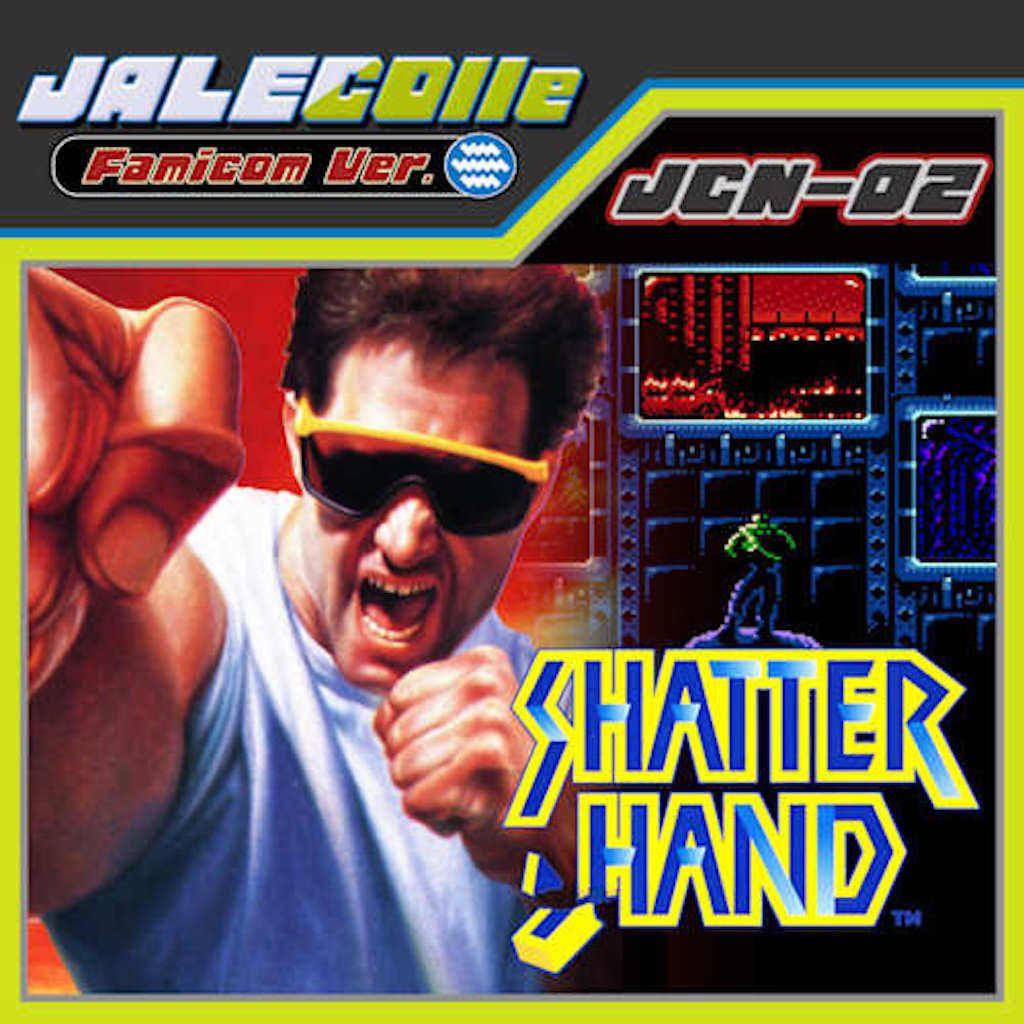
There are plenty of ways to deal with an invading cyborg army. You could reach for a massive gun, call in an air strike, or perhaps hide somewhere until the whole unpleasant business blows over. Steve Herman, however, has apparently decided that the best solution is to punch everything in sight with a pair of cybernetic fists. Welcome to SHATTERHAND, one of those wonderfully bonkers 8-bit action games that feels as though somebody threw every great idea they had onto a table, turned up the difficulty, and then told you to get on with it.
Originally released for the Famicom, SHATTERHAND has returned as part of City Connection’s JALECOlle Famicom Ver. collection, giving a new generation the chance to discover a game that has spent far too long in the shadows of better-known 8-bit classics. It is a side-scrolling action game built around close-range combat, clever power-ups, and a pair of fists that are considerably more powerful than they have any right to be. The result is fast, demanding, and wonderfully satisfying once you begin to understand how its systems fit together.
The Year Is 2030
The story wastes little time getting to the point. In 2030, the cyborg army known as Metal Command launches a rebellion with plans for world domination, leaving humanity in a serious predicament. Police officer Steve Herman loses both hands in the conflict, but rather than accepting that his career of punching things is over, he receives cybernetic replacements and adopts the excellent code name Shatterhand.
It is classic 8-bit storytelling in the best possible sense. There is no need for hours of exposition or endless dialogue explaining Metal Command’s political motivations. The robots are bad, the world is in danger, and you have fists capable of smashing metal. That’s all the motivation you really need.
There is something wonderfully direct about that setup. SHATTERHAND isn’t embarrassed about being an action game, and it gets you into the fight quickly. Before long, you’ll be running through factories, submarines and ruined cities, trying to dismantle an entire robotic army, one punch at a time.
Punching Is The New Shooting
The first thing that makes SHATTERHAND stand out is its combat. Instead of relying primarily on firearms, your main weapon is your cybernetic fists, so you have to get close to enemies to deal damage.
That sounds like a recipe for frustration in a game filled with bullets, but it actually creates a brilliant rhythm. You aren’t simply standing at a safe distance and firing until everything dies. Enemies need to be approached, attacks need to be anticipated, and your movement has to be carefully considered.
There is also something deeply satisfying about punching enemy bullets out of existence. Rather than simply dodging every projectile that comes your way, you can attack certain bullets, destroying them and using that interaction to restore your Satellite Robot’s health. It is a fantastic little mechanic because it encourages aggression while also giving you another reason to pay attention to what is happening around you.
Eight Buddies For The Fight
The Satellite Robots are arguably the game’s most interesting addition. By collecting the [α] and [β] letters scattered throughout each stage, you can create different three-letter combinations, each summoning one of eight robots.
Each Satellite Robot has its own weapon and attack style, meaning your choices can genuinely affect how you approach a level. Rather than simply giving you an extra character who floats around firing indiscriminately, these robots become part of your overall strategy.
Learning which combinations produce which robots becomes part of the fun. You might discover that one particular companion works beautifully against a certain enemy type, while another gives you a completely different approach to a difficult section. It adds a surprising amount of depth to a game that, on the surface, looks like a straightforward punch-everything-until-it-stops-moving affair.
When Eight Become One
There is an even bigger reward for players who truly understand the system. If you complete the same three-letter pattern again, your Satellite Robot transforms into the invincible Heavy Armor Dynamo.
This is the sort of reward that makes collecting the letters feel genuinely worthwhile. You’re not simply gathering items because the game tells you to. You’re hunting for specific combinations and weighing whether the potential reward is worth the effort and risk of collecting them.
It also creates some lovely moments of panic. When you’re deep into a stage, trying to complete a pattern while enemies attack from every direction, that little collection system suddenly becomes extremely important. Do you play safely, or risk everything for the upgrade?
Power In Your Fists
Shatterhand can also increase his attack power, making you considerably more dangerous as you progress through the stages. It is a simple mechanic, but one that gives the campaign a welcome sense of progression.
The challenge is keeping that power intact. This isn’t a game where you can casually absorb punishment and expect everything to be fine. Mistakes have consequences, and maintaining your advantages requires concentration.
That balance between growing more powerful and desperately trying not to lose that power is one of the reasons the game remains so satisfying. You are constantly trying to establish control over the chaos, only for the next section to remind you that Metal Command isn’t going to make things easy.
A Robot Army With Attitude
The enemies themselves are varied enough to keep the action moving. Different areas introduce distinct threats, and the game regularly asks you to adjust your approach rather than simply repeating the same attack pattern.
The Factory, Submarine and Ravaged City environments also provide distinct settings for the action. They may be constrained by the original hardware, but there is still plenty of personality in the level design.
The bosses are where everything really comes together. Each area culminates in a confrontation with a major Metal Command enemy, eventually leading to General Grover himself. These battles demand an understanding of movement, attack patterns and your available abilities, making them satisfying tests of everything you’ve learned.
A Classic That Doesn’t Hold Your Hand
It would be dishonest to pretend SHATTERHAND is an easy game. It absolutely isn’t. Like many of the era’s better action games, it expects you to learn through failure, remember enemy behaviour, and gradually improve at handling the situations it throws at you.
That can be frustrating if you’re approaching it with modern expectations. There are moments when the game seems perfectly happy to throw something horrible at you simply because it can. But there is also an undeniable satisfaction in finally overcoming a section that previously destroyed you.
The important difference with the JALECOlle version is that you don’t necessarily have to endure the original experience exactly as players did decades ago.
Rewind The Pain
The Rewind feature is perhaps the most immediately useful modern addition. Make a mistake, get hit by something you didn’t see coming, or completely mess up a difficult section, and you can rewind rather than simply accept defeat.
Purists can turn these modern conveniences off, which is important because it means the original challenge hasn’t been sacrificed. You can play SHATTERHAND in a way that closely resembles its original presentation, or you can use the modern tools to make the experience more approachable.
Quick Save and Load provide another useful option. Being able to save and resume your progress anywhere makes a significant difference for modern players who don’t necessarily have the time to sit down for an entire arcade-style session.
A Love Letter To The Curious
The new information features are another welcome touch. You can now see details that weren’t always clear in the original game, including power-up durability, your current Satellite Robot, its three-letter pattern, robot life, and boss information.
The Pattern Log is particularly useful, as it lets you track the combinations you’ve discovered. Instead of having to remember everything yourself, the game provides a handy reference for experimenting with the different Satellite Robots.
There are also video guides explaining how the Satellite Robots work, which is a genuinely thoughtful addition. These systems can initially feel confusing, so having an accessible explanation makes the game considerably easier to understand without taking away the satisfaction of discovering the mechanics for yourself.
For The Retro Obsessed
JALECOlle doesn’t stop at gameplay improvements either. There are 30 achievements to chase, a Simple Timer for players who want to record their best completion times, and a collection of extras featuring the original package artwork alongside previously unseen development materials.
The inclusion of edited English development material is particularly welcome for players who want to understand more about the game’s creation. These extras help transform the release from a simple emulation package into something closer to a little digital museum surrounding the game.
There are also screen filters, screen size options, wallpapers, and a Screen Edge setting designed to reduce visual distortion around the edges. None of these features changes the underlying game, but together they demonstrate just how much care has gone into presenting an old game on modern hardware.
Listen To The Famicom
One of the more unusual additions is the keyboard-style visualiser, which displays the three sound channels that make up the game’s background music in real time.
It is an oddly fascinating feature. The music in an 8-bit game is created under very different technical constraints from a modern soundtrack, and seeing those channels represented visually offers a brief glimpse into how the original hardware produced its sound.
It might not be the first thing everyone uses, but for retro enthusiasts it is exactly the sort of quirky extra that makes a collection like this feel special.
Still A Brilliant Punch Up
What ultimately matters, though, is whether SHATTERHAND itself still holds up. Thankfully, the answer is yes. The core combat remains satisfying, the Satellite Robot system adds genuine strategic depth, and the level design continues to provide a solid challenge. There is a wonderful sense of momentum throughout the experience, with each successful encounter encouraging you to keep pushing forward.
It also helps that the game has a very clear identity. This isn’t simply another generic 8-bit action platformer. Cybernetic fists, Satellite Robots, bullet punching and Heavy Armor Dynamo give it enough personality to stand out, even decades after its original release.
Final Verdict
JALECOlle Famicom Ver. SHATTERHAND is exactly the sort of retro release I love seeing. It takes a genuinely excellent old-school action game and gives it the modern conveniences necessary to make it far more approachable without compromising what made the original special.
The combat is still wonderfully punchy, the Satellite Robots remain a brilliant mechanic, and the ability to destroy enemy bullets with your fists feels every bit as satisfying as it sounds. The letter combinations add an extra layer of experimentation, while the Heavy Armor Dynamo gives dedicated players something genuinely rewarding to chase.
The JALECOlle additions are what make this release particularly appealing, though. Rewind, Quick Save and Load, achievements, timers, pattern tracking, video guides, visual options, and development materials make this more than a basic re-release. At the same time, being able to turn the modern additions off means purists can still experience the game in its original style.
It is challenging, occasionally brutal, and unapologetically old-school, but that is precisely why it works. SHATTERHAND has spent far too long being one of those games that retro fans mention with a knowing nod while everyone else wonders what they’re talking about. This release finally gives it the chance to step back into the spotlight.
So dust off those cybernetic fists, get ready to punch bullets, and prepare for a fight against one of the most entertaining robot armies the Famicom ever produced.