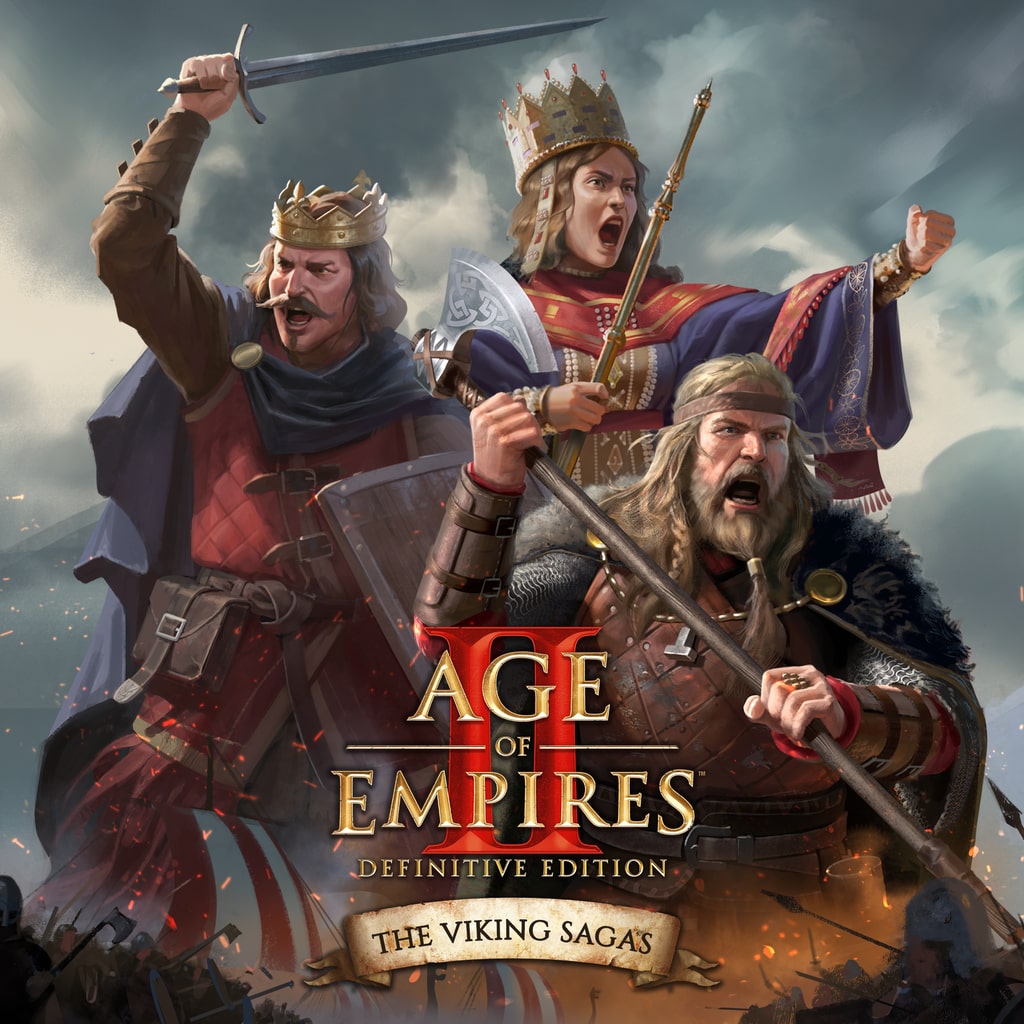
There are few strategy games that have aged as gracefully as Age of Empires II. What began life as a classic of the late 1990s has somehow continued to grow, evolve and find new audiences decades later, with the Definitive Edition proving there is still plenty of life left in one of the genre’s most beloved foundations. Now, The Viking Sagas sets its sights firmly on the North, bringing three new civilisations, three interconnected campaigns and a formidable historical figure to the battlefield.
That figure is Harald Hardrada, a man whose life was dramatic enough to merit a video game. Exiled from Norway, he travelled through some of the most fascinating parts of the medieval world, amassed wealth and military experience, fought for power, and eventually turned his attention towards England. The Viking Sagas takes that remarkable journey and turns it into a three-part adventure that moves from Scandinavia to the Mediterranean, the Byzantine Empire, Kyivan Rus, and ultimately the English shores.
This is exactly the sort of material Age of Empires II has always handled brilliantly. History provides the backdrop, but it is the player’s decisions that determine how the story unfolds on the battlefield.
The North Has Arrived
The Viking Sagas wastes little time in making it clear that this is more than a simple collection of new scenarios. The expansion introduces three completely new civilisations in the Danes, Saxons and Varangians, each built around a distinct approach to warfare. While experienced Age of Empires II players will inevitably find familiar elements, there is enough personality here to make each one feel worth learning.
The Danes are all about pressure and mobility. Their swift Longships are particularly useful for players who enjoy striking quickly and forcing an opponent to react, while the Jomsviking provides a rather nasty surprise for anyone who leaves their buildings or ships inadequately protected. This nimble infantry unit can hurl flaming torches, allowing it to cause serious trouble for structures and naval targets before the enemy has a chance to settle into a comfortable rhythm.
The Saxons take a rather different approach. Instead of relying purely on aggression, they are built around fortified settlements and controlling territory, making them particularly appealing to players who enjoy turning their home into an increasingly unpleasant place for an invading army. Their Hearth Troops are heavy infantry that begin engagements with a ranged javelin attack before closing the distance and getting stuck into melee combat. It is a simple idea, but one that gives them a satisfying tactical identity.
Then there are the Varangians, who bring a mixture of water-based warfare, cavalry and mercenary-style flexibility. Their Jarl is an axe-throwing cavalry unit capable of making life extremely uncomfortable for infantry formations. Put the three civilisations together and you have a welcome spread of strategic personalities.
Vikings With A Few New Tricks
The expansion also introduces six unique units across the new civilisations, including three shared units that offer intriguing tactical possibilities. The Varangian Guards are particularly interesting because they generate gold while fighting, rewarding players who throw them into the thick of combat rather than keeping them safely behind the lines.
Mounted Crossbowmen provide another intriguing option. They hit hard but fire slowly, so they are not simply another fast ranged unit that can effortlessly kite everything in sight. Used correctly, however, they can cause serious problems for infantry armies and give players another way to approach battles.
Then there are the Longships, which combine speed and offensive capability to create a naval unit that feels perfectly suited to the expansion’s Viking identity. Naval warfare has always been an important part of Age of Empires II, but there is something particularly satisfying about watching a fleet of Longships sweep across the water in search of an exposed settlement.
These units do not completely reinvent the game, nor do they need to. Age of Empires II works because its enormous collection of interconnected systems allows relatively small changes to have surprisingly large consequences. A new unit can completely change how you approach a familiar situation, and The Viking Sagas understands that principle very well.
The Exiled Prince
The first campaign, The Exiled Prince, introduces Harald as a young man whose ambitions have been temporarily derailed by exile. Rather than simply waiting for an opportunity to return home, Harald travels abroad in search of wealth, experience and prestige.
This takes the campaign into wonderfully varied territory, including the Byzantine Empire and Kyivan Rus. The change of location is important because it prevents the adventure from feeling like three versions of the same Viking raid. Instead, Harald’s journey becomes an increasingly ambitious tour through the medieval world, with each region bringing different enemies, environments and challenges.
There is also an intriguing political element to Harald’s story. His ambition to reclaim his crown is complicated by the increasingly despotic Empress Zoe, creating a narrative that is about more than simply conquering territory. The campaign works because Harald is not portrayed as a straightforward hero marching towards an inevitable victory. His journey is full of compromises, ambition and difficult choices.
The Hard Ruler
The second campaign, The Hard Ruler, shifts the focus to Denmark and Norway as Harald’s ambitions draw closer to home. Having accumulated considerable wealth and experience, he now has the resources to pursue the thrones he believes should be his.
The problem is that power has a habit of changing people. Harald’s increasingly ruthless approach creates a compelling tension within the story, as his pursuit of control risks turning him into the very sort of tyrant he once opposed. That gives the campaign considerably more personality than a straightforward succession of battles.
From a gameplay perspective, this is also where the expansion starts to feel increasingly confident in its ability to blend military objectives with storytelling. You are not simply conquering because the scenario designer has placed a red enemy colour on the other side of the map. There is a sense of purpose behind the conflicts, which makes each victory feel more meaningful.
The Last Viking
And then we reach England. The Last Viking is arguably the campaign many players will be waiting for, as Harald turns his attention to the English throne. Anyone familiar with the history of 1066 will know that this ambition has a rather famous ending, but knowing the history does not make the journey any less compelling.
The campaign builds towards that confrontation with an appropriate sense of scale. Harald has travelled an enormous distance, accumulated experience, wealth and followers, and now everything rests on his attempt to seize England. There is a sense that the entire expansion has been building towards this point.
What makes the campaign particularly effective is that it does not treat Harald as a mere historical footnote. Instead, it gives him room to become a character. His ambition, determination and increasingly complex relationship with power provide a thread that ties all three campaigns together.
Age of Empires At Its Best
The biggest compliment I can pay The Viking Sagas is that it feels like Age of Empires II. That might sound obvious, but with a game this old and a roster this enormous, maintaining that sense of identity is not necessarily easy.
The core gameplay remains wonderfully familiar. Gather resources, build your economy, establish your military, research technologies, and then make somebody else’s day considerably worse. The beauty lies in the many ways you can approach those basic principles. A cautious player can build a heavily fortified settlement and expand gradually, while an aggressive player can strike early and try to keep their opponent permanently on the back foot.
The new civilisations slot into that formula naturally. They feel like additions to an already enormous strategic ecosystem rather than gimmicks bolted on purely to justify another expansion.
A Beautifully Crowded Battlefield
However, there is a slight issue with adding more and more civilisations to Age of Empires II. The roster is now enormous, and there are inevitably moments when the differences between some factions can feel less dramatic than they once did.
The Viking Sagas occasionally brushes up against that problem. Experienced players may recognise elements of existing civilisations in the newcomers, and some of the new mechanics can feel like variations on familiar ideas rather than completely revolutionary additions.
But perhaps that is not really a criticism of this expansion so much as a consequence of Age of Empires II’s incredible longevity. After all, when you already have an enormous selection of civilisations, technologies and units, creating something that feels completely unlike anything that came before is an increasingly difficult task. The important thing is that the new factions remain interesting to play, and they do.
History With A Human Face
What really gives The Viking Sagas its soul is the Harald Hardrada story. Strategy games can sometimes get so caught up in numbers, resources and military efficiency that the people behind the historical events disappear. This expansion makes a genuine effort to put Harald at the centre of the experience.
His journey from exile to warrior, ruler and would-be conqueror provides a natural narrative structure, while the three campaigns give the story enough space to develop. You get to see different stages of his life rather than simply dropping into one famous battle and calling it a day.
That makes the expansion surprisingly easy to become invested in. You may begin by playing because you want to command Vikings, but before long you are playing because you want to see where Harald’s increasingly ambitious journey takes him.
A Viking Saga Worth Telling
The Viking Sagas does not attempt to reinvent Age of Empires II, and honestly, it does not need to. Instead, it takes one of history’s most fascinating warriors, builds three campaigns around his life, and introduces three new civilisations that bring fresh tactical possibilities to the battlefield.
The Danes provide aggression and naval mobility, the Saxons offer defensive strength and territorial control, while the Varangians bring a flexible mix of cavalry, waterways, and hard-hitting infantry. The additional units add further tactical options, and the campaigns provide the historical context that turns the expansion from a collection of mechanics into a genuine adventure.
There is a familiar comfort to it all. You start with almost nothing, watch your settlement grow, hear the familiar sounds of workers gathering resources, and eventually find yourself commanding an army across a battlefield that has become almost impossible to predict. It is a formula that has survived for decades because, quite simply, it still works.
Final Verdict
Age of Empires II: DE The Viking Sagas is another strong addition to an already remarkable strategy game, combining three distinctive new civilisations with a superb three-part campaign centred on Harald Hardrada. The historical journey is the real star, taking players from exile and foreign adventures through political intrigue and warfare before eventually reaching England and the events surrounding 1066.
The new units provide meaningful tactical options without disrupting the fundamentals that make Age of Empires II so enduring. The Danes, Saxons and Varangians each have their own strengths and approaches, while the Varangian Guards, Mounted Crossbowmen and Longships add further wrinkles to an already wonderfully deep battlefield.
There is some inevitable overlap with an increasingly crowded civilisation roster, and veteran players may occasionally wish for something a little more revolutionary. Yet the quality of the campaigns, the strength of the scenarios and the sheer pleasure of commanding these new factions make that a relatively minor concern.
Most importantly, The Viking Sagas remembers that Age of Empires II is at its best when it combines history with the freedom to create your own little stories. One minute you are an exiled prince searching for wealth, the next you are commanding a fleet across hostile waters, and eventually you are standing on the shores of England with an army behind you and an entire kingdom within reach. History may already know how Harald’s story ends, but getting there is still one hell of a journey.