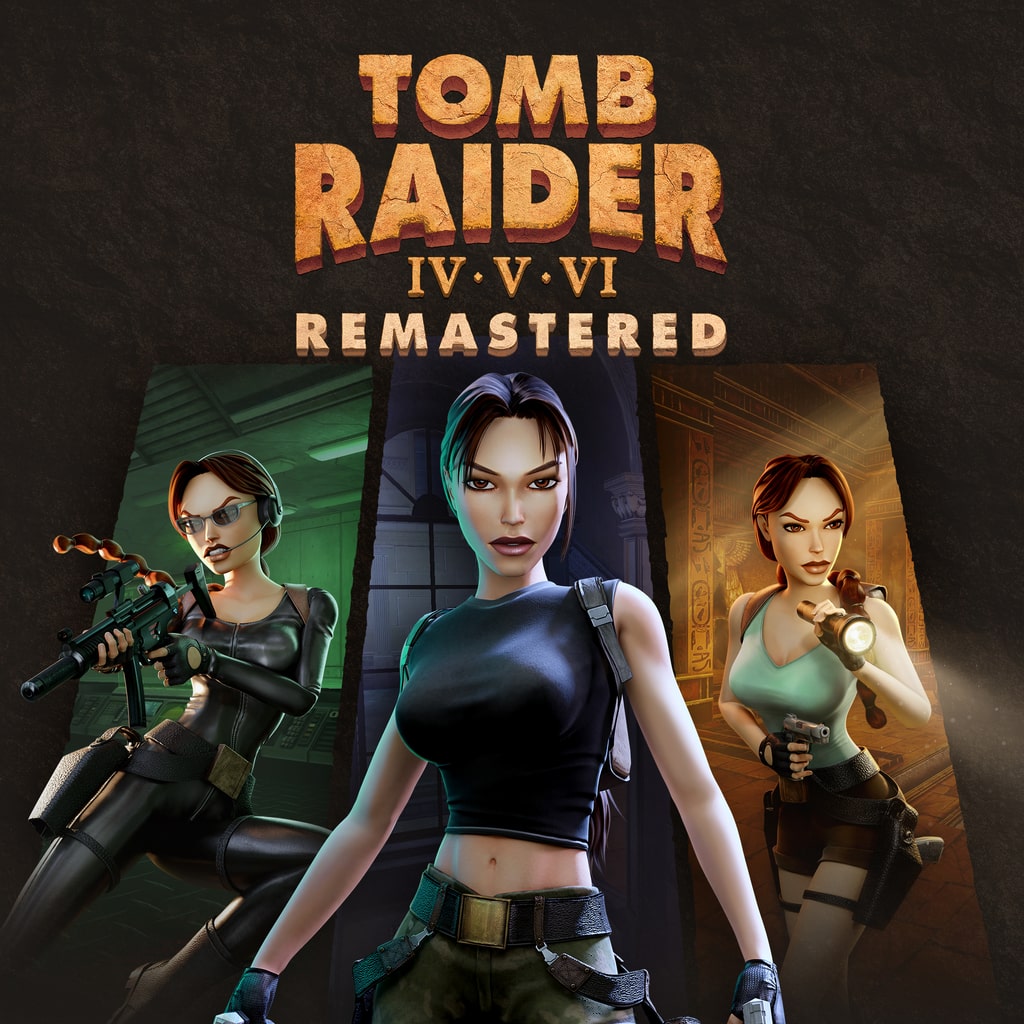
Remasters often walk a tightrope between preservation and modernisation. Lean too far towards nostalgia, and new players feel left behind; lean too far towards reinvention, and long-time fans feel their memories rewritten. Tomb Raider IV–VI Remastered Starring Lara Croft finds its footing, confident and sure, presenting three of the franchise’s most ambitious—and, at times, most polarising—classic adventures in a way that feels respectful, revitalised, and surprisingly engaging in 2025.
This collection bundles The Last Revelation, Chronicles, and The Angel of Darkness, each representing a pivotal moment in Lara’s evolution. Although these games originally launched at the tail end of the 90s and into the early 2000s, they now arrive with a visual overhaul and gameplay refinements that, for the first time in decades, make them feel unified. The result is a time capsule polished for modern hands: still occasionally clunky, still occasionally unforgiving, but undeniably iconic.
A Fresh Coat of Life on Familiar Ruins
The star of this package, unsurprisingly, is the visual upgrade. Environments across all three titles are rebuilt with modern lighting, higher-resolution textures, and improved geometry, giving ancient Egyptian tombs, Roman ruins, corporate skyscrapers, and Parisian backstreets a dramatically updated look. This isn’t a simple up-res. Rooms are richer in atmosphere; shadows dance across stone carvings; water reflects with a natural shimmer; and character models—especially Lara’s—are drastically improved. Her animations retain their classic “grid-based” charm but blend more smoothly, making traversal more readable and less stiff.
The remaster allows players to toggle between original and updated graphics on the fly. Switching back to the PS1-era visuals is an instant reminder of how far the series has come and how much attention the developers have devoted to maintaining authenticity rather than rewriting history. These are still the same levels, puzzles, and routes—just rendered with decades of hindsight.
Timeless Tombs, Improved Controls
The greatest hurdle facing classic Tomb Raider has always been its controls. The grid-based movement, tank turning, and leap-timing defined an era but often clash with modern expectations. The remaster offers two control schemes: a classic mode, faithful to the originals, and a modernised scheme that introduces analog movement, smoother turning, and more forgiving platforming.
The modern controls don’t completely erase the inherent rigidity of the original design—The Last Revelation, in particular, relies heavily on precise jumps and exact positioning—but they soften the learning curve without undermining the challenge. Meanwhile, Angel of Darkness, infamous for its uneven mechanics and awkward attempts at RPG-lite progression, benefits massively from technical refinement. Movement is tighter, animations blend better, and the once-problematic camera feels far more predictable.
These are still old-school games, and that means a certain stubbornness remains. You’ll occasionally misjudge a jump, fight with the camera in tight halls, or curse a puzzle that requires spotting a tiny detail half a map away. But for fans of classic adventure design, these quirks are part of the charm—and the remaster does just enough to streamline the edges without sanding them off.
Three Adventures, Three Distinct Eras
Tomb Raider: The Last Revelation remains the crown jewel of the trilogy. Its sprawling Egyptian setting feels cohesive and rewarding, its puzzles intricate without being obtuse, and its story—more centrally focused on Lara’s personal history—feels grounded and confident. Its remastered presentation elevates one of the classic series’ best games.
Tomb Raider Chronicles, by contrast, is a more experimental anthology. Jumping between stories and tones, it’s the loosest of the three, but the remaster’s polish makes its variety shine. Levels that once felt visually inconsistent now feel unified by improved lighting and textures, and the enhanced cinematics lend the narrative framing greater weight.
Then there’s Angel of Darkness, the most controversial entry in the bunch. Originally released unfinished and technically unstable, it has long been considered the series’ troubled black sheep. The remaster doesn’t rewrite its identity, but performance improvements, control refinements, and a dramatic visual overhaul elevate it from a frustrating relic to something that finally resembles the ambitious noir adventure it was meant to be. It’s still uneven, but for the first time it feels playable in the way fans always hoped it would be.
Sound, Story, and Presentation
Audio has also seen meaningful improvements. Classic orchestral cues sound fuller, environmental effects gain clarity, and dialogue—while still occasionally delivered with charmingly retro stiffness—comes through clean and crisp. The remaster retains the original cinematics but enhances them with improved encoding and smoothing.
The stories across the three games hold up surprisingly well. Lara’s dry wit, the globetrotting mystery structure, and the blend of historical intrigue and supernatural flair fit neatly with modern sensibilities. There’s an earnestness to these narratives that contrasts sharply with the gritty reboots of the past decade.
A Testament to Legacy, Imperfections Intact
This remastered trilogy isn’t a reinvention, nor is it meant to be. It’s a preservation effort enhanced by modern tools—a celebration of the era that defined the action-adventure genre and cemented Lara Croft as an icon. The flaws remain, but the frustrations are softened; the beauty is restored without overwriting the soul.
Final Verdict
Tomb Raider IV–VI Remastered Starring Lara Croft is a lovingly restored tribute to three ambitious, influential adventures. It won’t win over players who dislike old-school design, but it offers the definitive way to experience a key chapter in gaming history. For fans and newcomers willing to embrace classic quirks, this is a treasure worth unearthing.
A faithful, polished return to three formative adventures that shaped the legend of Lara Croft.