There is something oddly appealing about a game that knows it isn’t trying to be the biggest or most technically impressive thing you’ll play all year. Prison of Illusion: Night Rose is very much an indie production, and it wears that fact openly, yet there is a sense of enthusiasm running through the experience that gives it a charm of its own. This bundle brings together the original Prison of Illusion, a 2D pixel-art adventure, and Night Rose, its considerably different 3D follow-up, creating an unusual little package that feels like a snapshot of one developer’s love for old-school fantasy adventures.
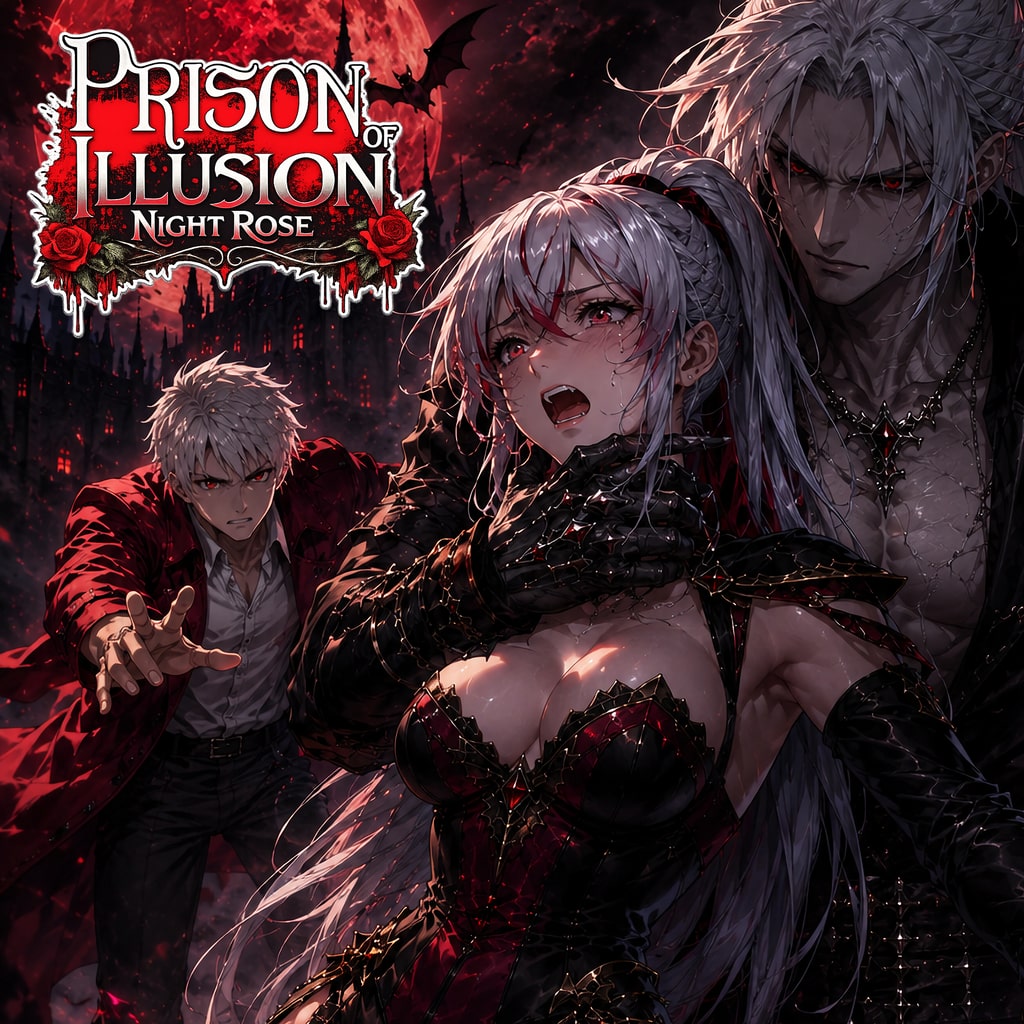
The basic story is wonderfully simple. Uriel has found himself trapped inside a castle cursed by Dracula, and unless he can find a way out, he faces the prospect of being imprisoned there for eternity. Things become even more complicated when Rose is kidnapped by vampires and taken into the same cursed stronghold, leaving Uriel with another reason to venture into its halls. What follows is a short supernatural adventure filled with vampires, gargoyles, traps, locked gates, collectable orbs, and enough gothic architecture to make Dracula feel right at home.
It is not a grand reinvention of the action-adventure genre, but it doesn’t need to be. Prison of Illusion: Night Rose is a straightforward game with modest ambitions, and when approached on those terms, there is plenty here to enjoy.
Where It All Began
The original Prison of Illusion is perhaps the more traditional of the two retro experiences. Presented in 2D with pixel art visuals, it has the unmistakable feel of a game inspired by the era when castles, monsters and mysterious prisons were enough to form the entire premise of an adventure.
There is something satisfying about that simplicity. Uriel is trapped, Dracula is responsible, and escape is the goal. You don’t need pages of exposition to understand what is happening, and the game can get on with delivering its exploration and platforming without spending hours explaining the history of every brick in the castle.
The pixel art also gives the original a distinct personality. It isn’t trying to reproduce modern graphical techniques, instead leaning into the retro aesthetic that clearly inspired it. For players with a soft spot for old-school 2D adventures, there is a nostalgic quality here that can be more appealing than a technically superior but visually anonymous game.
Enter Night Rose
The biggest surprise comes when Night Rose takes the concept and moves it into 3D. Rather than simply expanding the original with more levels, the developer has effectively reimagined the adventure as a third-person action game, complete with anime-inspired character designs and a very different visual presentation.
The story provides the connection. Rose is enjoying a peaceful moment in her garden when vampires suddenly descend on her and carry her away. Uriel once again finds himself heading into the cursed castle, this time on a rescue mission that gives the adventure a little more urgency.
The change in perspective gives the game a completely different personality. Gone is the original’s traditional pixel platforming, replaced by a compact 3D action-adventure that feels influenced by Japanese games and anime from the 1980s and 1990s. The result isn’t particularly sophisticated, but it is undeniably colourful and has a certain retro charm.
Swords At The Ready
Combat is the main attraction in Night Rose, and it keeps things deliberately simple. Uriel uses melee attacks to cut through vampires, gargoyles and other supernatural creatures while dodging incoming attacks and moving through the castle. There aren’t dozens of complicated weapon combinations to learn or a massive skill tree to navigate, so you can get straight into the action.
The swordplay is satisfying in a simple, old-fashioned way. Swing, move, dodge and attack again. It doesn’t take long to grasp the rhythm, and the straightforward controls make the game accessible even if you’re not accustomed to action games.
That simplicity does have its limitations. Veterans of modern character action games may find themselves wanting more depth, particularly once they’ve become comfortable with the combat system. The enemy AI is also fairly basic, with opponents sometimes feeling more like moving targets than intelligent supernatural predators.
Still, there is a certain pleasure in not having to overthink every encounter. Night Rose is a game that lets you pick up the sword and get on with it.
A Castle Full Of Trouble
The cursed castle provides most of the game’s atmosphere. Gothic corridors, locked gates, moving platforms and environmental hazards create a suitably dangerous playground for Uriel’s rescue mission. There are floor spikes to avoid, traps to negotiate and obstacles that require a little observation before you can continue.
The linear structure means you aren’t wandering around a gigantic open world, trying to remember which door you passed several hours earlier. The adventure knows where it wants you to go and steadily pushes you towards the next encounter.
That can sometimes make the experience feel restrictive, but given the game’s modest scale, I think it works. Night Rose isn’t attempting to be an enormous exploration game. It is a compact journey through a supernatural castle, and the relatively focused structure helps maintain momentum.
Hunt For The Orbs
The collectable Orb system adds a little more incentive to explore. Enemies can drop Orbs, while others are tucked away in hidden corners and alcoves. Collecting them gives you another reason to look beyond the most obvious route rather than simply charging towards the next objective.
The Orbs can be spent in the main menu to unlock additional outfits, character skins and even bonus playable fighters. This is a nice little reward system because it gives exploration a purpose beyond simply finding another collectable that sits permanently in an inventory.
It also adds a small sense of replay value. If you are the kind of player who enjoys finding everything a game has hidden away, the extra characters and costumes give you something to work towards after you’ve already learned the basic route through the castle.
A Different Kind Of Anime Adventure
The visual style is perhaps the game’s most distinctive feature. Night Rose clearly draws inspiration from classic Japanese anime and dark fantasy adventures from the 1980s and 1990s, resulting in a bright, stylised take on the gothic setting.
The character models have an appealing retro-anime flavour, while the castle offers the expected mix of stone corridors, dark corners and supernatural menace. The textures and animations are understandably limited compared with those of larger productions, but the presentation remains clean enough to follow what is happening.
More importantly, it has an identity. A low-budget game can sometimes disappear into a sea of generic assets and forgettable environments, but Night Rose has a clear aesthetic direction. It may not perfectly reproduce the games and anime that inspired it, but you can see what the developer was aiming for.
Sound Of The Supernatural
The audio follows the same philosophy. Electronic combat music gives the action an arcade flavour, while sword strikes and other sound effects provide the necessary impact in battle. It isn’t a sweeping cinematic soundtrack designed to follow every emotional beat, but it doesn’t need to be.
There is something fitting about the straightforward electronic approach. Combined with the anime-influenced visuals, it gives Night Rose the feeling of an obscure game you might have stumbled across years ago and wondered why you’d never heard of it.
That retro quality is arguably more important than technical polish. The presentation works because it is consistent with the game’s personality.
When The Camera Fights Back
There are, inevitably, areas where the limited budget becomes apparent. The camera can occasionally be awkward, particularly during combat or in tighter sections of the castle. There are moments when you find yourself spending more time trying to get a useful view of the action than you would like.
Enemy behaviour can also be predictable. Once you’ve figured out how certain enemies behave, encounters can become quite easy to manage. The game doesn’t possess the sophisticated combat systems or enemy variety found in bigger action adventures.
But these issues need to be viewed in context. This isn’t a full-price blockbuster with a huge development team behind it. It is an indie project with a clear retro inspiration, and there is something rather likeable about the fact that it doesn’t pretend to be anything else.
Two Games, Two Eras
The bundle itself is an interesting proposition because the two games show a clear evolution in approach. The original Prison of Illusion is a 2D pixel-art adventure, while Night Rose takes the same general world and turns it into a 3D, anime-inspired action experience.
That contrast gives the package more character than you might initially expect. You can see how the basic idea developed from one game into another, even though the gameplay styles are quite different. For anyone interested in smaller indie projects and the way developers experiment with their ideas, there is something genuinely interesting about experiencing both.
It also means the bundle isn’t simply giving you more of the same. The original provides the retro 2D experience, while Night Rose offers a more modern third-person interpretation. Neither is especially long or deep, but together they form a more complete picture of the Prison of Illusion concept.
The Verdict
Prison of Illusion: Night Rose is a modest but charming indie adventure that wears its inspirations proudly. The original 2D Prison of Illusion delivers a traditional pixel-art experience, while Night Rose takes Uriel’s story into a 3D world of anime-inspired characters, vampires, gargoyles and gothic castle corridors.
The combat is uncomplicated, the puzzles and environmental challenges are straightforward, and the enemy AI isn’t going to trouble the design teams behind the biggest action games. The camera can occasionally be a nuisance, and those looking for a lengthy or deeply challenging adventure may come away wanting more.
Yet there is a certain warmth to the whole thing. You can feel the developer’s enthusiasm for retro games, classic anime and supernatural adventures. Night Rose may be rough around the edges, but it has enough personality to make those rough edges part of its charm rather than simply reasons to dismiss it.
For the right player, this is exactly the sort of small indie adventure that can provide a pleasant evening or two. It doesn’t demand hundreds of hours, it doesn’t bury you under complicated systems, and it doesn’t take itself too seriously. Instead, it gives you a sword, a cursed castle and a vampire kidnapping problem, then asks you to get on with it. Sometimes that is all an adventure really needs.