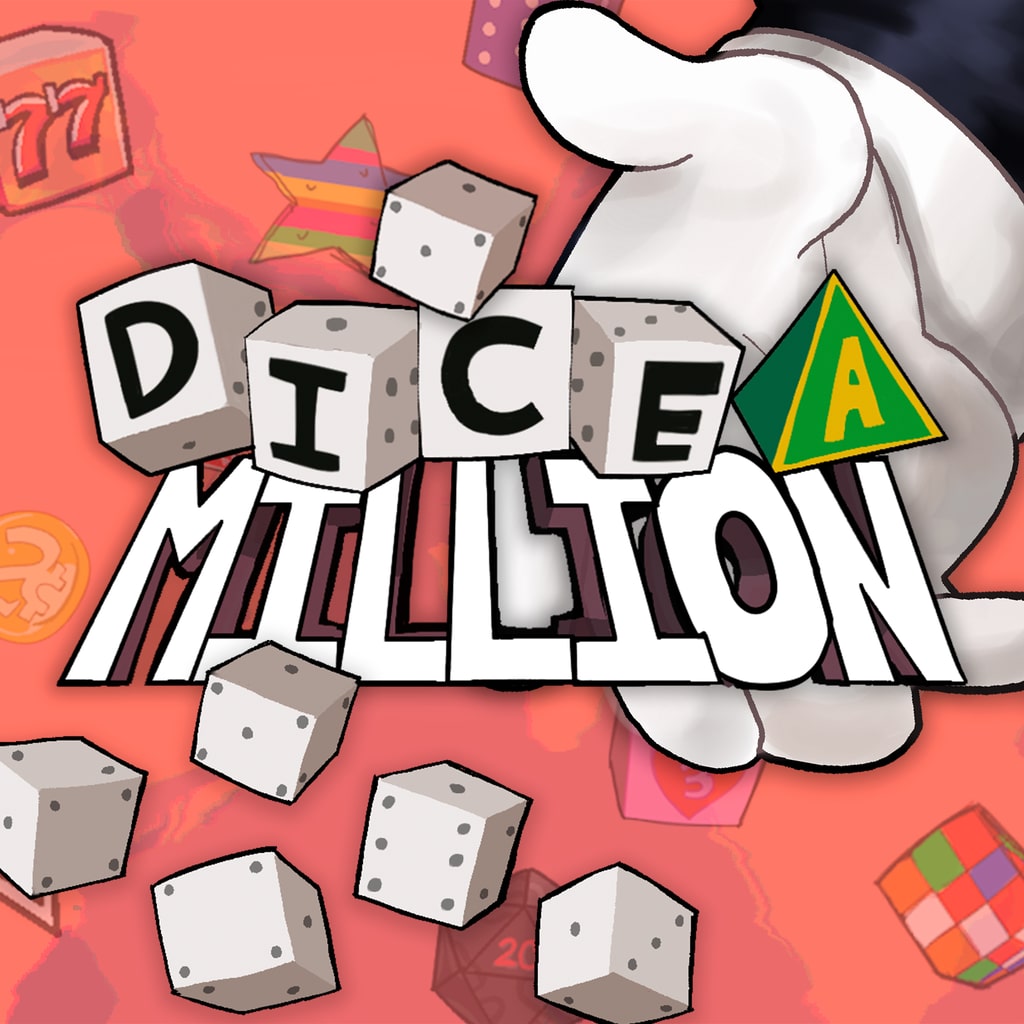
There are plenty of games that promise to make you feel like a genius, but few are as honest about asking you to become dangerously obsessed with numbers. Dice A Million has one very simple objective: roll dice, score points and somehow reach that magical one million mark. It sounds almost ridiculously straightforward, which is precisely why it works. What begins as a modest exercise in adding numbers soon turns into an increasingly ridiculous battle of probability, synergy and beautifully chaotic arithmetic.
Developed by countlessnights and published by 2 Left Thumbs, Dice A Million drops you into a rather strange dice-rolling facility where freedom apparently comes at a price. That price is measured in ever-increasing debt quotas, increasingly awkward challenges and bosses that seem determined to dismantle whatever clever strategy you have spent the last half hour building. The concept may be silly, but beneath the colourful presentation lies a surprisingly thoughtful roguelike deckbuilder that understands exactly why players love watching a carefully constructed system suddenly explode into ridiculous numbers.
Roll The Dice, Chase The Million
The brilliance of Dice A Million is that it gives you a goal that anyone can understand. You need a million points. That is it. There is no complicated backstory required to explain why you are doing what you are doing, and there is something wonderfully old-school about the simplicity of it all.
Of course, reaching a million is another matter entirely. You begin with fairly ordinary dice and quickly discover that the real game is not simply about rolling high numbers. It is about building a collection in which every piece can make another more powerful. A die that looks unremarkable on its own can become incredibly valuable when combined with the right ring, enchantment or another unusual die.
That is where the deckbuilding side of the game really starts to take over. More than 120 different dice can eventually find their way into your collection, and they are far more imaginative than a collection of differently coloured six-sided cubes has any right to be. There are dice that duplicate themselves, split values, manipulate outcomes and behave in ways that can completely change how you approach a run.
When The Numbers Start Getting Silly
There is a wonderful tipping point in Dice A Million when the numbers stop feeling like numbers and start feeling like a personal challenge from the game itself. You see a promising combination forming, add another modifier, trigger another effect, and suddenly the screen fills with dice, multipliers and increasingly impressive totals. It is the sort of thing that makes you lean towards the monitor and mutter, “Hang on, what if I do this?”
That feeling is the game’s greatest strength. It constantly encourages experimentation without making every decision feel completely random. Luck obviously plays a huge part, but good preparation can turn an ordinary roll into something considerably more impressive. The best runs therefore feel like a blend of good fortune and clever planning, which is exactly the sweet spot a roguelike should aim for.
The bag itself becomes almost like a character. You start learning which dice you want to see, which ones you would rather avoid, and which combinations can produce something spectacular. Finding a new die is exciting not simply because it might be powerful, but because you immediately start imagining what else it could work with.
Building A Bag Of Madness
The sheer variety of dice gives Dice A Million plenty of room to experiment. Some are straightforward improvements, while others are stranger and prompt you to rethink how your entire bag operates. Magnetic black hole dice and nesting-doll-style dice quickly signal that this is not trying to recreate a traditional tabletop experience.
The game also lets you permanently modify individual dice. Shops and booster packs let you add stamps, enchantments and other effects, creating a sense of investment in the pieces you have chosen. A die can gradually become far more valuable than its original form, and watching that transformation is strangely satisfying.
This is also where the game’s roguelike structure starts to show its teeth. You will inevitably have runs where everything comes together beautifully, followed by another attempt where your carefully considered plan seems to collapse before it has even got started. Rather than feeling unfair, those failures generally encourage you to think about what you could do differently next time.
Rings Change Everything
If the dice are the stars, the rings are the supporting cast that occasionally steal the show. These passive relics can provide global multipliers, generate additional throws, or reward specific combinations, including odd and even results. Finding a ring that complements the bag you are already building can completely alter the direction of a run.
This adds an enjoyable layer of strategic decision-making. You are not simply asking whether something is powerful. You are asking whether it is powerful for the particular collection you have created. A fantastic ring can be almost useless in one run and utterly ridiculous in another, depending on the dice surrounding it.
That interaction between systems is what gives Dice A Million its longevity. There are plenty of roguelikes where you eventually discover one strategy that works and simply repeat it. Here, the sheer variety of possible combinations makes experimentation feel worthwhile, even when it inevitably produces spectacular failures.
Spells For When Everything Goes Wrong
There is also a useful safety net in the form of spell cards. These consumable abilities can provide rerolls, manipulate values, or force certain transformations when you desperately need something to go your way. They are particularly useful during difficult hands, although using them too freely can leave you without an emergency option later.
I like that these cards do not completely remove the importance of luck. They give you another decision to make rather than simply handing you the answer. Do you spend a spell now to rescue a mediocre roll, or hold onto it because the next boss might make you regret wasting it?
Those little decisions add up. Dice A Million is at its most enjoyable when you are constantly making small judgements about risk and reward rather than simply hoping the right numbers appear.
The House Always Wins
Eventually, the game’s bosses start to make their presence felt, and this is where the cosy arithmetic adventure becomes considerably more hostile. Bosses can introduce effects that obscure dice faces, reduce certain values, or disable rings, forcing you to adapt to conditions that can seriously disrupt a carefully constructed strategy.
There is an argument that some of these encounters can feel a little harsh, particularly when a particular build relies heavily on a mechanic that the boss decides to punish. Losing because your entire strategy has suddenly been switched off is never especially satisfying. At the same time, the bosses are important because without them there would be very little pressure to keep evolving your approach.
The increasing debt quotas perform a similar role. They stop you from simply settling into a comfortable rhythm and force you to keep pushing. The game wants you to become greedy, but it also wants to remind you that greed has consequences.
Simple Looks, Surprisingly Good Presentation
Visually, Dice A Million is refreshingly unpretentious. Its colourful, MS Paint-inspired artwork gives everything a homemade charm, and there is something quite likeable about the deliberately rough edges. It never takes itself too seriously, which suits the absurdity of trying to build an unstoppable army of magical dice.
More importantly, the simplicity aids readability. When a particularly successful run starts throwing additional dice, multipliers and effects across the screen, you need to be able to understand what is happening. The clean presentation keeps the chaos entertaining rather than turning it into visual noise.
The audio follows the same philosophy. Relaxed lo-fi music creates a surprisingly calm atmosphere, while the clatter and click of the dice provide the tactile feedback you need. There is something deeply satisfying about hearing another roll land just as the numbers begin climbing towards another ridiculous total.
The Addiction Is Real
The most dangerous thing about Dice A Million is how easy it is to tell yourself you will play just one more run. You finish an attempt, learn from it, and immediately spot a possible improvement for the next. Maybe a different ring would work better. Maybe that strange die you ignored earlier is actually the key to the whole strategy.
Then you roll again.
That loop is what makes the game work so well. It understands that the appeal of a roguelike is not simply winning, but discovering something in a failed run that makes you want to try again. Every defeat can become a lesson, while every successful combination gives you another reason to see how far you can push it.
And then there is the million. That ridiculous, slightly absurd target sits in the background like a carrot on a stick. Once you get close, ordinary scores suddenly stop feeling impressive. You are no longer playing for survival. You are playing because you need to see that number.
The Verdict
Dice A Million takes a wonderfully simple premise and builds impressive depth around it. Rolling dice might sound like a mechanic that would become repetitive within minutes, but the sheer variety of dice, rings, spells and enhancements gives the experience plenty of room to grow. The best moments come when several systems click together, and the game suddenly transforms from a modest little dice game into a spectacular mathematical fireworks display.
It is not completely free from frustration. Certain boss effects can be particularly punishing when they target the foundation of a carefully assembled build, and the luck-driven nature of the experience will inevitably produce runs where everything seems determined to go wrong. Yet those rough edges never quite overwhelm the underlying appeal.
There is a lovely sense of humour running through Dice A Million, but it never gets in the way of the mechanics. Underneath those colourful dice and deliberately scruffy visuals lies a genuinely deep roguelike that rewards curiosity, experimentation and a willingness to take one more chance.
Most importantly, it is fun. There is an almost childlike satisfaction in watching the numbers climb, followed by the very adult realisation that you have somehow spent far longer playing than you intended. Dice A Million may have one million points as its target, but getting there is really just an excuse to keep rolling.