There is something deeply satisfying about building a fortress while an army of monsters does everything it can to tear it apart. Give me a handful of buildings, a limited patch of land and a steadily growing collection of increasingly unpleasant creatures, and I am suddenly convinced I can outsmart an entire fantasy army. Fortress Merge takes that simple pleasure and mixes it with the compulsive appeal of tile merging, creating a strategy game that can look deceptively casual right up until a dragon or giant comes stomping through your carefully arranged defences.
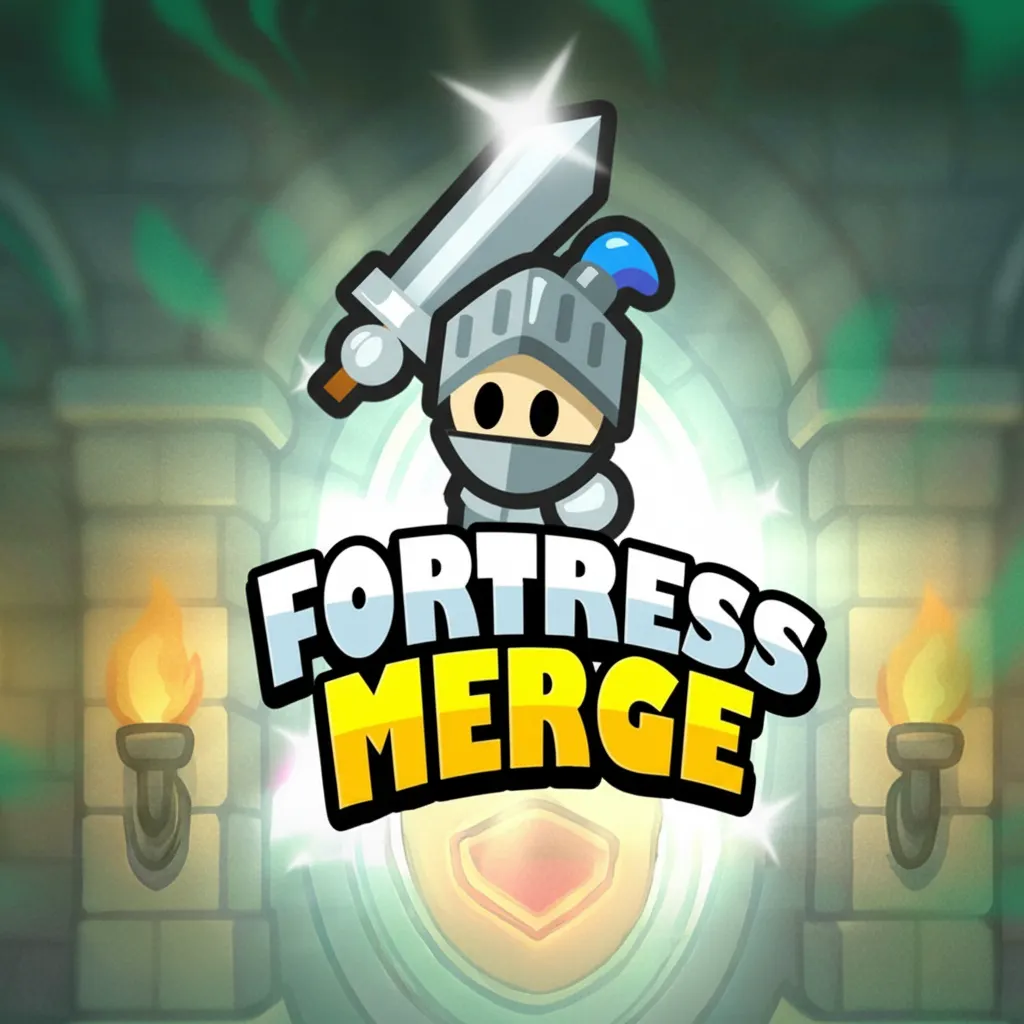
Developed by TapNation and Tartatin and published on PC and consoles by QubicGames, Fortress Merge puts you in charge of a fortress that is very much having a bad day. Waves of enemies constantly approach, your building space is limited, and every decision about where to place something can have consequences later. The basic idea is wonderfully easy to understand: build structures, merge matching ones to make them stronger, earn gold, improve your army and survive long enough to deal with increasingly nasty threats. The clever part is how quickly those simple decisions begin to compete with one another.
A Fortress Under Pressure
The first thing Fortress Merge gets right is its accessibility. You do not need a lengthy tutorial or a degree in military engineering to understand what you are supposed to be doing. Place buildings, merge matching structures, defend your keep, and try not to let the monsters reach the centre of your fortress.
That simplicity is important because there is quite a lot happening beneath the surface. You have buildings producing knights, horsemen, archers and mages, defensive turrets firing at approaching enemies, barricades slowing them down, and gold mines generating the money needed to keep everything moving. Then there are heroes, upgrades, rerolls and increasingly dangerous enemies to worry about.
The result is a game that starts gently before gradually tightening the screws. Early waves give you enough breathing room to understand the systems, but later battles demand a proper plan. Suddenly, that empty tile you casually ignored five minutes ago becomes the one space you desperately need.
Every Tile Matters
The limited grid is arguably the game’s most important mechanic because it turns simple placement into a genuine strategic puzzle. You cannot simply build everything everywhere. Trees need clearing to open additional spaces, buildings need room to merge, and defensive structures need to be positioned where they can do the most good.
This creates surprisingly satisfying moments of planning. You might have a powerful building ready to merge but realise that doing so would leave your army without enough room for another important structure. Alternatively, you might deliberately leave a gap because you know a particular building could become extremely valuable later.
It is the sort of system that makes you stare at the screen for a few seconds before committing to a decision. That pause is a good sign. It means the game has made positioning matter rather than simply asking you to fill empty spaces as quickly as possible.
There is also a lovely sense of regret when you make a mistake. Put something in the wrong place and you may spend the next few waves wishing you had thought about it first. In a game about limited space, poor decisions have a way of becoming very visible.
Merge, Upgrade, Repeat
The merging mechanic is the game’s most immediately addictive feature. Combining matching buildings to create a stronger structure feels satisfying every time, particularly when the new building noticeably improves your defensive line.
It also presents an interesting choice between quantity and quality. Do you keep several lower-tier buildings producing more units, or merge them into something more powerful? The answer is rarely obvious, especially when you are trying to balance immediate survival with the potential to create something much stronger later.
Experience gained from merging also feeds into the wider progression system. Each level brings new upgrade choices, allowing you to strengthen units, improve defences, or select bonuses that complement your current setup. This means the merge mechanic is doing more than simply tidying up the board. It is actively shaping the direction of your run.
The best part is when a few different systems suddenly start working together. A strong defensive building, the right upgrade, and a strategically placed barricade can turn a previously frightening enemy wave into something that barely reaches your inner defences.
Building An Army
Your fortress is not defended by walls alone. Different structures produce different types of soldiers, giving you a varied mix of offensive options. Knights provide dependable close-range strength, horsemen bring a different flavour of battlefield pressure, archers allow you to attack from a safer distance, and mages offer more powerful area effects.
This variety gives you a reason to think about the composition of your army rather than simply chasing the highest available tier. A powerful unit is not necessarily useful if the rest of your defence leaves it exposed or fails to deal with a particular type of enemy.
That becomes increasingly important as the opposition grows more varied. Skeletons and slimes are one thing, but eventually you are dealing with dragons, giants and bosses that can rip through an underprepared fortress remarkably quickly. Each threat encourages you to rethink your arrangement, which helps prevent the later stages from becoming a simple exercise in repeating the same strategy.
The Heroes Arrive
Heroes add another layer to the battlefield and give the fortress a little more personality. There are three unique heroes to choose from, each with distinct statistics, a combat skill and a permanent boost that can influence how you approach a battle.
Placing a hero in the right location can make a noticeable difference. Their active abilities are particularly useful when a difficult wave arrives and your ordinary troops are struggling to contain it. Using that ability at the right moment can mean the difference between watching a boss crash through your defences and watching it disappear beneath a mountain of attacks.
Gear provides another reason to invest in your chosen hero. Equipping useful bonuses and gradually upgrading your commander gives the character a sense of progression that complements the fortress-building itself.
I would have liked even more heroes and perhaps greater differences between their overall playstyles, but what is here works well. They are not simply decorative characters standing behind your army. They are another tool that needs to be considered when putting your defence together.
Gold Is Never Quite Enough
The gold economy adds a nice little risk-and-reward decision to each battle. Gold mines can generate extra income during waves, but they also need to be protected. If enemies reach them or your defensive line collapses, you can lose out on money that could have made the next part of the battle considerably easier.
That creates an interesting tension. You want your mines producing as much gold as possible, but dedicating too much space to them can weaken the fighting area. Once again, the limited grid forces you to make choices rather than simply giving you everything you want.
Gold can then be spent on rerolls to search for better buildings, which introduces another tempting gamble. Do you accept what the game has given you, or spend precious resources looking for something better? There is always the possibility that the next reroll will solve your problem, but there is an equally good chance that you will wish you had kept your money.
When The Monsters Get Serious
The enemy variety does a good job of keeping the pressure mounting. Skeletons provide a familiar early threat, while slimes, dragons and giants gradually make the battlefield harder to control. Bosses are where the game really tests whether your fortress has been built with purpose.
A weak defence can disappear remarkably quickly once a larger enemy reaches it. That makes preparation important, particularly because the battlefield is not just about how much damage you can deal. Slowing enemies down, creating useful chokepoints and ensuring your strongest structures have the right coverage can be just as important.
The challenge modes also give experienced players something beyond the standard battles. Grand Battle, Boss Fight and Hero Battle each put a slightly different emphasis on the systems, providing reasons to return once you have become comfortable with the main progression.
A Colourful Little Kingdom
Visually, Fortress Merge adopts a bright, colourful isometric style that suits its approachable nature. Buildings are easy to distinguish, upgraded structures offer a satisfying sense of visual progression, and the battlefield remains readable even when things get busy.
That clarity is more important than it might initially seem. When you are juggling several buildings, multiple enemy types and a growing army, you need to understand what is happening without fighting the interface. Fortress Merge generally manages that balance well.
There is also a pleasing little burst of satisfaction whenever a merge happens. Buildings snap together, the new structure appears, and the visual feedback tells you immediately that your decision has paid off. It is simple, but these small touches are exactly what make a game like this so easy to keep playing.
The energetic fantasy soundtrack and collection of weapon clashes, enemy sounds and merging effects complement the action nicely. Nothing here is likely to blow you away, but the presentation knows what it needs to do and gets on with it.
Easy To Learn, Harder To Master
The biggest compliment I can pay Fortress Merge is that it understands the difference between being simple and being shallow. The controls and basic systems are immediately accessible, but putting them together effectively takes considerably more thought.
There will be runs when everything seems to fall into place. Your buildings merge perfectly, the upgrades complement one another, and your hero happens to be exactly where they need to be. Then there are those other runs when every decision seems to make the next one harder, your gold disappears, and a giant comes charging through the weakest part of your fortress.
That unpredictability is part of the appeal. You are always trying to improve on the previous attempt, perhaps by placing a building somewhere different or choosing another upgrade. The game encourages that little voice in your head saying, “I know what I did wrong last time.”
It is a familiar feeling for anyone who has become hooked on a good roguelike or strategy game. You lose, think about it for a while, and then immediately want another go.
The Verdict
Fortress Merge is a surprisingly enjoyable blend of tile management, merging mechanics and tower defence. None of those ideas are particularly new on their own, but putting them together creates a loop that works remarkably well. The limited grid gives every placement significance, while the constant threat of enemy waves ensures you never have quite as much time as you would like to arrange everything perfectly.
The heroes, gold mines, upgrades and enemy types add enough variety to keep the basic formula interesting. There is genuine pleasure in watching a messy collection of buildings gradually become an organised fortress capable of dealing with increasingly ridiculous threats. When the strategy works, it feels earned.
There are signs of its mobile roots in the straightforward progression and repeatable structure, and players looking for an enormous strategy experience may find the systems a little light. Some battles can also feel particularly punishing when the available building options refuse to cooperate with your plans. But that never detracts from the central appeal.
Fortress Merge is at its best when you are balancing several competing problems at once. Do you merge now or wait? Do you protect the gold mine or use that tile for another defensive structure? Do you strengthen your hero or improve the army? Those decisions are small, but together they create the game’s personality.
Most importantly, it is the kind of game that makes losing feel like an invitation rather than a punishment. You finish a failed battle, stare at your fortress, and immediately start planning how you will build it differently next time. That is a difficult trick to pull off, and Fortress Merge pulls it off with enough charm to make its little kingdom worth defending.