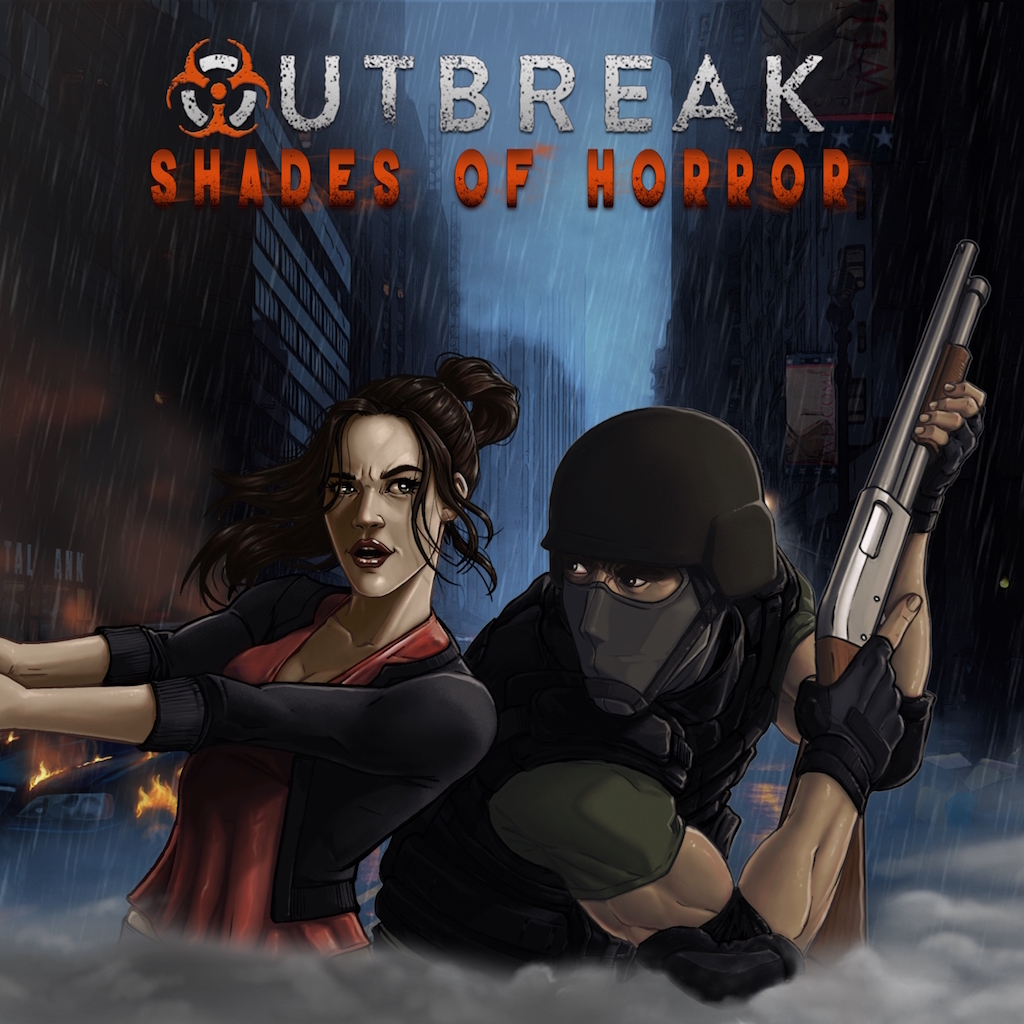
The zombie survival genre is nothing if not crowded — over the years, titles have ranged from cinematic blockbusters to cinematic missteps, from survival simulators to arcade shooters. Outbreak: Shades of Horror – Founders Edition enters this space with a clear aim: to deliver tense, atmospheric survival horror grounded in resource scarcity, permadeath-adjacent progression, and emergent risk. In its Founders Edition release, the experience feels like a work in progress — polished in some areas, rough in others — but its core systems coalesce into a compellingly grim and strategic survival experience that fans of methodical horror will appreciate.
After many hours navigating contaminated zones, battling shambling hordes, and adapting to a world that punishes distraction, Outbreak: Shades of Horror stands out as a survival horror adventure that stresses decision over action, strategy over spectacle. It’s not perfect, but its Founders Edition is already a substantial and promising take on a beloved genre.
Premise and Worldbuilding
Outbreak: Shades of Horror situates players in a post-pandemic landscape ravaged by biohazardous outbreaks and the undead horrors they spawn. From abandoned towns to abandoned military installations, each map reflects desolation, decay, and looming dread. The Founders Edition doesn’t beat players over the head with lore; instead, worldbuilding emerges through environmental storytelling — graffiti-scrawled warnings, boarded-up windows, and audio logs that whisper forgotten tales of panic and survival.
The narrative framing is sparse but effective. You’re not a chosen saviour with scripted dialogue trees; you are a survivor, making hard choices about where to explore, what risks to take, and how to allocate dwindling supplies. The emphasis on quiet, implied storytelling — rather than blockbuster cinematics — aligns well with the title’s identity.
Each biome feels distinct. Rusted farm towns evoke quiet terror; rain-soaked city streets offer little solace amid flickering streetlamps; and industrial complexes feel claustrophobic and labyrinthine. These environments aren’t merely backdrops — they influence how combat unfolds, how noise propagates, and how resource nodes are distributed. Darkness isn’t cosmetic; it’s a tactical hazard.
Core Gameplay: Fragility and Tension
From the first steps into the infected world, Outbreak: Shades of Horror makes survival feel like a weight — not a mechanical grind, but a constant negotiation with risk. Resources are scarce and immediately precious. Ammo must be rationed. Health items are rare. Stashes of safe food are almost mythical. Every decision — do you use that single medkit now or save it for later? — carries narrative and tactical tension.
Movement and exploration are deliberately paced. Rushing through zones often results in ambushes. Hordes don’t always roar at you from afar; sometimes a lone shambling corpse emerges from the shadows, causing a spike of dread rather than spectacle. The game’s AI doesn’t need to be hyper-intelligent; it just needs to be persistent and unpredictable — and Shades of Horror achieves that.
Stealth mechanics are just as valuable as combat. Sometimes the smartest choice is not to fight at all; sneaking around infected groups, using sound to distract or mislead, and retreating deeper into relative safety are all viable strategies. This emphasis on tactical choice over reflexes makes the title feel intentional rather than frantic.
Combat and Enemy Design
Combat in Outbreak: Shades of Horror is purposefully gritty. Gunfights aren’t high-octane affairs; they are tense engagements where every shot has consequence. Enemies react differently depending on type and environmental conditions — some stagger uneasily, others sprint in bursts, and higher-tier threats can swarm with alarming coordination.
The combat systems unfold in layers. Early weapons are rudimentary: rusted pistols with few rounds, blunt instruments that can stun but not kill quickly, and fragile melee tools that degrade with use. As you explore and craft or scavenge better gear, weapon variety expands: shotguns that shred close threats, crossbows that maintain silence, and improvised explosives for crowd control.
Ammo scarcity directs playstyle. Shooting indiscriminately is punished; efficient headshots and conservation are rewarded. The game’s hit detection is satisfyingly weighty rather than hyper-arcade, reinforcing the impression that gunfire is a resource to be used sparingly.
Boss encounters — though few in the Founders Edition — are memorable precisely because they test the systems rather than gimmicks. These fights demand observation and adaptation, not just firepower. Patterns, movement timings, and environmental usage often determine success.
Resource Management and Crafting
One of the defining pillars of Outbreak: Shades of Horror is its resource ecosystem. Resources are not just inventory items; they are decisions. Crafting components, medical supplies, and ammo parts are distributed in ways that encourage exploration and risk evaluation.
The crafting system is both intuitive and layered. Simple recipes allow basic bandages and weapon repairs, while advanced formulas — unlocked through exploration and lore discovery — offer more sophisticated gear. Crafting isn’t instantaneous; it requires designated workstations or time investments, which means players must decide when and where to prepare for upcoming encounters.
Resource scarcity elevates tension without feeling punitive. Finding a supply cache isn’t just a momentary boost — it reshapes strategies for the next zone. This dynamic gives survival a tangible psychological weight. A potential downside for some players is that resource management can feel overwhelming during early runs, but as familiarity grows, scarcity feels like a challenge rather than a chore.
Progression, Permadeath, and Risk
The Founders Edition presents a balanced progression loop. You don’t carry every upgrade forward automatically; instead, progression ties into skill unlocks and gear blueprints that moderate advancement without trivialising core challenges.
Death isn’t necessarily permadeath, but it carries consequences. Dying resets your position and often your immediate loadout, but learned Blueprints, map lore, and skill points remain persistent. This hybrid model respects player investment while retaining roguelike tension.
Some runs will feel like learning exercises rather than triumphs, which is integral to the game’s identity rather than a design flaw. The loop of explore, learn, die, adapt is familiar to fans of the genre, but Shades of Horror distinguishes itself by tying that loop directly to atmospheric dread rather than abstract numbers.
Visual and Audio Atmosphere
A successful horror game rests as much on sound design as visuals, and Outbreak: Shades of Horror earns its bones here. The audio landscape is rich and unsettling. Distant groans, scuttling footsteps, and static radio chatter create a sense of relentless presence. Silence is equally meaningful: a quiet corridor feels ominous because the soundtrack withdraws away from music and into ambient tension.
Visually, the game leans toward a gritty realism filtered through a moody colour palette. Environments are texturally detailed without overwhelming clarity, meaning every shadow could conceal threat or treasure. Light sources — flares, lanterns, flashlight beams — are both practical tools and mood machines, piercing darkness in ways that heighten terror rather than reduce it.
The Founders Edition occasionally reveals minor graphical rough edges — clipping, texture pop-in, or occasional lighting anomalies — but these are rare and generally do not break immersion.
Critiques and Limitations
Despite its many strengths, Outbreak: Shades of Horror has areas that could be refined:
- Pacing Variance: While tension is a core strength, pacing occasionally swings between sticky slow exploration and sudden threat spikes without clear build-up, which can disrupt rhythm.
- UI Complexity: Inventory management and crafting menus, while functional, feel dense and could benefit from additional clarity or streamlining.
- Enemy Variety: A broader roster of creature behaviours would enhance long-term engagement, particularly in later runs.
Importantly, these critiques are contextual to the Founders Edition. The foundation is strong, and with iterative content expansion, these areas could evolve meaningfully.
Final Verdict
Outbreak: Shades of Horror – Founders Edition is a thoughtful and atmospheric survival horror experience that emphasises strategy, resource tension, and emergent challenge over spectacle or jump scares. It honours the roguelike survival tradition while carving its own niche through meticulous design and mood-centric systems.
This isn’t just a sim of surviving zombies — it’s a study in somber choice, where every decision carries weight, and every corner holds consequence. For players who appreciate cerebral survival mechanics wrapped in dread-laden exploration, this is a title worth watching — and worth playing.