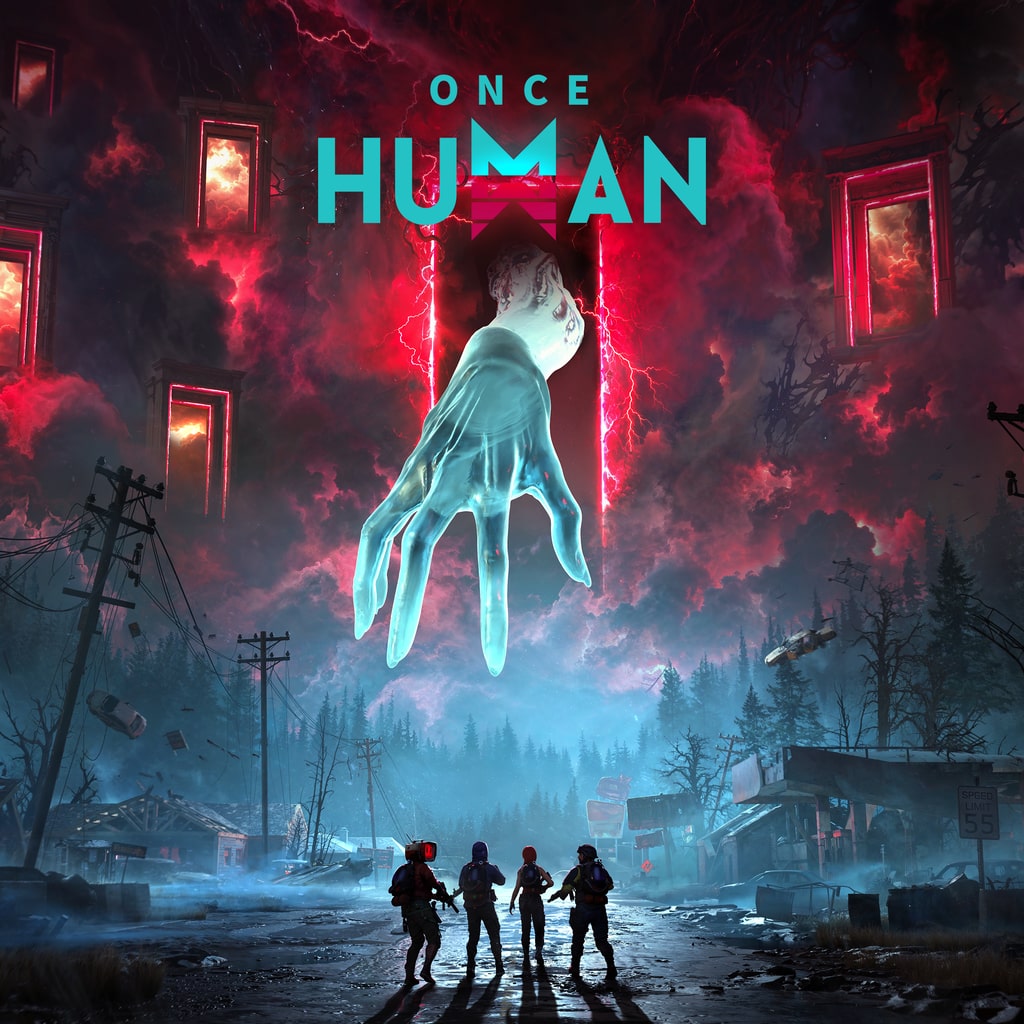
There is something wonderfully strange about Once Human. Survival games are hardly in short supply these days, and the formula is familiar enough that you can usually predict what comes next. Wake up somewhere unpleasant, punch a tree, collect some rocks, build a shack, make a slightly better weapon, and then wonder why the local wildlife is so determined to murder you. Once Human starts with that familiar foundation, but then throws a gigantic, unsettling curveball into the mix. Before long, you are fighting grotesque creatures, collecting bizarre supernatural companions, building increasingly elaborate bases, and wondering why there is a bus with enormous legs wandering around the countryside.
That willingness to embrace the bizarre is what makes Once Human stand out. Developed by Starry Studio and published by NetEase Games, this free-to-play survival adventure takes place in a world ravaged by Stardust, a mysterious substance that has transformed humanity and twisted the environment into something barely recognisable. You awaken as a Meta, one of the altered survivors capable of interacting with the strange powers left behind by the catastrophe. What begins as a fight to stay alive gradually becomes something much bigger as you uncover the truth behind the fall of civilisation and question what being human actually means.
Welcome To A Very Strange World
The first thing that struck me about Once Human is how confidently weird its world is. There is a grim beauty to the ruined landscapes, abandoned towns and overgrown roads, but beneath that familiar post-apocalyptic scenery lies something far more unsettling.
Stardust has fundamentally changed the world, creating creatures and phenomena that feel as though they have escaped from a particularly unpleasant nightmare. You might be exploring an abandoned settlement one minute and then find yourself staring at something that looks completely at home in an old horror film. The contrast between recognisable locations and utterly bizarre threats gives exploration a constant sense of uncertainty.
It helps that the world is enormous. There is a genuine sense of discovery as you travel between regions, uncover forgotten buildings and stumble across strange events. Even when you are simply heading somewhere to collect resources, there is always the possibility that something unexpected will catch your attention.
That is an important quality in an open world because it makes travelling feel like part of the adventure rather than merely the time spent getting from one objective to another.
Survival With A Twist
At its heart, Once Human remains a survival game. You gather resources, craft equipment, establish a territory and gradually improve your ability to survive in increasingly dangerous environments.
The early hours are particularly enjoyable because everything feels useful. A scrap piece can become part of a weapon, a resource can help expand your base, and a new blueprint can completely change what you are capable of producing. There is a satisfying rhythm to heading out with a plan, returning home with a backpack full of materials and immediately finding something useful to do with them.
The crafting system becomes increasingly elaborate as you progress, giving the game a strong sense of escalation. You are not simply making bigger versions of the same wooden tools forever. Firearms, equipment modifications, ammunition and more advanced structures gradually become part of your survival toolkit.
It does mean there is quite a lot to learn. Once Human throws plenty of menus, currencies, crafting options and progression systems at you, and newcomers may initially feel as though they have been handed an instruction manual written by somebody who forgot to include the instructions. Once the various systems begin to click, there is plenty of depth to sink your teeth into.
Building Somewhere To Call Home
Base building is another major part of the experience, and this is one area where Once Human can become surprisingly addictive. Your territory starts modestly, but there is considerable satisfaction in gradually turning it into something that feels like your own little corner of the apocalypse. You can construct workshops, storage areas, defensive structures and all manner of practical additions, while decorative options allow you to make the place feel more personal. There is something satisfying about returning from a dangerous expedition and seeing the lights of your base in the distance.
The building system also fits naturally into the survival loop. Your home is not simply a pretty backdrop. It is where you process materials, produce equipment and prepare for the next expedition, so improvements to your territory have a genuine purpose. Of course, I still managed to create something that looked more like an industrial storage facility than a comfortable home. Some people build beautiful post-apocalyptic mansions. I build warehouses. At least my warehouse has character.
The Deviants Are The Real Stars
If there is one aspect of Once Human that deserves particular praise, it is the Deviant system. These strange creatures and entities can be collected and put to work, adding a surprisingly charming element to an otherwise bleak world. Some Deviants assist in combat, while others perform useful tasks around your territory. They can help with gathering, farming and resource production, effectively turning your base into a strange little ecosystem of supernatural helpers.
There is something wonderfully absurd about the whole thing. The world is collapsing around you, monsters are roaming the countryside and humanity is fighting for survival, yet you are also deciding which bizarre creature would make the best little helper for your base. It should not work as well as it does, but somehow it does. These companions also give Once Human a personality that many survival games struggle to develop. They are not simply another collection of statistics. Their designs are often wonderfully imaginative, and discovering a new one can feel like finding a strange little treasure.
When The Shooting Starts
For all its crafting and exploration, Once Human is also a surprisingly capable shooter. The firearms have a satisfying weight, and there is enough weapon variety to accommodate different approaches.
Assault rifles are useful for dealing with groups, shotguns are naturally satisfying at close range, and sniper rifles provide a more deliberate way of dealing with distant threats. Weapon modifications and additional systems allow you to specialise further, adding a welcome layer of customisation to combat. The enemies also encourage you to stay alert. Some are straightforward targets, while others require more careful positioning and awareness. Certain encounters can become genuinely chaotic, particularly when several threats attack at once.
Boss encounters are where the game’s stranger side really comes alive. These are not always conventional monsters, and the imaginative designs can make some battles feel like they have wandered in from a completely different game. That unpredictability keeps combat interesting.
Multiplayer Makes The World Feel Alive
Although you can spend considerable time playing independently, Once Human is designed around a multiplayer world, and playing with friends can transform the experience.
There is something inherently entertaining about tackling a dangerous area together, particularly when everyone has developed their own approach to survival. One player might focus on combat, while another focuses on gathering resources or maintaining the base. Working together also makes the game’s larger encounters considerably more enjoyable. A difficult fight that might feel intimidating alone can become an exhilarating scramble when several players are communicating and trying to keep each other alive.
The social side can be hit-and-miss, depending on the players around you, naturally. This is still an online survival experience, and that means dealing with the usual complications of shared worlds, busy servers and the occasional stranger who appears to have made it their personal mission to cause trouble. When everything clicks, however, Once Human delivers some excellent cooperative moments.
A World Worth Exploring
The open world is arguably at its best when you stop following objectives and simply wander. The environmental design gives you plenty of reasons to investigate abandoned buildings, suspicious locations and points of interest.
The post-apocalyptic setting could easily have become visually repetitive, but the variety of environments helps keep things fresh. Forests, settlements, industrial locations and contaminated areas each provide their own atmosphere.
Then there are genuinely strange moments. A normal road can suddenly lead to something deeply unsettling, and the game’s creature design frequently reminds you that this is not simply another story about zombies and ruined cities. There is a real sense that the world has been infected by something fundamentally alien. That atmosphere is one of Once Human’s greatest achievements.
A Gorgeous Kind Of Ugly
Visually, Once Human strikes an interesting balance between grim realism and outright surrealism. The ruined world looks appropriately battered, but the creature designs are where the artists have clearly had the most fun. Some enemies are grotesque, others are strangely amusing, and a few are genuinely memorable. The aforementioned living bus is exactly the sort of thing that sounds ridiculous when described but somehow looks perfectly natural once you encounter it.
The environments also benefit from strong lighting and atmospheric effects. Exploring a quiet area at night can feel completely different from travelling through it during the day, particularly when you know there are things hiding beyond the edge of your torchlight.
The audio complements this nicely. Weapon sounds have enough impact to make combat satisfying, while environmental noises and unsettling musical cues help maintain the sense that danger could be waiting around the next corner.
The Free To Play Question
Being a free-to-play game inevitably brings some baggage. Once Human has many systems competing for your attention, and the sheer number of menus, currencies and progression mechanics can sometimes make the experience feel more complicated than it needs to be.
There are moments when the game seems determined to remind you that it is an online service rather than simply letting you get on with playing. For players who prefer a straightforward adventure without layers of additional systems, this can become tiring.
There are also occasional performance issues and moments when the online infrastructure does not quite feel as seamless as you would hope. These problems are not enough to ruin the experience, but they can interrupt an otherwise immersive adventure.
The important thing is that, underneath all of this, is a genuinely enjoyable game. The free-to-play structure may not appeal to everybody, but there is a considerable amount of entertainment available without needing to turn the experience into a second job.
The Odd One Out In The Survival Crowd
What ultimately makes Once Human memorable is its personality. There are plenty of survival games that offer crafting, building, exploration and combat, but comparatively few are willing to throw supernatural creatures, bizarre companions and surreal horror into the same pot and somehow make the mixture work.
It is ambitious, occasionally messy and frequently ridiculous, but those qualities are part of its charm. There is always another weapon to craft, another area to explore, another Deviant to discover, or another strange creature waiting to ruin your afternoon.
It also works particularly well when played with friends. Sharing the world’s absurdity makes the stranger moments even funnier, while the more difficult encounters benefit enormously from cooperation. You might begin playing because you want to survive. You will probably keep playing because you want to see what bizarre thing the game throws at you next.
Final Verdict
Once Human is an ambitious survival game that refuses to settle for being ordinary. Beneath its familiar crafting, shooting and base-building systems lies a wonderfully strange world packed with unsettling creatures, bizarre companions and enough mysteries to keep curiosity alive.
The survival mechanics are satisfying, the weapon customisation offers plenty of room for experimentation, and base-building can become a wonderfully absorbing distraction. The Deviants are an inspired addition, giving the game a unique personality and adding moments of genuine charm to an otherwise bleak setting. Most importantly, exploration regularly rewards curiosity, and there is real pleasure in discovering what lies beyond the next hill.
It is not without faults. The sheer number of systems can make the opening experience feel overwhelming, the free-to-play structure occasionally gets in the way, and online performance can sometimes take the shine off an otherwise impressive adventure. Some players will also find the ongoing progression and management a little exhausting.
For me, though, Once Human succeeds because it understands that a post-apocalyptic game does not have to take itself completely seriously. It can be creepy and funny, bleak and beautiful, familiar and completely bizarre, all at the same time. And honestly, any game that lets me build a home, collect supernatural creatures and then watch a gigantic mutant bus stomp across the wasteland has already earned a place in my gaming library.