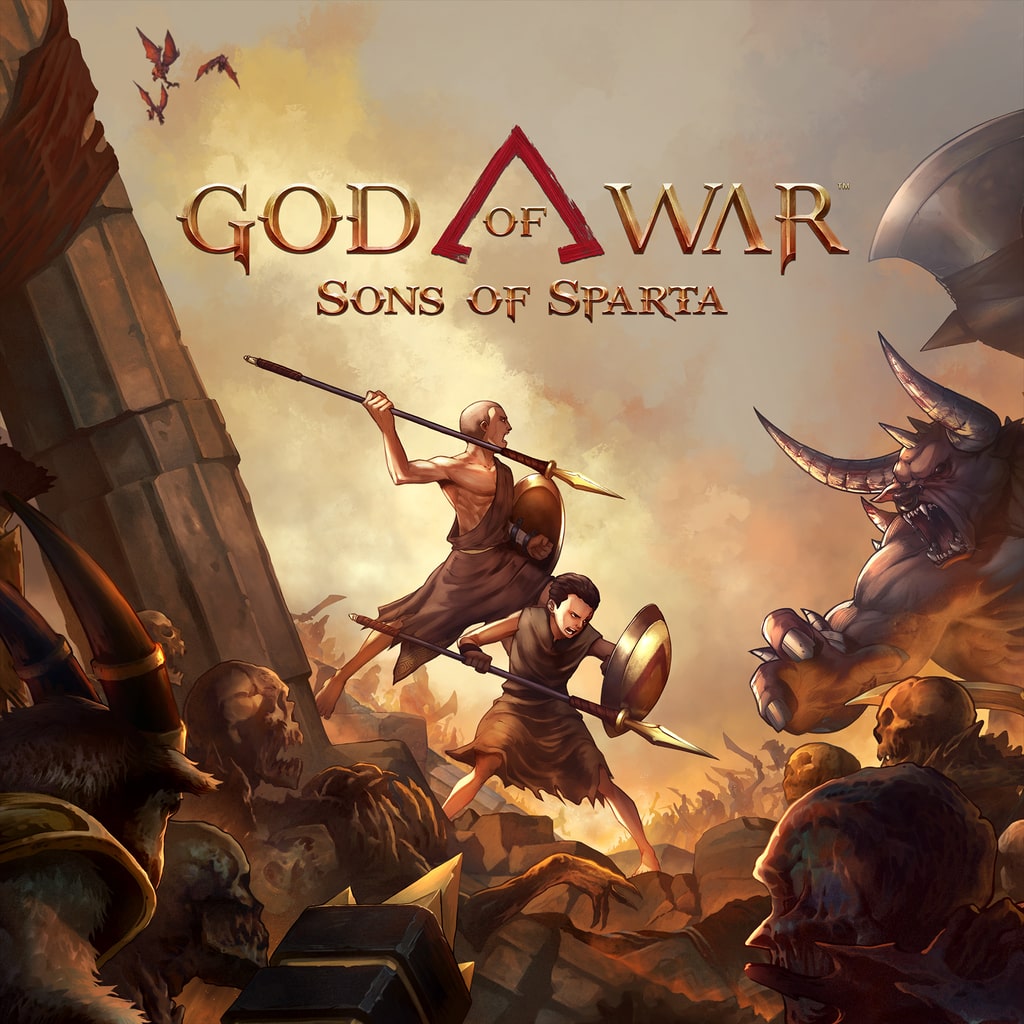
When Sony Interactive Entertainment shadow-dropped God of War: Sons of Sparta during yesterday’s State of Play, it felt less like a marketing beat and more like a statement. Developed as a passion project by Mega Cat Studios in collaboration with Santa Monica Studio, this PlayStation 5 exclusive strips the franchise down to its roots—literally.
Before Olympus. Before the Blades of Chaos. Before fatherhood and frost.
This is Kratos as a boy—hardened by the Agoge, bound by Spartan discipline, and fighting alongside his brother Deimos in an untold chapter of their youth.
And somehow, in 2D pixel art form, it works.
A Spartan Beginning
Sons of Sparta serves as a prequel to the entire God of War saga. Set during the brutal Spartan training system known as the Agoge, the story centers on young Kratos and Deimos investigating the disappearance of a fellow cadet.
It’s a focused narrative—less about gods and grand betrayal, more about brotherhood and the forging of identity. TC Carson returns as the adult Kratos narrator, marking his first official return to the franchise in over a decade. His voice—measured, gravelled, reflective—adds emotional gravity to what might otherwise feel like a stylistic experiment.
Carson’s narration frames the game as a memory. A lesson. A turning point.
The result is intimate storytelling within a universe known for operatic scale.
Retro, But Not Regressive
At first glance, Sons of Sparta appears to be a nostalgic detour. Its pixel-art aesthetic channels 16-bit action platformers. But beneath that retro veneer lies a combat system unmistakably rooted in God of War’s DNA.
Because this is pre-Blades Kratos, combat revolves around spear and shield mechanics. The spear functions as both melee weapon and ranged projectile, allowing for fluid chaining between thrusts and throws. The shield introduces parries and directional blocks that reward timing over button mashing.
Combat feels deliberate rather than frenetic. Encounters emphasize spacing, crowd control, and reading enemy telegraphs.
And yes—there are boss fights.
Mythological creatures appear in stylized pixel form, their designs cleverly translating the franchise’s trademark spectacle into 2D scale. While they lack the cinematic bombast of the modern trilogy, they retain mechanical complexity.
Mega Cat Studios demonstrates clear reverence for the source material without attempting to mimic its 3D grandeur directly.
Two Brothers, One Journey
A core differentiator here is Deimos’ playable presence.
While not a fully independent character at all times, cooperative mechanics allow Kratos and Deimos to perform tandem actions—boosting each other across vertical segments, coordinating shield formations, and executing synchronized attacks.
These sequences aren’t gimmicks; they’re narrative reinforcement. The bond between the brothers underpins the entire experience.
Environmental puzzles frequently require dual interaction—lever pulls, timed spear throws, coordinated platform shifts. It’s simple design, but effective.
The story emphasizes the shaping of Spartan ideals: duty, honor, loyalty. Yet it also subtly hints at cracks in that doctrine.
For longtime fans aware of the brothers’ eventual fate, there’s a quiet poignancy threaded throughout.
Level Design and Progression
The game unfolds across vibrant 2D stages—sun-scorched training grounds, shadowed mountain passes, cavernous ruins that foreshadow mythological menace.
Level design balances platforming with combat. There are hidden alcoves, optional challenges, and collectible lore fragments that expand on Spartan culture.
Progression is steady but not bloated. At roughly 8–10 hours for a standard playthrough, Sons of Sparta respects its scope. It doesn’t overstay its welcome.
Upgrades focus on spear techniques, shield counters, and minor health/stamina improvements. There’s no sprawling skill tree—just incremental mastery.
The pacing feels purposeful.
A Passion Project with Polish
Given its smaller scale and $29.99 price point (with a $39.99 Digital Deluxe edition offering cosmetic and artbook extras), Sons of Sparta could have easily felt like a novelty spin-off.
It doesn’t.
Pixel art is richly detailed. Animation frames are fluid, particularly during combat transitions. Environmental lighting effects add depth to otherwise flat planes.
Performance on PS5 is stable, with no noticeable frame drops. Load times are near-instantaneous.
The soundtrack blends retro-inspired compositions with orchestral undertones, preserving the series’ epic mood within tighter sonic constraints.
It feels crafted, not rushed.
Where It Falls Short
For all its strengths, Sons of Sparta does have limitations.
Combat, while satisfying, lacks the mechanical depth of the mainline entries. There’s less combo variety and fewer weapon types.
Some platforming segments occasionally veer into repetition, particularly in mid-game levels where enemy encounters mirror earlier layouts.
Additionally, as a prequel constrained by established lore, narrative stakes can feel muted. We know Kratos survives. We know where Deimos’ path leads. The tension lies in the journey, not the outcome.
For players expecting blockbuster spectacle akin to God of War Ragnarök, this 2D installment may feel restrained.
The Broader Context
The timing of this release is noteworthy. Announced alongside confirmation that the original Greek trilogy is being remade (currently in early development), Sons of Sparta feels like a bridge—connecting old-school roots with modern reinterpretation.
It reminds players that the franchise wasn’t born in sweeping one-shot camera angles and Norse realms. It began in brutality, discipline, and brotherhood.
By stripping the formula down to pixelated fundamentals, it highlights how enduring the core themes truly are.
Final Verdict
God of War: Sons of Sparta is a bold, respectful experiment that honors the franchise’s origins without mimicking them.
Its 2D action-platforming framework captures the essence of Spartan training and brotherly loyalty. Combat is tight and thoughtfully designed, even if it lacks the layered complexity of its AAA counterparts. TC Carson’s return adds emotional resonance that longtime fans will deeply appreciate.
While smaller in scope and scale, it feels intentional rather than diminished.
This isn’t the next epic saga.
It’s the first step toward becoming one.