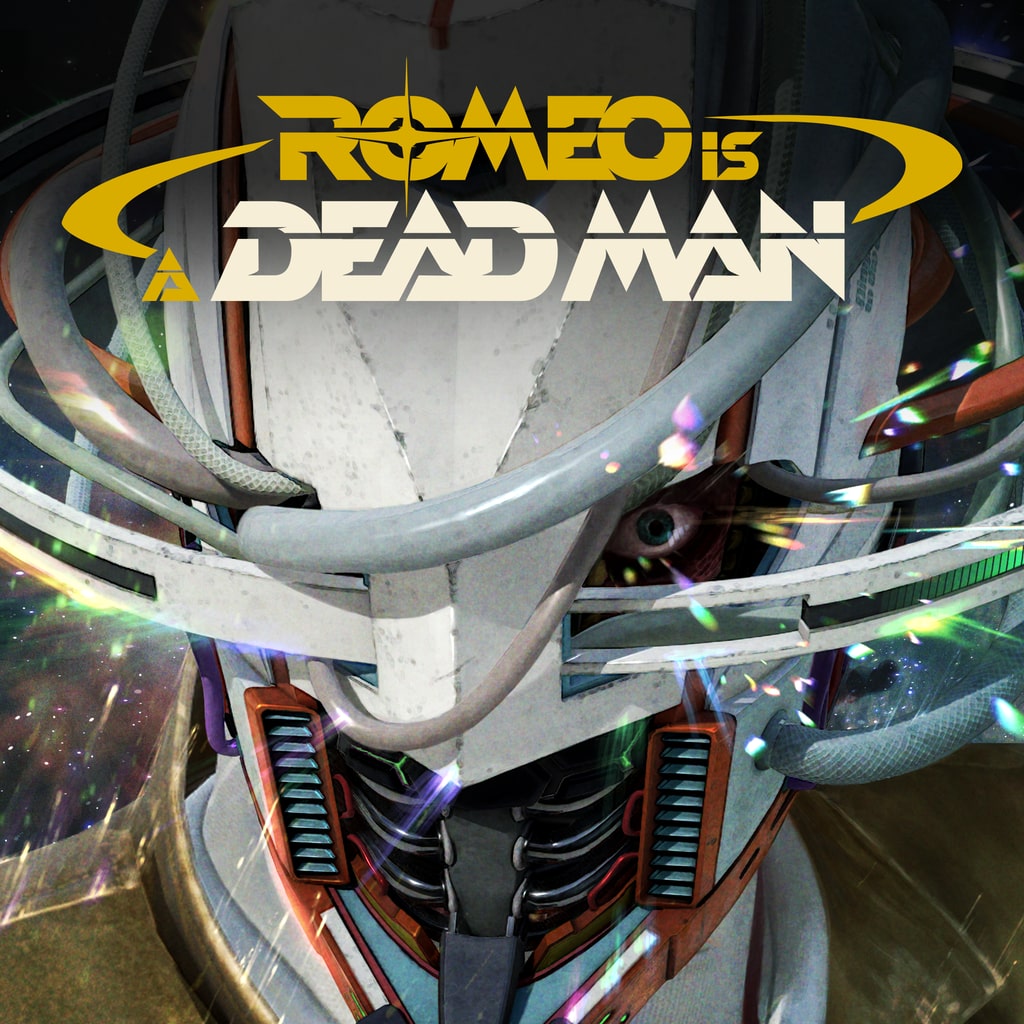
It’s not every week that an industry legend drops a brand-new IP out of nowhere. But that’s exactly what happened when ROMEO IS A DEAD MAN shadow-dropped ahead of its official February 11, 2026 release. Developed by Grasshopper Manufacture and directed by Suda51, ROMEO IS A DEAD MAN marks the studio’s first wholly original property in over a decade—a fact that carries serious weight. On consoles, the game is published by NetEase Interactive Entertainment, while Grasshopper self-publishes the PC release.
And true to form, it doesn’t play it safe.
ROMEO IS A DEAD MAN is violent, surreal, structurally chaotic, occasionally brilliant, occasionally indulgent, and unmistakably Suda. It doesn’t just embrace excess—it weaponizes it.
Death Was Just the Opening Act
You play as Romeo Stargazer, a man pulled back from the brink of death by experimental “Dead Gear” technology after a space-time catastrophe shatters the universe’s fabric. Recruited by the FBI’s Space-Time Police (because of course that’s a thing), Romeo becomes a cosmic hitman tasked with hunting criminals exploiting fractured timelines.
Meanwhile, he searches for his missing girlfriend, Juliet—a disappearance that may be intimately tied to the collapse of space itself.
If that sounds convoluted, that’s intentional. Suda51 has always thrived on narrative fragmentation. Here, time loops, alternate realities, tonal shifts, and fourth-wall nudges collide freely. The story rarely slows down to explain itself fully. Instead, it asks you to feel its rhythm.
And what a rhythm it is.
“Fight Blood with Blood”
Combat is the game’s beating heart—and it beats loudly.
Romeo switches fluidly between melee swords and ranged firearms, creating a hybrid combat system that feels equal parts stylish hack-and-slash and arcade shooter. Enemy waves crash toward you in bursts of choreographed chaos. Timing, spacing, and combo management matter.
But the standout mechanic is blood absorption.
Defeated enemies leave behind pools of crimson energy that Romeo can absorb to trigger his ultimate ability, Bloody Summer. This special attack detonates the battlefield in a frenzy of cinematic carnage, turning desperate situations into spectacular reversals.
It’s exaggerated. It’s excessive. It’s deeply satisfying.
Weapons evolve over time, unlocking alternate forms and modifications that subtly shift playstyles. While not overwhelmingly deep, the upgrade system provides enough variation to keep combat fresh across chapters.
Structure by Controlled Chaos
ROMEO IS A DEAD MAN unfolds in chapters, each introducing new locations, enemies, and stylistic flourishes. The primary gameplay loop revolves around third-person action arenas, but it doesn’t stay there long.
Suddenly you’re in a pixel-art RPG interlude.
Then a retro arcade minigame.
Then a side-scrolling segment that feels ripped from a 1990s cartridge.
These shifts are jarring—but deliberately so. They serve as palette cleansers between intense combat sequences and reinforce the fractured space-time premise.
Not every experimental segment lands equally. Some retro diversions feel inspired; others feel like stylish detours that overstay their welcome. But even weaker segments add texture to the experience.
The game is constantly reinventing itself.
Style as Substance
Visually, ROMEO IS A DEAD MAN is a collision of neon, gore, glitch effects, and stylized futurism. Character designs are bold and exaggerated. Environments range from dystopian cityscapes to cosmic limbos. The art direction screams confidence.
Grasshopper’s signature punk-rock aesthetic pulses through every frame. Menus snap with flair. Transitions glitch with intentional distortion. Boss introductions feel like music video drops.
The soundtrack complements this perfectly—mixing industrial beats, high-energy rock, and distorted ambient tracks. It’s aggressive but controlled.
This is not a subtle game.
Bosses Worth Remembering
Boss fights deserve special mention. Each major antagonist—those exploiting fractured timelines—feels conceptually distinct. Battles are mechanically varied, often incorporating unique gimmicks tied to time manipulation or environmental shifts.
Some bosses require precise counterplay. Others demand aggressive risk-taking to maximize blood absorption. A few even twist perspective mid-fight, reinforcing the “space-time is broken” theme in clever ways.
These encounters feel handcrafted rather than procedural, and they’re often the high points of each chapter.
Where It Stumbles
As strong as the combat and presentation are, ROMEO IS A DEAD MAN isn’t flawless.
The narrative can veer into self-indulgence. Emotional beats occasionally get buried beneath stylistic excess. Juliet’s disappearance is compelling, but her presence sometimes feels more symbolic than grounded.
Pacing is also uneven. While most chapters strike a good balance between action and experimentation, a few segments drag, especially when retro diversions stretch beyond novelty.
Technically, performance across PS5 and Xbox Series X|S is smooth, but minor camera quirks during crowded fights can briefly disrupt flow.
Still, these issues feel like rough edges rather than structural flaws.
Suda’s Return to Original Form
What makes ROMEO IS A DEAD MAN significant isn’t just its mechanics—it’s its identity.
This is Suda51 unfiltered. No legacy IP constraints. No adaptation compromises. Just a creative team reveling in originality.
And that originality matters.
The industry rarely sees mid-sized, auteur-driven action games with this much personality anymore. ROMEO IS A DEAD MAN feels handcrafted in an era increasingly dominated by formula.
It may not appeal to everyone. Players seeking grounded narratives or realistic combat will likely bounce off its maximalism.
But for those who crave style-forward action with emotional undercurrents and mechanical punch, it delivers.
Final Verdict
ROMEO IS A DEAD MAN is bold, messy, stylish, and unapologetically itself. Its combat system is tight and exhilarating, its boss fights memorable, and its tonal shifts daring—even when they don’t fully land.
More importantly, it feels alive. It feels authored. It feels like a creative statement rather than a product.
Not every experiment works. Not every narrative thread resolves cleanly. But the ride is unforgettable.
And in a fractured universe ruled by space-time criminals and punk-rock blood magic, that feels exactly right.