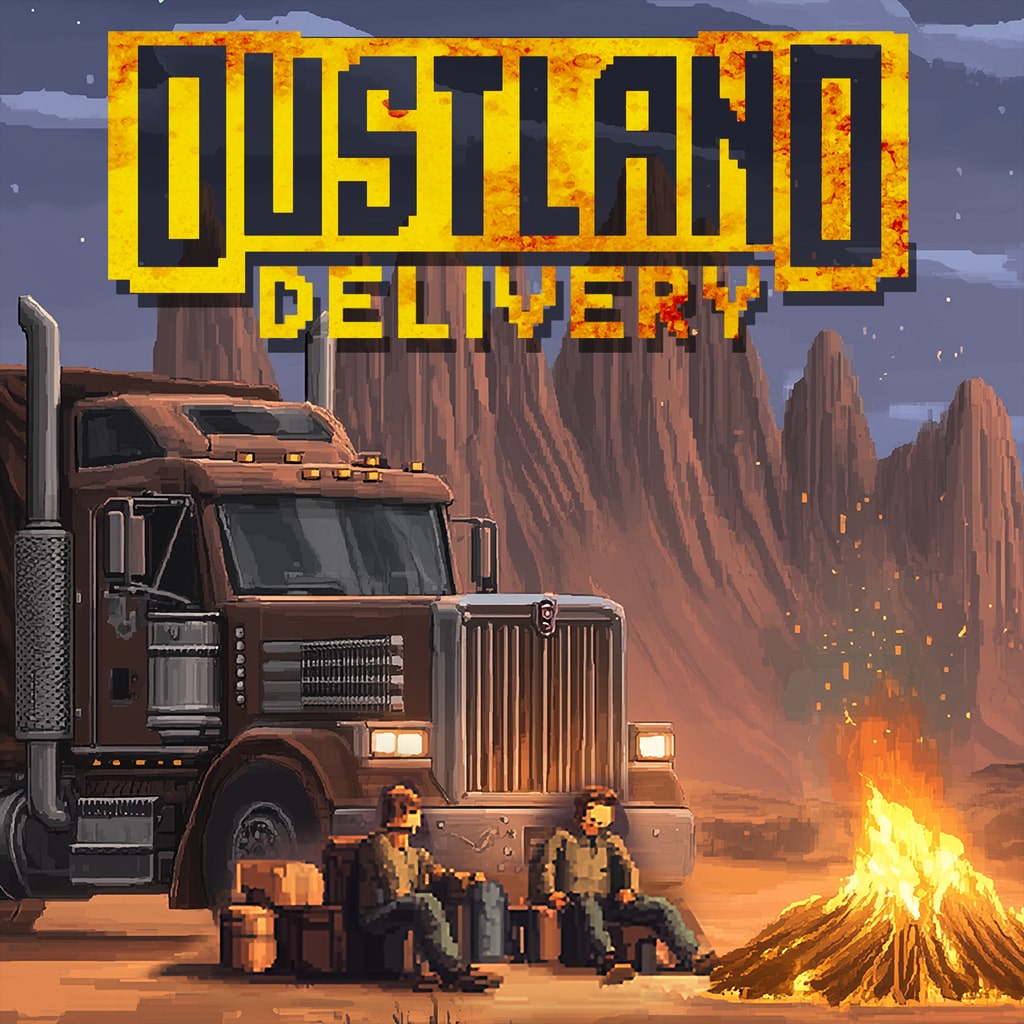
In a landscape crowded with high-budget shooters, sprawling RPGs, and frenetic action games, Dustland Delivery carves out an unexpected niche: a post-apocalyptic courier simulator that blends survival strategy, narrative grit, and open-ended traversal into a uniquely satisfying package. It’s a game built on contrast — the monotony of the open road versus the thrill of discovery, quiet moments of solitude against sudden bursts of danger, and the hollow wasteland aesthetic paired with a surprisingly warm cast of characters.
After dozens of treks across its dusty terrain, I can confidently say this is one of the most memorable indie survival-strategy hybrids to appear in recent years — equal parts thoughtful and thrilling, with a surprising depth that sneaks up on you long after the first delivery.
Striking Out Into the Wasteland — Premise and Narrative
Dustland Delivery drops you into a bleak, beautifully rendered post-apocalyptic world where civilization is fractured and communication is precious. You play as a courier — one of the brave few responsible for transporting goods, messages, and hope between scattered settlements. There isn’t a tyrannical overlord or world-ending AI here; instead, the story thrives on humanity at its edges — the interactions, alliances, betrayals, and small acts of kindness that keep people alive.
Narrative beats are delivered through radio calls, settlement dialogues, and the journals of past couriers you uncover along the way. The tone is sparse, reflective, and grounded. It doesn’t hold your hand, which in this context feels appropriate: you aren’t a chosen hero with grand destiny, merely a cog in the fragile machine of survival.
What makes the world compelling isn’t high aventure drama but moment-to-moment immersion in the psychological texture of life after collapse. Surviving isn’t glamorous, but it feels significant.
Gameplay — Strategy, Survival, and the Long Road
Dustland Delivery offers a multi-layered core loop that balances strategic planning with tactical survival and exploration.
The Map and Route Planning
The world map is semi-procedurally generated, representing a vast expanse of desert, ruined highways, overgrown towns, and makeshift outposts. Every delivery route presents a choice — take the faster but more dangerous highway, or opt for the scenic backroad that’s safer but slower.
Each path contains random events, environmental hazards (sandstorms, irradiated zones, collapsed bridges), and opportunities for loot or danger. The result is a gripping risk-reward dynamic: do you push forward to meet a tight deadline, or detour for resources that might make your next leg safer?
This route planning blends survival tension with strategic depth. Fuel, food, parts, and water all matter. Running low can turn a simple trek into a desperate scramble for survival.
Courier Management — It’s More Than Driving
Most of your time is spent preparing for a delivery, and this aspect is much more than a menu screen. You must:
- Manage resources — fuel, rations, spare parts, ammunition.
- Maintain your vehicle — wear and tear affect performance; breakdowns can be fatal.
- Choose your equipment — weapons, tools, armor, and upgrades all alter how you interact with the world.
- Plan inventory wisely — too much weight slows you down; too little puts you at risk.
These decisions aren’t trivial. A poorly planned loadout can leave you stranded mid-desert, while smart preparations make survival feel like a triumph rather than a gamble.
Encounters and Combat
Combat is not the core focus, but it’s a necessary and satisfying tension builder. Ambushes, wild scavengers, and rival couriers can turn a planned route into a desperate fight for survival.
The combat system — a strategic blend of real-time movement and timing-based firing — keeps engagements engaging without overshadowing the survival elements. You aren’t a war machine, and that’s intentional; every violent encounter should feel risky, not routine.
Scavenging and resource acquisition also come into play here. Defeating a bandit crew might yield food, ammo, or parts — all of which matter on the long road ahead.
Visuals — A Bleak Beauty
The aesthetic of Dustland Delivery embraces its desolate setting with restrained artistry. It doesn’t try to dazzle with neon lights or hyper-realistic landscapes; instead, it leans into the muted palette of a post-collapse world — rusted metal, blistered asphalt, and windswept ruins.
But that doesn’t mean it’s dull. Far from it. The art direction uses contrast beautifully: flaring sunsets over broken horizons, eerie shadows of skeletal infrastructure, and the occasional vibrant oasis that feels like a balm in the barren stretches. Locations are memorable, even if the scenery remains largely barren — the emptiness is part of the storytelling.
The vehicle and character designs are detailed without unnecessary flash, and the visual feedback in combat and environmental events is crisp and readable.
Audio — Soundtrack and Ambience That Echoes the Void
Sound design works hand in glove with the visuals to sell the tone. The ambient score — sparse acoustic lines mixed with melancholy synth — feels like wind through dead trees: minimal but evocative.
Environmental audio — the hiss of sandstorms, the rumble of your engine, the crackle of radio static — reinforces a feeling of isolation and vulnerability. Voice acting is utilized sparingly but effectively; each settlement elder, fellow courier, or desperate survivor you meet feels grounded, not theatrical.
There’s an emotional resonance to the silence and the sparse musical cues that few survival games manage this well.
Accessibility and Difficulty
One of Dustland Delivery’s greatest balances is between challenge and accessibility. It doesn’t hold your hand — routes are dangerous, resources are scarce, and mistakes are costly — but the game equips you with the tools and information you need to learn, adapt, and grow stronger.
There’s no punitive barrier to entry; early routes are manageable, and the difficulty ramps as your capabilities expand. Tutorials are well-paced, teaching important survival and management concepts without overwhelming the player.
Experienced survival fans will appreciate the depth, while newcomers won’t feel left in the dust.
Longevity — A Journey With Endless Roads
With a semi-procedural world, branching story threads, and a robust craft and upgrade system, Dustland Delivery avoids the trap of one-and-done playthroughs. Each delivery path offers new hazards, random events, and unexpected encounters. Unlocking new regions, vehicles, and tools keeps the loop fresh.
There’s also a subtle emergent narrative — personal stories about other couriers, lost families, and fading communities — that unfolds differently based on your decisions, adding layers to the experience worth exploring over multiple runs.
Where It Could Improve
No game is perfect, and Dustland Delivery has room to grow:
- Map variety: While the world feels vast, more biome diversity (forests, ruined cities, frozen wastelands) could elevate visual and strategic variety.
- Combat depth: Encounters are satisfying but limited — expanding enemy types and combat mechanics would deepen engagement.
- Settlement interactions: Dialogue choices feel limited; a greater range of narrative consequences would enrich the world’s storytelling.
These are refinements rather than fundamental flaws — ambitious additions that could elevate an already strong experience.
Final Verdict — A Road Worth Travelling
Dustland Delivery is a thoughtful and immersive survival-strategy title that turns the mundane into the meaningful. Through tactical resource management, atmospheric world-building, and emergent narrative threads, it bridges survival grit with emotional weight. Whether you’re navigating perilous roads, trading with desperate communities, or simply savouring the loneliness of a windswept highway, this game makes the journey itself worth every dusty mile.