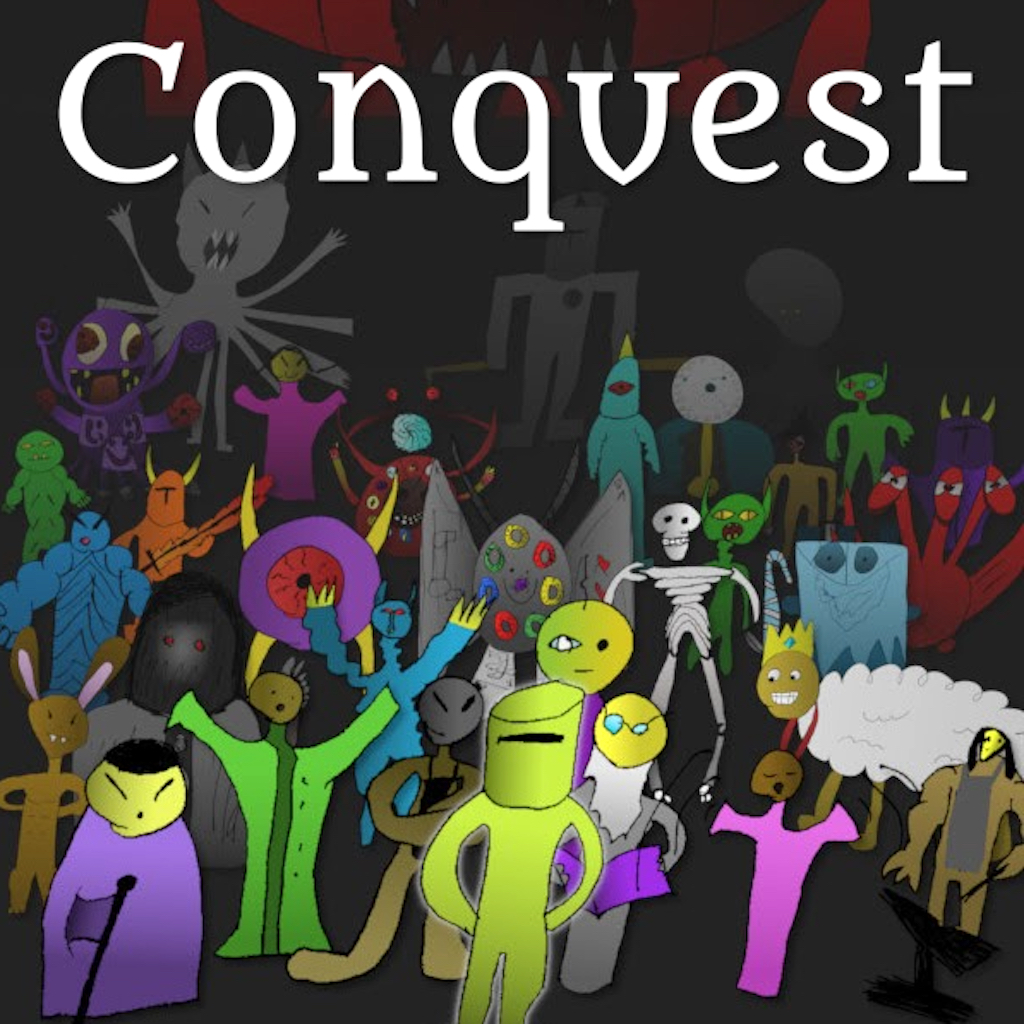
Conquest, developed by Zellgert Games, is an indie turn-based fantasy adventure that places randomness and replayability at the very centre of its design philosophy. Rather than delivering a tightly scripted campaign or a heavily authored narrative, Conquest opts for an emergent structure built around procedural systems, card-driven events, and unpredictable encounters. The result is a game that feels closer to a digital tabletop experience than a traditional RPG, for better and for worse.
Conquest is a game that values possibility over certainty. Every new playthrough reshuffles the deck, offering different lands to explore, different challenges to overcome, and different opportunities to exploit. It is an ambitious approach, particularly for a small studio, and one that largely succeeds in creating a sense of discovery and spontaneity.
Premise and Narrative Design
At a high level, Conquest’s narrative framework is deliberately simple. A dark force threatens the land, monsters roam freely, and it is up to a band of heroes to explore the world, grow stronger, and ultimately confront the source of the chaos. Rather than telling this story through lengthy dialogue or cinematic sequences, Conquest allows the narrative to emerge organically through encounters, quests, and character interactions.
Story beats are delivered via short events and card-based scenarios, many of which are optional or context-sensitive. This approach ensures that no two runs tell the same story, but it also means that the narrative lacks cohesion in a traditional sense. Characters appear, offer quests or assistance, and may never be seen again depending on how a run unfolds.
For players who enjoy emergent storytelling, this design works well. The story becomes something you recount rather than something you are shown. However, those seeking a strong narrative arc or emotionally grounded character development may find Conquest’s storytelling too fragmented to leave a lasting impact.
Core Gameplay Loop
Conquest’s gameplay is built around turn-based exploration and decision-making. Players move across a grid-based world map, uncovering tiles that can contain enemies, towns, quests, loot, or unexpected events. Each action consumes a turn, reinforcing the importance of careful planning and risk management.
The game’s defining feature is its heavy reliance on card-driven systems. Almost every aspect of the experience is influenced by internal decks: map generation, encounters, loot drops, character progression, and narrative events. This ensures a high degree of variability and replay value, but it also introduces a significant level of unpredictability.
At times, this randomness is exhilarating. A lucky sequence of events can lead to powerful gear, strong allies, and a rapid sense of momentum. At other times, poor draws can stall progress or leave players underpowered against escalating threats. Conquest walks a fine line between meaningful unpredictability and occasional frustration.
Combat and Strategy
Combat in Conquest is turn-based and relatively streamlined. Battles focus on positioning, ability usage, and resource management rather than complex tactical layers. Characters have distinct abilities and stats, but the overall combat system prioritises accessibility over depth.
This simplicity keeps encounters fast and readable, which suits the game’s broader emphasis on exploration and variety. However, it also limits strategic expression. There are fewer opportunities for deep tactical planning compared to genre heavyweights, and once players understand optimal patterns, combat can feel routine.
Enemy variety helps mitigate this to some extent. Different monster types encourage adaptation, and certain encounters can be genuinely threatening if approached carelessly. Still, combat is rarely the highlight of Conquest. It functions more as a pacing mechanism than a primary source of engagement.
Progression and Customisation
Progression in Conquest is less about linear levelling and more about accumulation and synergy. Characters grow stronger through a combination of experience gains, equipment upgrades, and skill improvements. Loot plays a central role, often defining how a character performs far more than base stats alone.
The sheer variety of items and abilities is impressive for an indie title. Discovering new combinations and adapting builds mid-run adds a layer of strategic improvisation that keeps the experience fresh. Because progression is partially randomised, players are encouraged to work with what they are given rather than forcing a predefined build.
That said, this system can also undermine player agency. Sometimes progression feels earned through smart decisions; other times it feels dictated by luck. Whether this is a flaw or a feature will depend largely on player expectations.
Exploration and World Design
Exploration is one of Conquest’s strongest elements. The world feels expansive not because of sheer size, but because of its variability. Each new region introduces different challenges, rewards, and visual themes, ensuring that exploration remains engaging even after multiple runs.
The procedural nature of the world means that players are constantly adapting. Familiar landmarks may reappear, but their context and significance often change. This unpredictability keeps exploration from becoming rote, encouraging curiosity and experimentation.
However, the lack of handcrafted landmarks or scripted set-pieces can make the world feel abstract rather than lived-in. Conquest’s world is a system-driven playground rather than a deeply realised setting, which may limit immersion for some players.
Presentation and Audio
Visually, Conquest adopts a colourful, hand-drawn aesthetic that complements its light-hearted fantasy tone. Character designs are expressive, environments are clear and readable, and the overall presentation feels cohesive. While not technically impressive, the art style suits the game’s design goals and reinforces its tabletop-inspired identity.
Audio design supports the experience effectively. Music tracks provide a sense of adventure and whimsy, while sound effects offer clear feedback during combat and exploration. Voice elements and audio cues add personality to encounters, helping compensate for the minimal narrative structure.
Interface and Accessibility
The interface is functional and generally intuitive. Card systems, inventory management, and map navigation are clearly presented, with tooltips providing essential information. New players may still feel overwhelmed by the number of systems at play, particularly during early runs when mechanics are introduced rapidly.
Accessibility options are limited, which may restrict the game’s appeal for some audiences. Greater customisation in difficulty scaling or interface clarity would improve approachability without compromising the core design.
Replay Value and Longevity
Replayability is Conquest’s defining strength. The combination of procedural generation, card-driven systems, and variable progression ensures that each run feels distinct. Players who enjoy experimenting with different strategies and embracing unpredictability will find significant long-term value.
That said, the experience may eventually plateau once systems are fully understood. Without deeper tactical layers or evolving late-game challenges, long-term engagement will depend heavily on how much players enjoy the game’s core randomness.
Final Verdict
Conquest is an ambitious and inventive indie title that embraces unpredictability as a core feature rather than a side effect. Its card-driven systems, procedural world, and emergent storytelling create a constantly shifting experience that rewards curiosity and adaptability. While its reliance on randomness can occasionally undermine balance and agency, the overall design succeeds in delivering a fresh and replayable fantasy adventure.
For players who value variety, experimentation, and emergent gameplay over structured narratives and deep tactics, Conquest offers a compelling experience that stands out within the indie RPG space.