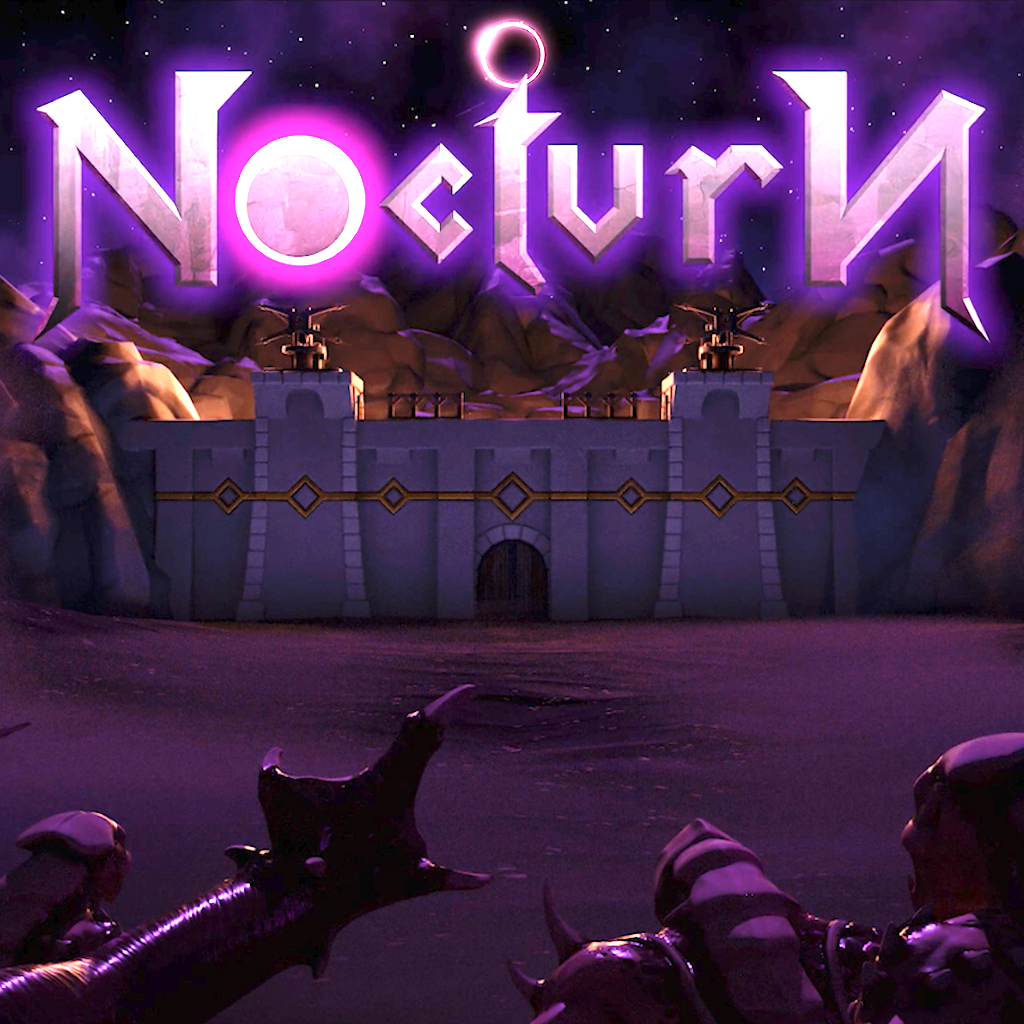
Nocturn is a compact but ambitious indie horror experience that leans heavily on atmosphere, restraint, and psychological unease rather than overt action or spectacle. Designed as a slow-burning descent into darkness, Nocturn places the player in a world where clarity is deliberately withheld, and meaning must be pieced together through observation, sound, and implication. It is a game that asks for patience and attentiveness, rewarding those willing to surrender to its mood-driven design philosophy.
Rather than chasing mainstream horror conventions, Nocturn positions itself closer to experimental psychological horror. It is less concerned with jump scares and more focused on cultivating a sustained sense of dread. This approach will not appeal to everyone, but for players who value atmosphere over adrenaline, Nocturn offers a focused and unsettling experience.
Premise and Narrative Approach
Nocturn offers very little in the way of explicit exposition. The player is dropped into an unfamiliar environment with minimal context, tasked with navigating shadowy spaces while gradually uncovering fragments of narrative through environmental cues. Notes, visual symbolism, and subtle audio elements provide hints, but the game rarely explains itself outright.
This deliberate ambiguity is central to Nocturn’s identity. The story is not something you are told, but something you infer. Themes of isolation, memory, and psychological fragmentation are woven into the environment itself, encouraging interpretation rather than delivering clear answers. For players accustomed to more structured storytelling, this can feel disorienting. For others, it adds depth and replay value, as meaning emerges slowly through reflection.
The narrative’s strength lies in how closely it is tied to the game’s mechanics and presentation. The world feels hostile not because of constant threats, but because it refuses to accommodate the player’s need for understanding.
Core Gameplay and Interaction
Gameplay in Nocturn is intentionally minimalistic. Movement, exploration, and interaction form the core loop, with occasional light puzzle-solving to gate progression. There is no traditional combat system, and moments of direct danger are rare. Instead, tension is derived from vulnerability and uncertainty.
Exploration is slow and deliberate. Environments are dimly lit, often forcing players to rely on sound and subtle visual cues to orient themselves. Navigation becomes an act of concentration, as familiar landmarks are scarce and spaces often feel deceptively similar. This design choice reinforces the game’s psychological themes, but it can also lead to frustration if players become disoriented for extended periods.
Puzzles are understated and generally intuitive, relying more on observation than logic-heavy problem-solving. They rarely halt progress for long, serving instead as pacing tools that encourage players to engage more deeply with their surroundings. Nocturn avoids overcomplicating these interactions, ensuring that atmosphere remains the dominant focus.
Atmosphere and Environmental Design
Atmosphere is where Nocturn truly excels. The game’s environments are carefully constructed to evoke discomfort and unease without relying on explicit horror imagery. Shadows dominate the screen, spaces feel abandoned yet watched, and silence is often broken by distant, unsettling sounds.
Environmental design prioritises mood over variety. While locations may share similar visual language, subtle changes in lighting, architecture, and audio cues create a sense of progression. The world feels cohesive and intentionally oppressive, reinforcing the feeling that you are trapped within a mental or emotional space rather than a physical one.
Lighting plays a crucial role. Darkness is not merely aesthetic; it actively shapes how players move and perceive danger. Limited visibility forces caution and heightens tension, even in moments where no threat is present. This constant uncertainty is one of Nocturn’s most effective tools.
Audio Design and Psychological Impact
Sound design is arguably Nocturn’s strongest element. Ambient noise, distant echoes, and subtle distortions create a soundscape that constantly keeps players on edge. There is rarely complete silence, but neither is there comfort. Audio cues often suggest movement or presence without confirmation, encouraging paranoia and second-guessing.
The soundtrack, where present, is sparse and restrained. Rather than driving emotion, it reinforces mood, often fading in and out in ways that feel almost subconscious. Sudden audio changes are used sparingly, making them more impactful when they occur.
This emphasis on audio over visual shock gives Nocturn a distinct identity within the horror genre. It understands that fear is often more effective when implied rather than shown.
Visual Presentation and Technical Execution
Visually, Nocturn adopts a subdued, minimalist aesthetic. Texture detail is modest, but this works in the game’s favour, as abstraction enhances its psychological tone. Environments feel intentionally incomplete, as though they are fragments of memory rather than fully realised spaces.
Performance is generally stable, though some rough edges are noticeable. Animations can feel stiff, and interactions occasionally lack tactile feedback. These issues do not significantly undermine the experience, but they do highlight the game’s indie origins.
The interface is almost non-existent, which aligns with the game’s immersion-focused design. While this enhances atmosphere, it can also lead to moments of confusion, particularly when objectives are unclear. Nocturn expects players to observe, experiment, and occasionally fail in order to progress.
Pacing and Player Experience
Nocturn is unapologetically slow. Progression is measured, and moments of heightened tension are spaced carefully between long stretches of quiet exploration. This pacing reinforces the game’s oppressive tone, but it also demands commitment from the player.
Those seeking constant engagement or frequent scares may find the experience uneventful. Nocturn’s horror is cumulative rather than immediate, building discomfort gradually rather than delivering sharp shocks. This makes it more effective for some players and less so for others.
The game’s length is modest, but appropriate for its scope. It does not overstay its welcome, and its restrained runtime helps maintain focus and impact.
Replay Value and Longevity
Replay value in Nocturn is largely interpretative. Players may return to uncover narrative details they missed or to reconsider the meaning of certain events. However, there is little mechanical variation between playthroughs, and once the atmosphere loses its initial potency, subsequent runs may feel less impactful.
That said, the game’s ambiguity encourages discussion and reflection, which can extend its life beyond the initial completion.
Final Verdict
Nocturn is a focused, atmospheric horror experience that prioritises mood, sound, and psychological tension over conventional gameplay systems. It is not designed to appeal to a broad audience, and it makes no effort to compromise its vision for accessibility or mainstream appeal.
For players who appreciate slow-burn horror, environmental storytelling, and interpretative narratives, Nocturn delivers a memorable and unsettling experience. Its limitations in mechanical depth and pacing will deter some, but its strengths in atmosphere and sound design make it stand out within its niche.