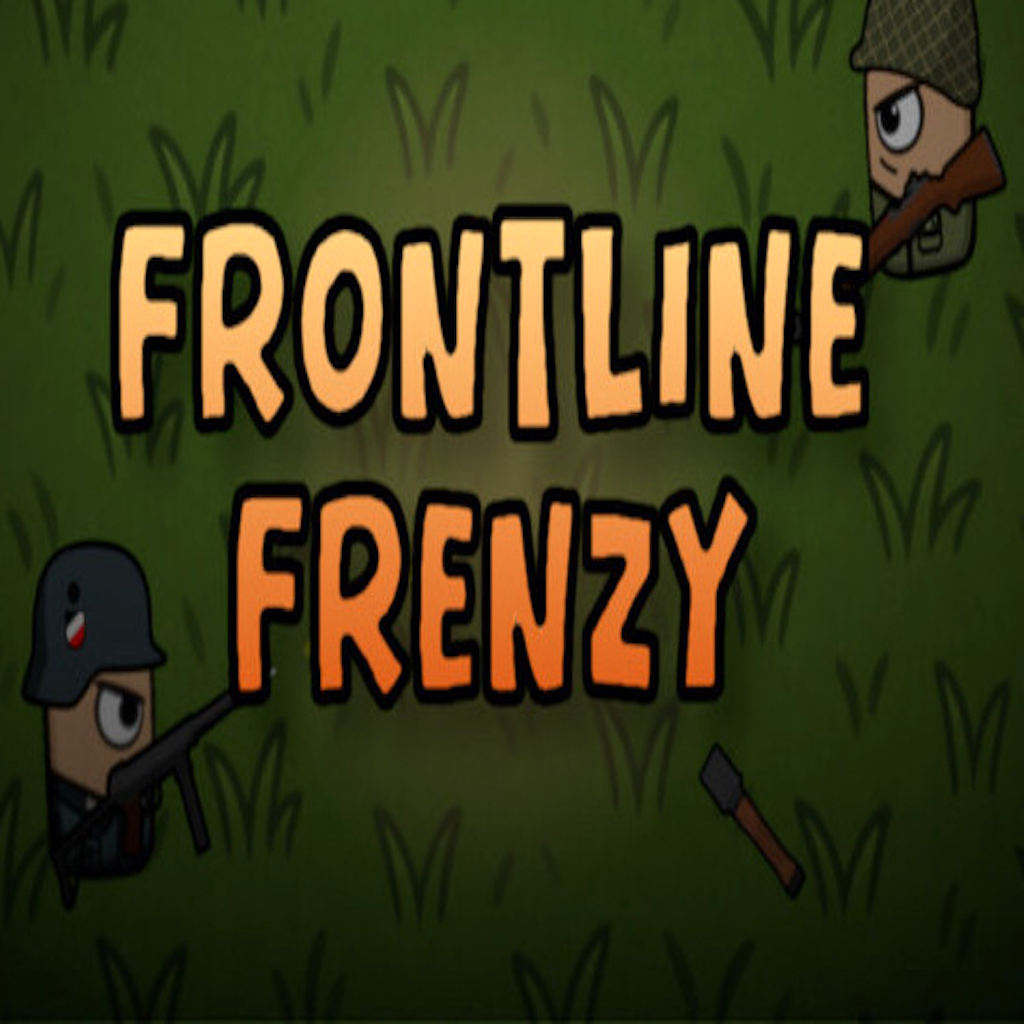
Frontline Frenzy, developed by indie creator Frostyy, is a top-down action game that blends fast-paced shooting with strategic positioning and chaotic multiplayer mayhem. It markets itself as a visceral battlefield experience distilled down to its purest elements: reflexes, aim, and survival instincts. In an overpopulated action game arena where comparisons to established shooters and battle arenas are inevitable, Frontline Frenzy attempts to carve out its own space by prioritising immediacy and momentum over narrative depth or mechanical complexity.
The result is a game that feels energetic and occasionally electrifying but also uneven in execution. Its strengths lie in moment-to-moment combat and emergent skirmishes, while its weaknesses stem from inconsistent balance, limited progression systems, and an underdeveloped structure that can make longer play sessions feel repetitive. For players who crave quick, unpredictable matches and visceral action, Frontline Frenzy can be rewarding. For those who seek strategic depth or a more robust single-player experience, it falls short of its potential.
Setting and Structure
Frontline Frenzy does not drown players in lore or exposition. There is no deep single-player campaign or world narrative to explore; instead, the game thrusts players directly into the chaos. Matches occur across a variety of compact arenas, each designed to encourage rapid engagements and constant movement. Whether playing solo against AI, in co-op, or in online multiplayer, the design philosophy is consistent: stay on your feet, keep shooting, and adapt to rapidly shifting situations.
This arena-focused model works well for short bursts of play. Sessions are typically measured in minutes rather than hours, and the learning curve is immediate. Controls are responsive and intuitive, allowing players to jump into combat without extensive tutorials or setup. This accessibility is one of Frontline Frenzy’s biggest advantages, lowering the barrier to entry and making it easy for new players to experience action quickly.
However, the lack of narrative or progression framework means that beyond individual matches, there is little to anchor long-term engagement. Players are free to compete for high scores or leaderboard positions, but without evolving goals or a structured campaign, Frontline Frenzy can feel hollow over extended play.
Core Combat and Mechanics
At its core, Frontline Frenzy thrives on combat. Movement is fluid, weapon handling is tight, and enemy behaviour ranges from predictable patterns to chaotic aggression. The top-down perspective grants a clear overview of the battlefield, emphasising positioning and situational awareness as much as aim.
The weapon roster is varied enough to keep combat engaging. Players have access to an array of firearms, explosives, and special abilities that encourage different play styles. Shotguns and close-range weapons favour aggressive play, while rifles and ranged tools reward measured positioning. Special abilities — such as temporary speed boosts, defensive shields, or area-denial tools — add a tactical layer that can turn the tide of a skirmish when used judiciously.
Despite this variety, balance issues occasionally undermine the combat ecosystem. Some weapons feel disproportionately powerful in the wrong hands, and certain abilities can dominate specific maps or scenarios. These balance inconsistencies can skew matches, especially in competitive multiplayer, where uneven loadouts may overshadow individual skill.
Still, when balance does align, combat in Frontline Frenzy is exhilarating. Quick reflexes, smart ability use, and map-aware movement can deliver satisfying moments of triumph and high-intensity confrontations that are easy to relive and share. These flashes of brilliance are where the game feels most alive.
Multiplayer and Social Dynamics
Frontline Frenzy’s multiplayer component is central to its appeal. Online matches introduce unpredictability and human competition — elements that AI cannot replicate. Matches support a range of player counts and modes, from free-for-all chaos to objective-based skirmishes.
The social dynamics of multiplayer elevate the experience, fostering rivalries, spontaneous teamwork, and memorable moments that emerge organically from player interaction. Friend lists, quick matchmaking, and simple lobby systems help get players into action rapidly.
However, the multiplayer ecosystem also reveals some structural shortcomings. Matchmaking can be inconsistent, with skill disparities leading to uneven games that frustrate newcomers and veterans alike. Additionally, the absence of dedicated servers or robust anti-cheat systems in the launch version exposes players to lag and occasional exploitative behaviour, detracting from what should otherwise be the game’s most compelling feature.
Progression and Rewards
Frontline Frenzy’s progression system is functional but unspectacular. Players earn experience and currency through matches, which can be used to unlock weapon skins, minor stat modifiers, and cosmetic items. While these rewards provide a modicum of personalisation and incremental growth, they rarely impact the core experience in meaningful ways.
Character progression does not significantly alter gameplay mechanics or unlock fundamentally new abilities, which means that advancement feels largely cosmetic. This approach keeps balance intact (since pay-to-win scenarios are avoided), but it also limits the sense of long-term investment players might feel in developing their characters or playstyles. Match rewards are frequent enough to incentivise continued play in the short term, but without deeper progression layers, retention beyond casual engagement is uncertain.
Visual and Audio Presentation
Graphically, Frontline Frenzy adopts a functional art style that prioritises clarity and performance over visual flair. Character models are readable, environments are distinct, and combat effects are easy to parse even in chaotic moments. While it does not push aesthetic boundaries, the visual presentation serves its purpose well — ensuring that action remains comprehensible in every match.
Audio design is similarly utilitarian. Weapons have satisfying impact sounds, footsteps and abilities emit clear cues, and the mix is balanced enough to support awareness in combat. However, the soundtrack lacks memorable identity, and ambient audio is minimal. This subdued audio approach matches the game’s focus on action, but it also means the experience rarely feels cinematic or emotionally engaging.
Accessibility and Learning Curve
Frontline Frenzy’s controls are approachable and responsive, with an emphasis on immediate action rather than complex combos or mechanics. Tutorials are brief but effective, allowing players to grasp the fundamentals quickly. This makes the game accessible to a wide audience, including those with limited experience in action shooters.
That said, the skill ceiling remains high. Mastering movement, weapon synergies, and map awareness takes time, especially in competitive settings. For players willing to invest effort, this depth contributes positively to long-term enjoyment. But the disparity between novice and veteran players can feel wide, particularly in unbalanced matchmaking environments.
Longevity and Replay Value
Replayability in Frontline Frenzy stems from its chaotic combat and varied match outcomes. No two encounters play out exactly the same, and the unpredictable dynamics of multiplayer ensure that spontaneous moments remain entertaining. Quick matches also make it easy to jump in for short sessions, which suits players with limited playtime.
However, the lack of structured progression, narrative context, or evolving content limits long-term retention. Unless future updates introduce deeper game modes, richer reward systems, or expanded objectives, Frontline Frenzy risks settling into a repetitive loop once the initial excitement wears off.
Final Verdict
Frontline Frenzy is an energetic and accessible action game that delivers exciting combat and unpredictable multiplayer encounters. Its strengths lie in responsive controls, diverse weaponry, and the unpredictable chaos that emerges when players collide in close-quarters combat. Yet its weaknesses — including balance inconsistencies, limited progression, and an underdeveloped long-term structure — hold it back from standing out in an increasingly crowded genre.