Blitz Smash Ultimate is a game built on velocity. From its name to its design philosophy, everything about it suggests immediacy, aggression, and constant motion. Drawing inspiration from arena fighters and party brawlers, Blitz Smash Ultimate aims to deliver short, explosive matches defined by fast reflexes, chaotic encounters, and accessible combat systems. At its best, it succeeds in creating moments of exhilarating intensity. At its weakest, it reveals a lack of mechanical depth and structural variety that limits its staying power.
A Focus on Action Over Context
Blitz Smash Ultimate wastes no time on narrative framing. There is no campaign storyline, no character arcs, and minimal world-building. Characters are introduced through brief visual cues and stylistic flair rather than lore or dialogue. This approach is intentional: the game wants players in the action immediately.
While this lack of context reinforces the arcade-like nature of the experience, it also limits emotional investment. Characters feel like avatars rather than personalities, defined more by move sets than identity. For a game that leans heavily on spectacle and style, this can make the roster feel interchangeable once the novelty wears off.
That said, the clarity of purpose is refreshing. Blitz Smash Ultimate knows it is about combat first and foremost, and it structures itself accordingly.
Core Combat Mechanics
At its core, Blitz Smash Ultimate is an arena-based brawler focused on speed and aggression. Matches take place in compact arenas where players battle using a combination of basic attacks, special moves, evasive manoeuvres, and environmental awareness. Controls are straightforward, allowing players to execute flashy actions with minimal input complexity.
Combat feels responsive and immediate. Attacks connect with satisfying impact, movement is fluid, and the game rarely feels sluggish. This responsiveness is crucial, as Blitz Smash Ultimate thrives on rapid exchanges and split-second decisions. Matches are short and intense, often decided in moments rather than drawn-out engagements.
However, the simplicity of the control scheme comes at a cost. While easy to learn, the mechanics offer limited room for mastery. Advanced techniques exist, but they are not deep enough to sustain high-level play over extended periods. Once players understand optimal attack patterns and movement options, combat begins to feel repetitive.
Character Roster and Balance
Blitz Smash Ultimate features a varied roster of fighters, each with distinct visual designs and thematic identities. Characters differ in speed, attack range, and special abilities, offering some degree of strategic variety. Early on, experimenting with different fighters is enjoyable, as each brings a slightly different rhythm to combat.
Unfortunately, balance is uneven. Certain characters clearly outperform others, particularly in terms of mobility and damage output. This imbalance becomes more apparent in competitive play, where optimal choices overshadow personal preference. Without frequent adjustments or deeper counterplay systems, the roster risks feeling constrained rather than diverse.
Character progression, where present, is largely cosmetic or incremental. Unlocks provide visual flair rather than mechanical transformation, reinforcing the game’s arcade sensibility but limiting long-term engagement.
Arena Design and Environmental Interaction
Arena design in Blitz Smash Ultimate supports fast-paced combat effectively. Stages are compact, ensuring constant engagement and minimising downtime. Environmental hazards, platforms, and interactive elements add momentary variety, forcing players to remain spatially aware.
However, arena variety is limited. While layouts differ slightly, they rely on similar mechanics and visual motifs. Over time, stages begin to blur together, reducing the sense of novelty. Environmental hazards rarely evolve or combine in unexpected ways, which limits their strategic impact.
The game would benefit from arenas that meaningfully alter combat dynamics rather than simply hosting them.
Multiplayer as the Intended Experience
Blitz Smash Ultimate is clearly designed with multiplayer in mind. Local and online matches are where the game feels most alive, particularly when played with friends. The chaos of multiple fighters colliding in tight spaces creates unpredictable moments that are often thrilling and occasionally hilarious.
In social settings, the game shines. Its accessibility allows new players to compete without steep learning curves, while its speed keeps energy levels high. However, online play exposes the game’s limitations more clearly. Without robust ranking systems, matchmaking depth, or long-term progression, competitive longevity is limited.
Solo modes exist, but they feel secondary. AI opponents lack behavioural nuance, and single-player content offers little challenge or narrative motivation. Blitz Smash Ultimate is at its best when shared, and significantly weaker when played alone.
Visual Presentation and Performance
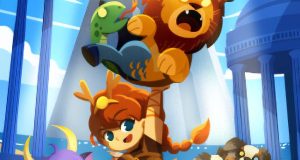
Visually, Blitz Smash Ultimate is bold and readable. Characters are designed with exaggerated silhouettes and vibrant colour palettes, ensuring clarity during chaotic moments. Visual effects are flashy without overwhelming the screen, reinforcing the game’s kinetic identity.
Performance is generally stable, even during intense encounters. Frame rate remains consistent, which is essential for a game so reliant on responsiveness. Animations are smooth, though somewhat repetitive, reflecting the limited range of combat actions.
Menus and interface design are functional but barebones. The focus is clearly on getting players into matches quickly rather than offering extensive customisation or analytics.
Audio Design and Impact
Audio design complements the game’s aggressive tone. Sound effects are sharp and impactful, providing clear feedback for hits, dodges, and special moves. These cues are essential for maintaining clarity in fast-paced matches.
The soundtrack leans into high-energy electronic and rock-inspired tracks that sustain momentum. While effective, the music lacks variety, and tracks repeat frequently. Over time, the audio experience becomes predictable, reducing its overall impact.
Character voice lines and reactions are minimal, reinforcing the lack of personality-driven presentation.
Progression, Replayability, and Longevity
Progression systems in Blitz Smash Ultimate are modest. Players unlock characters, arenas, and cosmetic items through repeated play, but these rewards rarely change how the game is played. There is little sense of long-term growth or evolving challenge.
Replayability depends heavily on social play. With friends, the game can remain enjoyable through sheer chaos and competition. Without that social element, repetition sets in quickly. There are no evolving modes, seasonal content, or significant updates to refresh the experience.
Accessibility and Audience Fit
Blitz Smash Ultimate excels in accessibility. Its simple controls, short matches, and forgiving mechanics make it easy to pick up and play. It is well-suited for casual players, party settings, and short sessions.
However, players seeking depth, mastery, or long-term competitive engagement will likely find the experience lacking. The game prioritises immediacy over longevity, and that design choice defines its appeal.
Final Verdict
Blitz Smash Ultimate is a fast, flashy arena brawler that delivers immediate excitement and accessible fun. Its responsive combat and energetic presentation make it enjoyable in short bursts, particularly in multiplayer settings. However, its limited mechanical depth, uneven balance, and lack of long-term progression prevent it from achieving lasting distinction.
It is a game that hits hard but burns out quickly, best enjoyed as a party staple rather than a long-term obsession.
A high-energy, accessible brawler that excels in short, chaotic multiplayer sessions, but whose shallow systems and limited variety hold it back from long-term impact.