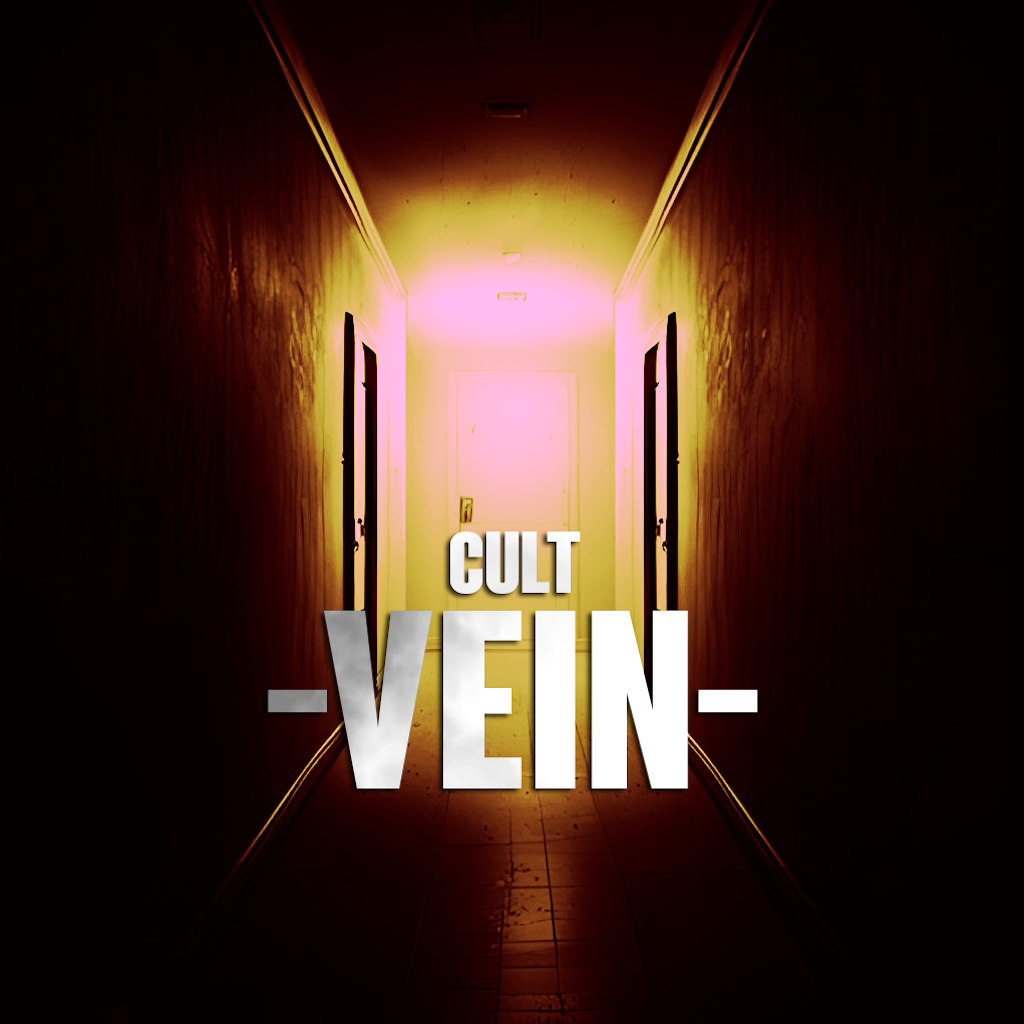
Psychological horror is at its most effective when it unsettles rather than shocks, when it corrodes the player’s sense of certainty instead of relying on sudden scares. Cult -Vein- understands this principle with striking clarity. Rather than flooding the screen with grotesque imagery or relentless jump scares, it builds dread slowly, methodically, and with an oppressive sense of inevitability. The result is a horror experience that feels intimate, uncomfortable, and persistently haunting — one that lingers well beyond the final scene.
At its core, Cult -Vein- is a narrative-driven psychological horror adventure that explores themes of indoctrination, identity erosion, and the quiet terror of losing agency. It is not a game that explains itself readily, nor does it guide players gently through its systems. Instead, it invites — or perhaps compels — players to descend into a deliberately opaque world where meaning must be excavated through observation, inference, and emotional interpretation. This approach will not appeal to everyone, but for players attuned to slow-burn horror and symbolic storytelling, Cult -Vein- offers a deeply unsettling experience.
Narrative and Thematic Foundations
C ult -Vein- places players in an environment defined less by geography and more by ideology. You awaken within an isolated, cult-dominated space — a compound, village, or institution whose exact nature is intentionally ambiguous. The inhabitants speak in ritualised phrases, obey unseen hierarchies, and exhibit behaviour that oscillates between serene devotion and barely concealed menace. You are not immediately positioned as a heroic outsider; instead, the game frames you as someone already entangled in this world, uncertain of where belief ends and coercion begins.
The narrative unfolds obliquely. There are no lengthy exposition dumps or conventional plot beats. Instead, story fragments are delivered through environmental detail, cryptic dialogue, ritual objects, and unsettling repetition. Symbols recur — bloodlines, purification, ascension — but their meaning evolves depending on player interpretation and progression. This deliberate ambiguity is one of the game’s strongest assets. Cult -Vein- trusts its audience to engage actively with its themes rather than consuming them passively.
Central to the experience is the concept of indoctrination. Characters speak with conviction yet lack individuality, and the player is frequently presented with choices that feel constrained rather than empowering. Even moments of apparent freedom are tinged with doubt, reinforcing the game’s underlying question: when does obedience become belief, and when does belief erase the self?
Gameplay Structure and Mechanics
Mechanically, Cult -Vein- is restrained, favouring immersion over complexity. Movement is deliberate, interaction is minimalistic, and progression is often slow. This is not a game driven by mechanical challenge but by psychological pressure. Puzzles are sparse and understated, usually embedded within the environment rather than presented as explicit obstacles. Solving them requires attention to pattern, ritual logic, and subtle environmental changes rather than traditional problem-solving logic.
Player interaction focuses on exploration, dialogue choices, and observation. Objects can be examined, rituals can be participated in or resisted, and conversations can subtly shift the tone of later encounters. Importantly, choices are rarely labelled as moral or immoral. Instead, consequences unfold quietly, sometimes hours later, reinforcing the idea that agency within a cult structure is never absolute.
There is a deliberate lack of conventional fail states. Rather than punishing mistakes with game-over screens, Cult -Vein- incorporates failure into its narrative fabric. Wrong decisions do not end the game; they alter perception, relationships, and self-understanding. This design choice enhances immersion and aligns perfectly with the game’s thematic focus on psychological manipulation.
Atmosphere and Visual Identity
Visually, Cult -Vein- is restrained yet evocative. The colour palette leans heavily on muted tones — greys, off-whites, deep reds — punctuated by stark contrasts during moments of ritual or revelation. Lighting is used sparingly but effectively, with shadows often obscuring more than they reveal. Environments feel deliberately claustrophobic, even when spaces are physically open, reinforcing the sense of constant surveillance and control.
Character design avoids grotesque exaggeration in favour of subtle wrongness. Facial expressions linger a moment too long, movements feel rehearsed, and eye contact is often uncomfortably direct. These choices create unease without relying on overt horror tropes. The world feels lived-in, but unnervingly so — as though normalcy itself has been corrupted.
Sound design is a critical component of the experience. Ambient audio — distant chanting, low mechanical hums, indistinct whispers — permeates every area. Music is minimal, often absent entirely, allowing silence to become a source of tension. When audio cues do emerge, they are purposeful and disquieting rather than dramatic. Voice acting, where present, is controlled and emotionally restrained, reinforcing the cult’s emphasis on unity and suppression of individuality.
Pacing and Psychological Impact
C ult -Vein- is unapologetically slow. Its pacing prioritises mood and introspection over momentum, and it demands patience from the player. Long stretches of exploration and observation are punctuated by moments of narrative escalation that feel earned precisely because of their restraint. This pacing will frustrate players expecting frequent stimulation, but it is essential to the game’s psychological impact.
The horror in Cult -Vein- is cumulative. There are few traditional scares, but the constant sense of unease builds steadily, creating a persistent psychological weight. The game excels at making players question their own perceptions, often blurring the line between environmental storytelling and internal monologue. By the latter stages, players may find themselves unsure whether the horrors they witness are external threats or manifestations of internal collapse.
Replayability exists primarily through narrative interpretation rather than mechanical variation. Multiple endings reflect different psychological trajectories, shaped by subtle choices and behavioural patterns rather than explicit branching paths. Revisiting the game with a different mindset can reveal new meanings, reinforcing its thematic depth.
Strengths and Limitations
Strengths:
- Deeply unsettling psychological atmosphere built through restraint and symbolism
- Strong thematic focus on indoctrination, identity, and loss of agency
- Effective use of environmental storytelling and sound design
- Meaningful player choice that influences narrative tone rather than overt outcomes
Limitations:
- Slow pacing may alienate players seeking constant engagement
- Minimal mechanical variety limits traditional gameplay appeal
- Narrative ambiguity may feel frustrating rather than intriguing to some players
Final Verdict
Cult -Vein- is not a horror game designed to entertain in conventional terms. It is an experience meant to discomfort, to provoke reflection, and to erode certainty. Its power lies not in what it shows, but in what it implies — the quiet horror of conformity, the fear of surrendering identity, and the unsettling realisation that escape is not always physical.
For players drawn to psychological horror, symbolic storytelling, and introspective narratives, Cult -Vein- is a compelling and memorable descent into ideological terror. It may not appeal to all audiences, but within its chosen niche, it is confident, cohesive, and deeply affecting.