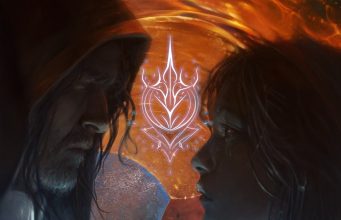
Mai: Child of Ages is a deliberate, atmospheric action RPG that sits comfortably in the Souls-like space — yet it consistently works to define itself beyond imitation. From the opening moments, the game presents an environment soaked in mystery, danger, and melancholic beauty. Its combat demands respect, its world rewards exploration, and its sparse storytelling invites interpretation rather than exposition.
Where many action RPGs seek to dazzle with spectacle, Mai draws strength from restraint. Here, every encounter, every item description, and every silent corridor contributes to a larger narrative tapestry woven by implication rather than explanation. For players who relish challenge, discovery, and atmospheric weight, this title offers an experience that feels both familiar and resonantly distinct.
Premise and World: A Shifting Realm of Memory and Sorrow
The world of Mai: Child of Ages is a fractured, liminal space that feels more like memory than geography. You inhabit the eponymous Mai — a figure caught between epochs, tasked with confronting malevolent forces that corrupt both land and spirit. The game’s opening leaves many questions unanswered, and this ambiguity is intentional. Rather than spoon-feeding lore, Mai encourages players to assemble meaning from environmental cues, cryptic NPC interactions, and fragmented item lore.
This design choice is one of the game’s most compelling features. There is a palpable sense of history embedded in the world: ruins that echo forgotten splendour; grotesque foes that speak of ancestral rage; weathered statues and stained architecture that evoke loss more powerfully than a thousand words. The narrative is not absent — it is distributed, embedded in every corner, whispering rather than narrating.
For players who enjoy patching together narrative from texture and inference, Mai delivers a rich conceptual experience. For those who seek linear storytelling or cinematic clarity, the game may feel opaque at times — but this opacity is part of its thematic vision, reinforcing the sense of dislocation that defines both its world and protagonist.
Combat and Mechanics: Precision, Punishment, and Mastery
Combat in Mai: Child of Ages aligns with its atmospheric identity: purposeful, weighty, and strategic. Mai is nimble but mortal; her attacks have heft, her dodges require timing, and every enemy encounter demands attention. Like the best Souls-likes, the core loop is deceptively simple: observe, approach cautiously, strike decisively, and evade with intent. Yet beneath this lay a depth of nuance that unfolds gradually with practice and patience.
Weapon handling is a standout strength. Swords, spears, daggers, and arcane implements all feel distinct, each with a unique rhythm and tactical implication. Some weapons favour quick, staccato strikes that reward aggression but demand immaculate spacing. Others are slow, sweeping instruments of area control that punish mistimed aggression but dominate when properly paced. This variety encourages experimentation, and builds feel earned rather than handed out.
Blocking, parrying, and dodging are all integral rather than optional. A single misread can quickly spiral into sustained damage, especially against larger or more aggressive foes. Enemy design reinforces this dynamic: foes telegraph attacks with subtle cues, and learning these patterns is crucial to survival. Boss encounters — often demanding multi-phase focus and exploration of attack windows — stand as testaments to this design philosophy.
Yet, Mai rarely feels unfair. Rather than introducing artificial difficulty spikes, its combat challenges stem from system mastery. Players improve not because stats climb, but because skill itself grows. This aligns with the game’s thematic core: existence in a fragmented world is survived through understanding, patience, and adaptation.
Exploration and World Design: A Narrative in Geography
The level design in Mai: Child of Ages is one of its most engaging aspects. Maps unfold organically, revealing shortcuts, hidden paths, and evocative landmarks. There is a satisfying balance between verticality and horizontal exploration, with many areas looping back upon themselves once new abilities or insights are gained.
Secrets abound. Whether it’s a weathered mural hinting at ancient conflict or a hidden shrine concealing a powerful relic, the game rewards curiosity and careful observation. The absence of a minimap or intrusive guidance reinforces this exploratory ethos — players are meant to remember landmarks, not follow glowing arrows.
This design fosters immersion. Progress rarely feels linear; instead, it unfolds like piecing together a fragmented memoir. Each new region revisits motifs from earlier areas, both visual and mechanical, subtly reinforcing the sense that this world has been lived in — and lost. It’s a narrative told through terrain, architecture, and ambient cues — a choice that respects players’ interpretive engagement.
Progression and Customisation: Depth Without Overwhelm
As Mai fights and survives, she earns currency and experience tied to exploration and combat. This progression system is familiar to fans of the genre, but Mai distinguishes its implementation through meaningful choices rather than incremental stat bloat.
Players invest in enhancements that genuinely alter how Mai interacts with the world — faster dodges, new weapon affinities, additional stamina, and unique combat augmentations. These decisions feel impactful and encourage thoughtful build diversity rather than cookie-cutter optimisation.
Crafting and resource management are present but not intrusive. Consumables, buffs, and utility items augment core combat without overshadowing skillful play. The game walks a careful line: giving players tools to survive without undermining the satisfaction of mastering systems through player agency rather than item sprawl.
Visual and Audio Design: Melody in Melancholy
Visual design is a consistent strength for Mai: Child of Ages. The aesthetic leans into muted tones, striking silhouettes, and environmental storytelling. Environments rarely feel generic; rather, each locale carries a unique mood — stained stone corridors echoing ruin, forlorn gardens overgrown with spectral flora, and shifting twilight vistas that feel both beautiful and ominous.
Character and enemy design align with the game’s thematic vision. Majestic foes — grotesque yet artistic — feel like mythic remnants of a broken world. Animation is deliberate, eschewing flashiness for purposeful movement that communicates both weight and intent.
Sound design plays an equally crucial role. Sparse, evocative melodies underscore key moments, while ambient audio reinforces spatial identity — distant wind through hollowed halls, echoing footsteps on stone, ominous murmurs that hint at hidden histories. Combat sound effects are sharp and meaningful: blade on bone, the scrape of armour, the visceral inhale of a near miss all contribute to a sensory identity that is rewarding and immersive.
Where It Stumbles
While Mai: Child of Ages achieves much of what it sets out to do, it is not without imperfections:
Opaque Storytelling: Its narrative restraint will delight players who enjoy interpretive engagement, but those seeking clear, character-driven storytelling may find its approach frustratingly cryptic.
Difficulty Peaks: The game’s challenge is deliberate and fair, but occasional spikes can feel abrupt, especially in areas with high enemy density and limited checkpoints.
Visual Uniformity: Though aesthetic quality is strong, some regions blend together visually more than they should, making distinct navigation slightly more difficult without careful memorisation.
These limitations are noteworthy but do not significantly detract from the experience as a whole; rather, they are areas where the game’s minimalism occasionally bleeds into ambiguity.
Final Verdict
Mai: Child of Ages is a thoughtful, atmospheric action RPG that blends challenging combat, evocative world design, and immersive exploration into a cohesive and rewarding experience. Its strengths lie not in spectacle, but in depth, restraint, and interpretive engagement. For players who enjoy methodical challenge, atmospheric storytelling, and worlds that invite contemplation as much as conquest, this title is a standout in the indie Souls-like space.