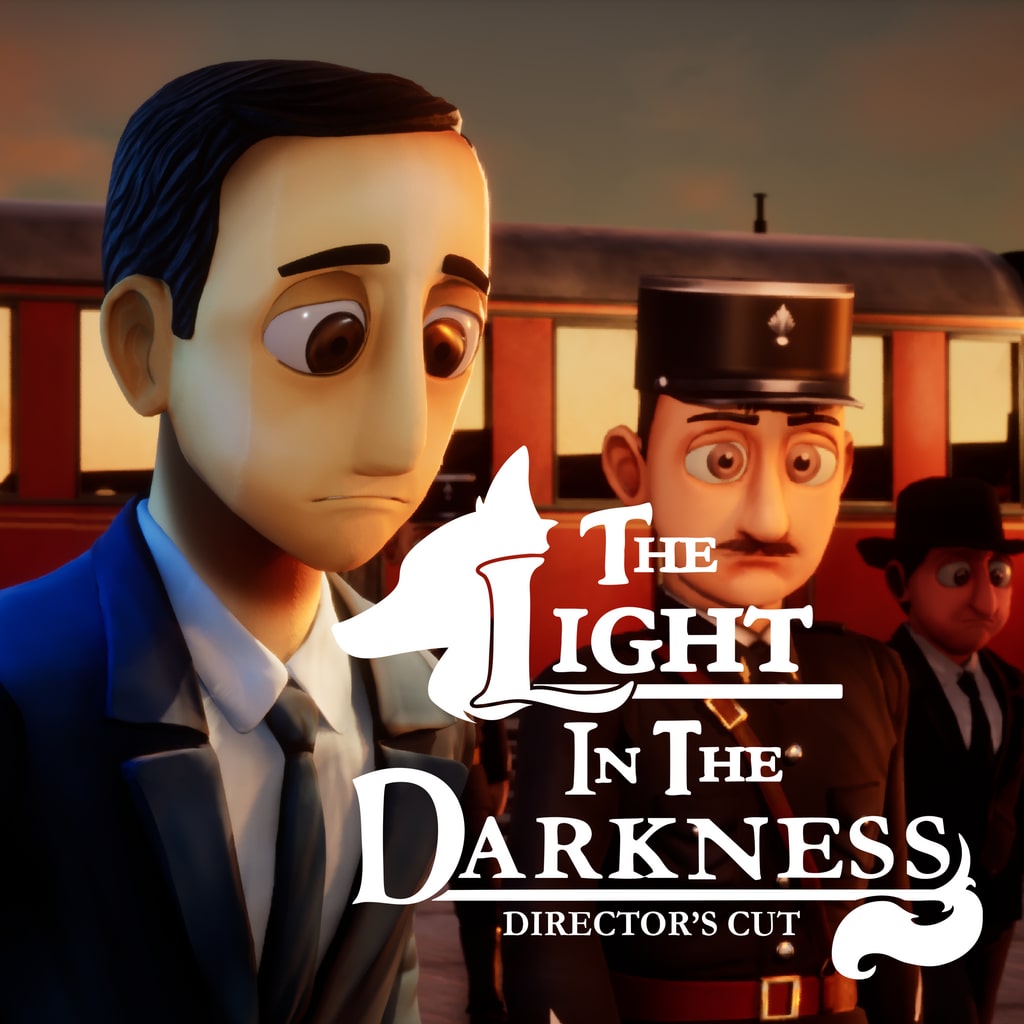
There are games designed to make you feel powerful, games designed to make you laugh, games designed to scare you senseless, and then there are games that ask you to sit quietly with something almost impossible to comprehend. The Light in the Darkness: Director’s Cut belongs firmly in that final category. It is not interested in giving you a gun, a heroic objective, or the ability to rewrite history. Instead, it places you alongside an ordinary Polish-Jewish family living in Nazi-occupied France and asks you to experience the gradual destruction of a life that once seemed perfectly normal.
That distinction is crucial, because countless games are set against the backdrop of the Second World War, with most naturally gravitating towards combat, resistance, and the fantasy of being the person who can make a difference. The Light in the Darkness deliberately removes that comfort. Here, there is no battlefield to conquer, no powerful weapon to discover, and no final enemy waiting to be defeated. There are only people, families, fear, uncertainty, and the horrifying realisation that the choices available to you are becoming fewer and fewer.
The result is an experience that can be difficult to play, but that difficulty is precisely why it matters. This is not a game that wants to distract you from history by turning tragedy into spectacle. Instead, it wants you to understand how persecution can affect ordinary people and how quickly a familiar world can become something frightening and unrecognisable. It is a very different kind of historical game, one that understands the power of simply making the player stop and listen.
A Different Kind of War Story
At the centre of The Light in the Darkness: Director’s Cut is a Polish-Jewish family trying to survive in Nazi-occupied France. The game does not treat their experiences as an excuse for spectacle, nor does it turn history into a playground where the player becomes an unstoppable hero. Instead, it focuses on ordinary routines and relationships before showing how quickly they can be dismantled by discrimination, persecution and state policy. That approach gives the story an uncomfortable intimacy that many traditional war games never attempt.
A war game can make death feel strangely distant because the player is usually looking through a weapon sight, rushing between objectives or concentrating on the next combat encounter. Here, the horror comes from watching normality disappear. The things that once seemed insignificant suddenly become precious because the game understands that persecution does not begin with the final destination. It begins with restrictions, suspicion, exclusion and the steady removal of freedoms, creating a creeping sense that something terrible is approaching, even when the characters themselves cannot know exactly what awaits them.
This makes the experience particularly effective because it encourages the player to understand the people involved rather than simply observe historical events from a distance. The family at the heart of the story are not statistics or names in a textbook, but people with relationships, hopes and fears. That personal perspective gives the wider historical events an emotional weight that traditional presentations of history can sometimes struggle to achieve. You are not simply watching history happen to strangers, because the game takes the time to establish a sense of the lives that existed before everything began to fall apart.
No Guns, No Glory, No Easy Answers
One of the most striking decisions by Luc Bernard and the team at Arcade Distillery and Voices of the Forgotten is the complete absence of traditional combat. There is no satisfying arsenal waiting to be unlocked, and no enemy army to defeat through superior skill. You cannot shoot your way out of persecution, nor can you simply reload a previous save and magically make history turn out differently. The game removes the familiar safety net of power that so many other titles provide.
That can initially feel strange if you are accustomed to games built around constant interaction and progression. Yet it soon becomes clear that this is exactly the point, as the mechanics are deliberately designed around vulnerability rather than empowerment. That completely changes the relationship between player and story, forcing you to experience events from a position of uncertainty rather than control. In a medium where players are usually rewarded for becoming stronger, making vulnerability such a central part of the experience is remarkably effective.
The lack of control becomes increasingly powerful as you understand what is happening, knowing there is no conventional gaming solution. In most games, when something goes wrong, the player becomes stronger, finds better equipment, learns new abilities, or discovers another route through the problem. The Light in the Darkness refuses to offer that escape. It places the player in a position where understanding what is happening does not necessarily mean being able to stop it, and that uncomfortable feeling becomes one of the game’s most important narrative tools.
The Director’s Cut
The Director’s Cut is much more than a simple visual upgrade. The original vision has been significantly expanded with full voice acting, additional narrative material, new animation, enhanced environments, improved lighting and sound design, and refined systems throughout the experience. These additions give the game a greater sense of completeness and allow its story to breathe in ways a more basic presentation could not. Rather than feeling like a quick coat of paint over an existing experience, this genuinely feels like an attempt to realise a broader creative vision.
Those changes make an important difference because this is a game that depends heavily on atmosphere. The environments need to feel lived in before they begin to feel threatened, and the additional visual detail helps establish that contrast. A familiar room, street or home can carry considerably more emotional weight once the player understands that the security associated with it is disappearing. The world therefore becomes part of the storytelling rather than simply somewhere for the player to move through.
The full voice acting is particularly important because hearing characters speak gives the family a greater sense of identity and presence. Dialogue delivered through text alone can certainly tell a story, but a human voice can communicate hesitation, fear, affection and uncertainty in ways that words on a screen cannot always achieve. That additional emotional layer makes the characters feel more immediate and helps prevent the story from becoming a detached history lesson. The performances allow the player to connect with the people at the centre of the narrative before the historical circumstances begin to overwhelm their lives.
History Without Spectacle
The reconstruction of Auschwitz is perhaps the most sensitive aspect of the entire project, and it is also one of the reasons the game needs to be approached differently from a conventional historical title. Rather than using such a location as a backdrop for an action sequence, the Director’s Cut grounds its reconstruction in historical research and documentation. That gives the setting a sense of purpose beyond simply creating another dramatic location for the player to visit.
Recreating a place associated with such immense suffering carries an enormous responsibility, particularly within an entertainment medium where there is often pressure to make everything bigger, louder and more visually dramatic. The Light in the Darkness takes a markedly different approach. Its presentation is restrained, allowing the historical significance of the setting to speak for itself rather than attempting to manufacture spectacle. That restraint is one of the game’s greatest strengths, as it demonstrates an understanding that some places and events require respect rather than embellishment.
There is something deeply uncomfortable about experiencing a reconstruction of Auschwitz while knowing that the people represented by this story were not fictional characters who could simply return to a checkpoint after a difficult encounter. They were real people living through events that fundamentally altered the course of millions of lives. The game cannot and should not attempt to make that reality comfortable. Instead, it gives the player time to absorb the significance of what they are seeing and allows the historical context to carry the emotional weight.
An Educational Experience That Never Feels Like a Lecture
Calling The Light in the Darkness an educational game might make it sound dry or academic, but that would undersell what it is trying to achieve. It teaches through perspective rather than simply presenting information, allowing the player to experience a sequence of events through the eyes of people caught within them. That makes the educational aspect feel naturally woven into the experience rather than something bolted on afterwards.
The approach makes the historical context easier to connect with emotionally because you are not simply being told that antisemitic laws and persecution affected families. You are shown how those policies gradually intruded into everyday life and how the world around ordinary people could change before they fully understood where it was heading. The gradual nature of that process is important because it demonstrates that history is not simply a collection of major dates and events. It is also made up of thousands of small moments in which people’s ordinary lives are changed by decisions made far beyond their control.
There is also considerable value in the fact that the game is offered entirely free of charge. Making a historically important narrative experience accessible without placing a financial barrier in front of it gives the project an additional purpose beyond entertainment. It feels designed to be experienced, discussed and potentially used as a starting point for further learning. For a game dealing with such important subject matter, that accessibility is worth recognising because it allows the message to reach an audience that might never otherwise encounter it.
Emotion Over Entertainment
It would be misleading to suggest that The Light in the Darkness will appeal to everyone. Players seeking fast action, conventional progression systems, or hours of traditional gameplay will find very little here to satisfy those expectations. The pacing can be deliberately slow, and the emotional weight means this is not something I would casually recommend when you are simply looking for a light evening’s entertainment. It demands a different mindset and asks you to engage with its subject rather than rush through it.
That said, the limited traditional gameplay is not necessarily a weakness within the context of the experience. The mechanics serve the narrative rather than competing with it, and the absence of combat prevents the player from slipping into the familiar rhythm of killing enemies, collecting rewards and becoming progressively more powerful. The game instead asks you to pay attention, listen to the characters and absorb the atmosphere. It is a quieter form of interaction, but one that suits the story being told.
There is also something refreshing about a game that understands it does not need to constantly entertain its audience. Modern games often measure progression through increasingly spectacular moments, but The Light in the Darkness finds its impact in much smaller details. A conversation, a familiar environment or a moment of uncertainty can become more significant than an elaborate action sequence because you understand what is at stake. The experience leaves its mark not because it gives you power, but because it repeatedly reminds you of how powerless its characters were.
A Story That Stays With You
What makes The Light in the Darkness: Director’s Cut particularly effective is its refusal to allow history to become abstract. The scale of the Holocaust can be almost impossible to comprehend when reduced to statistics, dates and enormous numbers, but individual stories offer another way of understanding that history. By concentrating on one family and their gradual loss of security, the game provides a human perspective on events that are otherwise difficult to grasp.
That perspective also gives the game an emotional identity of its own. It is not simply trying to make the player sad, because sadness alone would be a fairly shallow objective for a project dealing with such serious material. Instead, it encourages empathy and remembrance, giving the player an opportunity to consider what ordinary life meant to people whose lives were eventually destroyed by persecution. The emotional response comes naturally from understanding what has been lost rather than from the game manipulating the player with cheap tricks.
The Director’s Cut strengthens that approach considerably, as the improved presentation makes it easier to become immersed in the world and the people who inhabit it. Full voice acting, additional narrative material, improved environments, lighting and sound all contribute to a more convincing experience. None of those additions change the fundamental purpose of the game, but together they make its message more immediate. The result is a historical narrative that feels carefully considered rather than simply constructed to shock.
Final Thoughts
The Light in the Darkness: Director’s Cut is an extraordinary example of how video games can explore history without reducing it to traditional entertainment. It recognises that sometimes the most powerful thing a game can do is refuse to make the player feel powerful. By focusing on ordinary people rather than soldiers, families rather than battlefields, and vulnerability rather than victory, it creates an experience that feels profoundly different from most historical games.
The Director’s Cut strengthens that vision considerably. Full voice acting, expanded storytelling, rebuilt environments, improved presentation, and the historically researched reconstruction of Auschwitz make this feel like the complete expression of what the project set out to be. There are moments when the limited gameplay and sombre pacing can make it feel more like an interactive historical drama than a conventional game, but judging it solely by traditional gameplay standards would miss the point. This is a game where the story is the experience, and the lack of conventional entertainment mechanics is part of what gives that story its weight.
Most importantly, the game never allows the people at its centre to become merely historical scenery. Behind the enormous numbers associated with the Holocaust were individual human beings with families, routines, dreams and lives that mattered to them. The Light in the Darkness makes those individual lives the focus, and that decision gives the experience its greatest strength. It is difficult, sombre and at times profoundly upsetting, but it is also deeply human, and there are moments when a game does not need to entertain you to be worth your time. Sometimes it simply needs to make you remember.