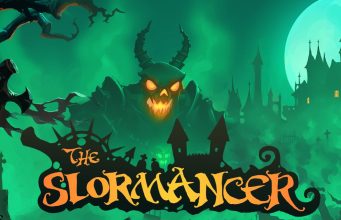
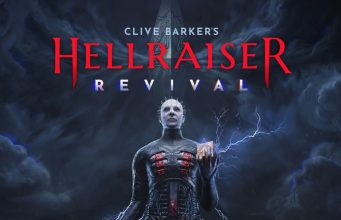
Upscale Studio – Ultimate Bundle: 15 in 1 arrives as a decidedly unconventional offering: a curated collection of fifteen distinct mini-games, each representing a different genre, theme, and style of play. Unlike singular, tightly focused titles, this bundle’s ambition lies in breadth — a digital arcade cabinet distilled into a single purchase — rather than genre mastery. The result is a compilation that’s best characterised as eclectic, occasional fun, and rewarding in short bursts, but uneven in depth, polish, and long-term engagement.
For players seeking variety with minimal commitment, or a low-barrier multiplayer experience for casual sessions, the bundle offers genuine value. For those who prioritise depth, narrative cohesion, or mechanical excellence, it may feel inconsistent. What elevates the package is not any single standout component, but the overall spirit of playfulness that runs through its parts.
Concept and Purpose: Curated Casuality
The Ultimate Bundle presents itself as a hub of quick-play experiences, each designed to occupy five to twenty minutes of player attention. Instead of investing deeply in one mechanic or world, the collection encourages experimentation — bouncing from puzzle to reflex challenge to rhythm test to physics-driven chaos.
The premise recalls classic compilation titles of bygone eras: pick up, play, and enjoy without heavy tutorials, overarching stories, or lengthy progression systems. In a world increasingly dominated by mega-budget, large-scale experiences, there’s something refreshing in a product that emphasises accessibility, ephemeral fun, and mechanical variety.
But this strength is also a constraint. Without a central unifying theme, narrative glue, or core progression loop tying the games together, the collection can feel disjointed — like fifteen game demos stitched into one package.
Content Breakdown: Variety Over Depth
The fifteen games in the bundle cover a broad spread of mechanics and genres, including:
- Reflex and timing tests
- Physics-based challenges
- Puzzle sequences
- Rhythm and timing mini-games
- Casual sport or arcade modes
- Memory and pattern recognition drills
In solo sessions, this diversity keeps sessions fresh. One moment you’re guiding a character through a reflex course, the next you’re balancing items on a shaky platform. The rapid shift in mechanics can be permissive — freedom without commitment — and for short play sessions, it’s a compelling draw.
However, the diversity also reveals uneven execution. Some mini-games feel complete — polished, engaging, and entertaining enough to stand on their own. Others suffer from mechanical simplicity, unclear goals, or repetitive loops that plateau quickly. Depth varies widely, and there’s no meta-progression that meaningfully ties one game’s skills to another’s rewards.
This is not necessarily a flaw in design philosophy — but it does influence how players perceive value over time.
Gameplay, Controls, and Accessibility
One clear advantage of this 15-in-1 approach is accessibility. Each mini-game typically introduces itself quickly, with minimal friction, short tutorials, and intuitive controls. Movement is responsive, button prompts are clear, and loading between segments feels light. This makes the bundle well-suited to casual players, younger audiences, or group sessions where ease of play is more important than mastery.
For players who prefer structured progression or skill curves, the experience can be somewhat hollow. There’s seldom a sense of improvement tracking, unlockable mastery, or macro-level goals that keep long-term engagement ticking upward. Instead, progression is often confined to beating high scores, improving accuracy, or completing short sequences.
Still, the accessibility framework is solid. For players with limited time or short play sessions — commutes, breaks, social gatherings — the package excels as a ‘dip-in, dip-out’ experience.
Visuals and Audio: Functional, Not Flourished
Visual design across the bundle leans toward functional clarity rather than aesthetic spectacle. Graphics are clean and legible, with each mini-game adopting a visual identity suited to its theme — vibrant colour palettes for rhythm games, simplified physics visuals for action sequences, and minimalistic layouts for puzzle segments.
These stylistic choices prioritise readability and mechanical clarity, which is appropriate given the quick-play ethos. However, few segments exhibit visual depth, narrative flair, or artistic character beyond their core mechanics. If you’re a player who enjoys atmospheric presentation or cinematic polish, this bundle will feel utilitarian rather than expressive.
Audio design echoes this pattern. Sound effects are purposeful, musical cues are rhythmic where needed, and there is no audio clutter to distract from gameplay. However, there are few standout tracks or memorable compositions that linger after play sessions. The mix reinforces function over form — clear, supportive, but not emotionally texture-rich.
Social and Multiplayer Potential
One of the bundle’s strengths is its potential for group play. Whether in local competitive sessions or online with friends, the short-turn structure makes it easy to rotate players, spark spontaneous challenges, and keep sessions lively. Turn-based mini-games or score comparisons fuel quick rivalry without requiring significant time investment.
This social dimension gives the collection a life beyond solo idle moments: it becomes a backdrop for laughter, casual competition, and shared gameplay rather than solitary engagement. In that context, the Ultimate Bundle arguably shines brightest — as a tool for convivial play rather than as a deep solo adventure.
Weaknesses and Limitations
Despite its merits, the bundle has several limitations:
Lack of Depth:
As a collection of mini-games, it defaults to brief engagements rather than sustained systems. Players seeking layered mechanical evolution may feel underserved.
Inconsistent Execution:
Not all fifteen games are equally compelling. Some feel like fully realised mini-experiences; others can wear thin after a few playthroughs.
Absence of Narrative or Cohesion:
Without a unifying theme beyond the label “casual fun,” the bundle can feel episodic in a way that lacks emotional or narrative resonance.
Replay Incentive:
Once high scores are achieved, there are limited meta incentives to return unless players are intrinsically motivated by self-improvement or social competition.
These shortcomings are not fatal, but they do frame the collection as light entertainment rather than a must-own mainstay.
Value Proposition and Target Audience
The Ultimate Bundle: 15 in 1 makes the most sense for players who enjoy:
- Casual gaming sessions
- Short, varied play bursts
- Group or party interactions
- Mechanically accessible, non-committal play
- Quick reflex and puzzle stiffness
If you’re seeking a deep single-player campaign, layered progression, or emotionally driven narrative experiences, this bundle might feel shallow. However, if you value light-hearted, curated content that you can jump into without commitment, this collection delivers consistent entertainment value.
It’s a package that rewards brevity over breadth, spontaneity over depth.
Final Verdict
Upscale Studio – Ultimate Bundle: 15 in 1 is a quirky, varied, and approachable collection of casual mini-games that excels in short-play contexts and social settings. Its strengths lie in accessibility, diversity, and immediate engagement rather than in narrative depth or mechanical evolution. As a digital arcade cabinet of light entertainment, it’s hard to fault the concept — but the uneven execution across individual entries keeps the overall experience from reaching greatness.