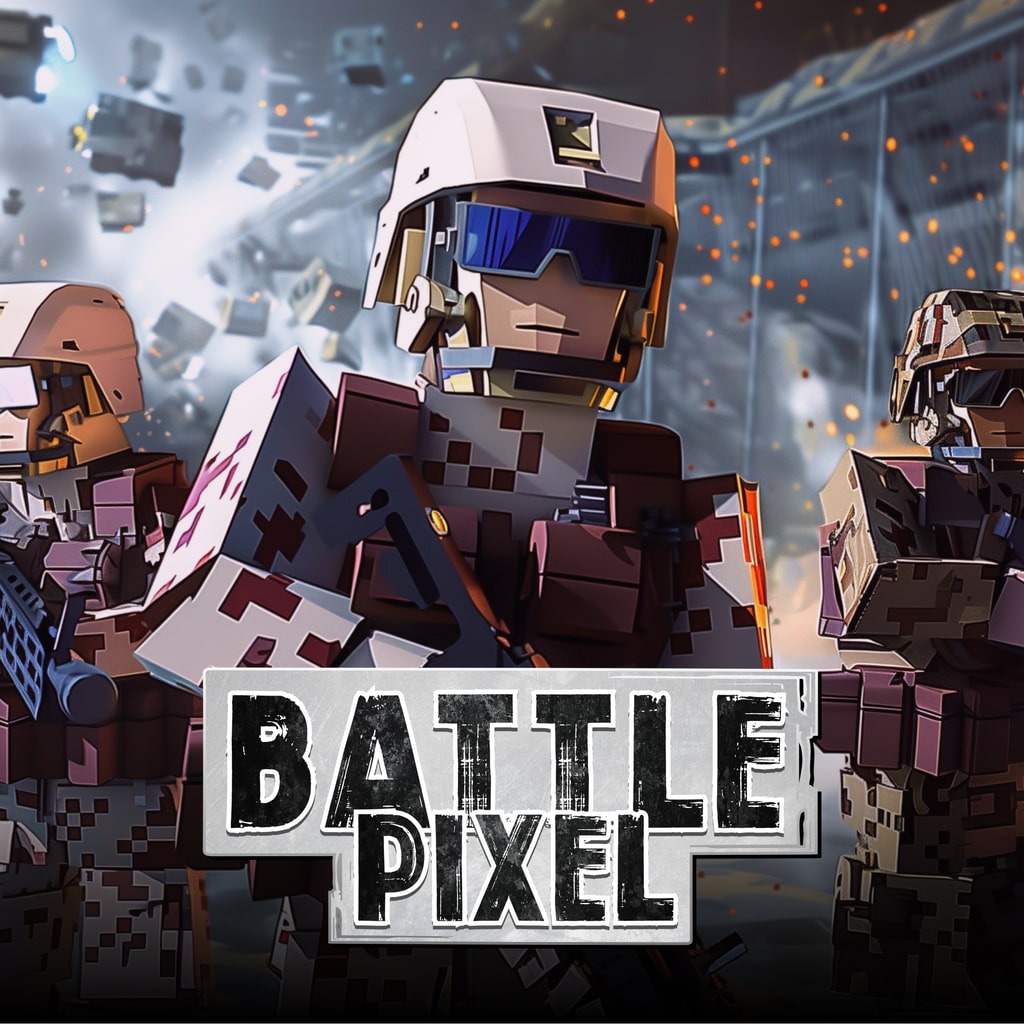
Battle Pixel arrives on Nintendo Switch as a fast-paced first-person arena shooter that places immediacy, reflexes, and tactical decision-making at the centre of its experience. Designed around short, intense matches and an arcade-style survival structure, the game aims to deliver satisfying combat in quick bursts while remaining accessible enough for portable play.
Rather than focusing on cinematic storytelling or sprawling campaigns, Battle Pixel strips the experience down to its fundamentals: drop into an arena, scavenge resources, arm yourself efficiently, and outlast the opposition. It’s a design philosophy that suits the Switch remarkably well, especially for players looking for something they can jump into for a single match or settle into for a longer competitive session.
Concept and Structure: No Frills, Just Firefights
At its core, Battle Pixel is built around a survival-arena format. Each match begins with players entering a contained combat zone where weapons, upgrades, and resources must be collected on the fly. As the match progresses, the playable area gradually shrinks, forcing encounters and ramping up tension until only one competitor remains.
This shrinking-zone mechanic ensures momentum never stalls. There is constant pressure to move, loot, and engage, discouraging passive playstyles. It also gives matches a natural arc — calm and exploratory in the opening moments, frantic and unforgiving by the end.
While familiar to fans of the genre, Battle Pixel executes this structure cleanly and efficiently. Matches are short enough to encourage repeat play but long enough to allow meaningful tactical decisions to unfold.
Controls and Performance on Nintendo Switch
First-person shooters on the Switch always face a challenge when it comes to controls, and Battle Pixel handles this aspect competently. Movement feels responsive, weapon switching is snappy, and basic gunplay is intuitive whether using Joy-Con or Pro Controller.
Precision aiming can occasionally feel limited during close-quarters firefights, particularly when relying solely on analog sticks. This is less an issue with the game itself and more a platform reality, though players willing to adjust sensitivity settings will find a workable balance.
Performance is stable across matches. Frame rate holds up well even during hectic late-game moments with multiple combatants, vehicles, and visual effects on screen. Load times are reasonable, and extended play sessions do not introduce noticeable technical degradation — an important consideration for a competitive shooter.
Weapons, Loadouts, and Tactical Decisions
One of Battle Pixel’s stronger elements is its loadout flexibility. Rather than locking players into rigid starting kits, the game encourages adaptation through resource collection and on-the-fly upgrades.
Weapons span a familiar but effective range, including rapid-fire firearms for mid-range combat, heavier weapons that reward deliberate positioning, and situational tools that shine in specific scenarios. Each weapon feels distinct enough to justify its role, and choosing when to upgrade or swap becomes a meaningful strategic decision.
Resource management plays a crucial role here. Do you spend early currency on immediate firepower, or save for a stronger weapon later? Do you upgrade survivability or gamble on offensive dominance? These choices help differentiate matches and ensure outcomes aren’t determined solely by reflexes.
Modes and Match Variety
Battle Pixel supports both offline and online play, which significantly broadens its appeal.
Offline matches against AI opponents provide a valuable training ground. These modes allow players to learn maps, test weapons, and refine tactics without the pressure of competitive play. While AI behaviour isn’t especially advanced, it serves its purpose well as a learning tool.
Online multiplayer is where the game truly comes alive. Matches are tense, unpredictable, and often chaotic in the best possible way. Player behaviour introduces variability that keeps encounters fresh, and the shrinking arena ensures that no match drags on longer than it should.
Although player counts per match are modest compared to larger-scale shooters, this actually works in the game’s favour, keeping performance smooth and encounters frequent.
Maps, Vehicles, and Environmental Design
Maps in Battle Pixel are designed with clarity and flow in mind. Open spaces support long-range engagements, while tighter zones encourage aggressive, close-quarters play. Learning these layouts — where loot spawns, where ambushes are likely, where escape routes exist — is a major part of the skill curve.
Vehicles add an extra layer of tactical variety. They can be used for rapid repositioning or daring flanks, but they’re not overpowering. Using a vehicle comes with risk, as noise and visibility can quickly draw enemy attention.
The overall environmental design prioritises readability over visual spectacle. While environments won’t wow from a purely aesthetic standpoint, they serve gameplay well and remain easy to parse even during frantic engagements.
Visual and Audio Presentation
Visually, Battle Pixel is functional rather than flashy. Textures and models are clear, animations are serviceable, and visual effects are restrained enough to preserve performance. The art direction prioritises gameplay clarity, ensuring enemies and items remain easy to identify even during intense moments.
Sound design is more impactful. Weapon audio is distinct, footsteps provide valuable situational awareness, and environmental cues help players anticipate nearby activity. The soundtrack remains understated, supporting the tension without distracting from the action.
Replayability and Long-Term Engagement
Replayability is one of Battle Pixel’s key strengths. Matches are short, systems are flexible, and outcomes vary significantly based on player decisions. The satisfaction of experimenting with different weapons, strategies, and approaches encourages repeated play.
That said, the game does not offer a deep narrative campaign or long-term progression system beyond competitive performance and unlocks. Players who rely on story-driven motivation or extensive meta-progression may find the long-term hook limited. The experience thrives most when approached as a competitive, skill-based shooter rather than a content-heavy package.
Strengths and Limitations
Strengths:
- Fast, responsive FPS gameplay suited to portable play
- Strategic weapon and resource management
- Stable performance on Nintendo Switch
- Offline modes useful for practice
- Tense, dynamic matches driven by shrinking arenas
Limitations:
- Precision aiming can feel constrained on Joy-Con
- Visual presentation is basic
- No narrative campaign or deep progression systems
- Longevity depends heavily on active online player base
Final Verdict
Battle Pixel – Nintendo Switch Edition is a confident and engaging arena shooter that plays to the strengths of Nintendo’s hybrid console. It delivers quick, intense firefights, flexible loadout choices, and enough tactical depth to reward skillful play without overwhelming newcomers.
While it doesn’t reinvent the genre or offer extensive single-player content, its focus on competitive survival combat is clear and well-executed. For players looking for a portable FPS experience that emphasises speed, tension, and repeatable action, Battle Pixel is a solid and entertaining choice.