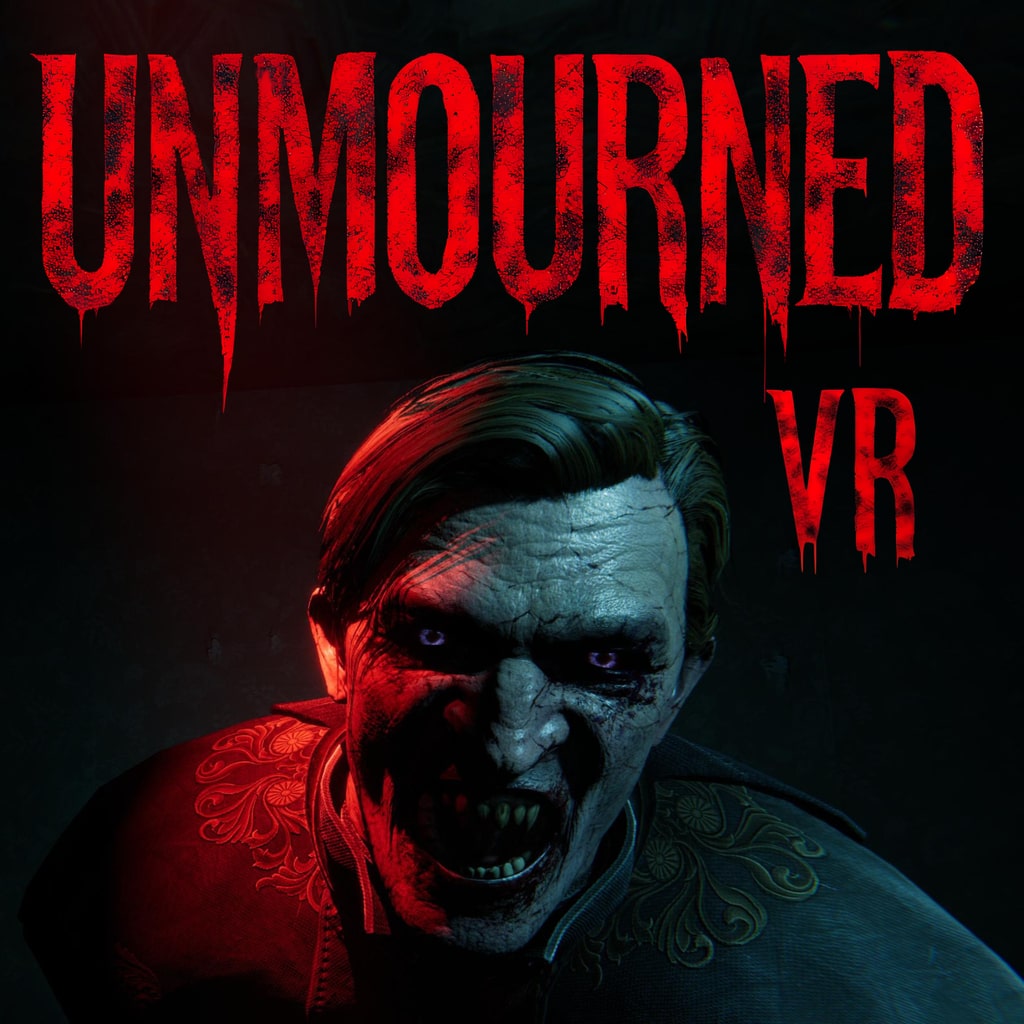
There is something uniquely unpleasant about being frightened in virtual reality. On a television screen, you can glance away. You can remind yourself that the thing creeping towards you is made of pixels, that your sofa is still safely behind you, and that nothing is actually hiding in the corner of the room. VR takes away some of that distance. When a game tells you something is standing behind you, there is a very good chance you will turn around, even when every instinct in your body is screaming at you not to.
Unmourned VR understands this very well. Developed and published by Codebros Studio, this first-person psychological horror experience takes the familiar haunted-house formula and puts you directly inside it. You play as Jason, a man who moves into a new home only to discover that the property has a past far darker than he could have imagined. The previous family mysteriously disappeared, and paranormal activity begins to escalate. Before long, Jason finds himself investigating secrets that perhaps should have remained buried.
Welcome Home, Jason
The opening premise is hardly unfamiliar to anyone who has spent time with horror games. New house, strange noises, unexplained occurrences, and a previous family with a deeply unpleasant history. It is practically the starter pack for psychological horror, but Unmourned VR makes effective use of that familiar setup by putting you inside the house rather than simply asking you to guide a character through it.
That difference matters. Walking through a dark corridor in VR feels considerably more threatening when you are physically looking around it yourself. A creaking floorboard behind you can make you turn your head before you have even consciously decided to do so, while an unexplained movement in the corner of your vision can have you questioning whether you actually saw anything at all.
That uncertainty becomes one of the game’s most effective weapons. Unmourned VR doesn’t need to throw a monster at you every thirty seconds because the house itself becomes something you distrust. You begin to wonder what might have changed since you last walked through a room, what might be waiting behind the next door, and whether the strange sound you just heard was part of the game or something happening somewhere behind you.
When Reality Starts To Crack
The story centres on the tragic history of the family who once lived in the house, and Jason gradually discovers that their disappearance is linked to something far darker. As the investigation unfolds, the game shifts between the present and disturbing visions of the past.
These transitions are particularly effective in VR because they can completely alter the feeling of a space you’ve already explored. A room that seemed harmless a few minutes earlier can suddenly take on entirely different meaning when you experience what happened there. The house becomes a physical archive of trauma, with each revelation adding another uncomfortable layer to the story.
There is also something appealing about being forced to experience these memories rather than simply reading about them in a diary or finding an audio recording. Horror works best when it makes you feel involved, and these reality shifts help blur the boundary between observer and participant. You’re not simply learning about something terrible that happened. For a moment, you’re there.
Darkness Is Your Enemy
Light is obviously important in horror, but Unmourned VR turns darkness into a genuine gameplay mechanic. Spending too long in pitch-black environments causes Jason’s sanity to deteriorate, and as his mental state worsens, the paranormal activity around him becomes increasingly aggressive.
This creates a deliciously horrible dilemma. You need to explore dark areas because answers are often hidden there, but staying too long carries consequences. The sensible response is to get out as quickly as possible, yet curiosity has a nasty habit of winning.
The sanity system works because it doesn’t simply function as another bar to manage. It changes the atmosphere around you. Audio hallucinations, visual distortions and increasingly unsettling events make it harder to trust what you’re seeing and hearing. When a horror game starts making you question your own senses, it is doing something right.
Look Through The Lens
One of the most interesting elements is the camera system. Jason has access to a night-vision camera that lets him navigate areas where ordinary vision isn’t enough, while a separate photographic camera can reveal things hidden from the naked eye.
It is a simple idea, but VR makes it considerably more engaging. Holding the camera up yourself and looking through the viewfinder creates a physical connection between you and the investigation. You aren’t pressing a button to activate a special ability. You’re actually looking through the device, searching for something that may or may not be there.
The photographic camera also fits well with the game’s psychological horror. Darkness can hide things that become visible through the lens, meaning you may find yourself deliberately pointing a camera into a room you absolutely do not want to look into. There is something wonderfully cruel about giving the player the tools to discover the truth while knowing that the truth is likely to make things considerably worse.
Never Quite Safe
The random event system is another useful trick. Paranormal activity can occur unexpectedly throughout the house, so you cannot simply memorise every scare and switch off your fear after the first playthrough.
That unpredictability is essential to a VR horror game. Once you’ve seen the same scare several times, the tension inevitably dissipates. By varying what happens around you, Unmourned VR keeps you slightly uncomfortable even when nothing appears to be happening.
It also encourages players to stay alert. A door opening by itself, an unexplained sound, or something suddenly changing in a familiar room can be enough to make you stop in your tracks. The game doesn’t always need to show you something horrible. Sometimes the suggestion that something might be there is much more effective.
Hands On Horror
Physical interaction is another area where VR suits the experience particularly well. Opening drawers, manipulating objects, searching rooms, and interacting with environmental puzzles feel considerably more immersive when you’re actually reaching out and doing them yourself.
These interactions aren’t revolutionary, but they serve an important purpose. They make the house feel like a physical place rather than a collection of rooms designed to funnel you towards the next scare. Searching through cupboards or examining objects becomes part of the investigation, encouraging you to pay attention to your surroundings.
There is also a certain tension in performing even mundane actions when you’re frightened. Opening a cupboard in a normal game is nothing. Opening one in VR when you’ve just heard something move upstairs is an entirely different proposition. Suddenly, you are very invested in what might be inside.
Atmosphere Does The Heavy Lifting
Visually, Unmourned VR understands that horror doesn’t necessarily need to look spectacular to be effective. The house is designed around claustrophobic spaces, harsh shadows and oppressive darkness, creating an environment that grows increasingly uncomfortable the longer you remain inside it.
Night vision adds another layer to the visual presentation. The green tint makes everything feel colder and more clinical, while the sudden flash of a camera can reveal details previously hidden in darkness. These visual changes help prevent the environment from becoming visually monotonous.
The sound design is perhaps even more important. Creaking floorboards, distant noises, whispers and unexpected sounds make excellent use of spatial audio, particularly when you’re wearing a VR headset. Hearing something behind you when you know there is nobody there is one of those simple horror tricks that remains remarkably effective.
A House Full Of Secrets
The story is at its strongest when it lets the player piece things together. The mystery surrounding the previous owners provides enough motivation to keep exploring, while the hidden door adds another layer of intrigue to the investigation.
There is a genuine sense of discovery as you progress deeper into the house. Each new revelation makes you reconsider what you thought you understood, and the increasingly supernatural events push the story into darker territory.
It isn’t trying to reinvent psychological horror, and I don’t think it needs to. What matters is execution. Unmourned VR takes several familiar ideas and combines them in a way that works particularly well when experienced through a headset.
Final Verdict
Unmourned VR is a reminder that virtual reality and psychological horror are almost disturbingly well suited to one another. By placing the player physically inside a haunted house, Codebros Studio makes simple actions such as opening doors, walking through corridors and looking into dark rooms feel surprisingly dangerous.
Random events sustain uncertainty, while the sanity system gives darkness genuine gameplay consequences. The dual camera mechanics are also a clever addition, particularly when the photographic camera reveals things you would probably have preferred not to see. Add in the reality shifts, physical interactions and strong spatial audio, and there is plenty here to unsettle horror fans.
It isn’t flawless. Some of the scares can feel familiar, and players who have spent years working their way through psychological horror games may recognise some of the tricks being used. The story also occasionally leans into conventions we’ve seen before. However, VR changes the equation, because even a familiar horror scenario can feel completely different when you are standing inside it.
Ultimately, Unmourned VR succeeds. It doesn’t need to reinvent the haunted house. It simply needs to make you dread walking down the corridor. For the most part, it does exactly that.