There is something quietly radical about a game that rejects urgency. In a medium often driven by challenge, optimisation, and escalation, Trash Goblin instead encourages you to slow down, get your hands dirty, and find joy in the act of making something small… better. It’s not about saving the world or mastering complex systems. It’s about running a humble shop, cleaning up discarded trinkets, and giving them a second life.
And yet, within that simplicity, Trash Goblin uncovers surprising depth — not in mechanics, but in mood, intention, and the gentle satisfaction of creative expression.
A Shop Without Stress
At its core, Trash Goblin is a shopkeeping game that purposefully avoids many of the genre’s usual conventions. There are no looming debts, ticking clocks, or harsh penalties for inefficiency. Instead, it provides a space where experimentation is encouraged and mistakes are of little consequence.
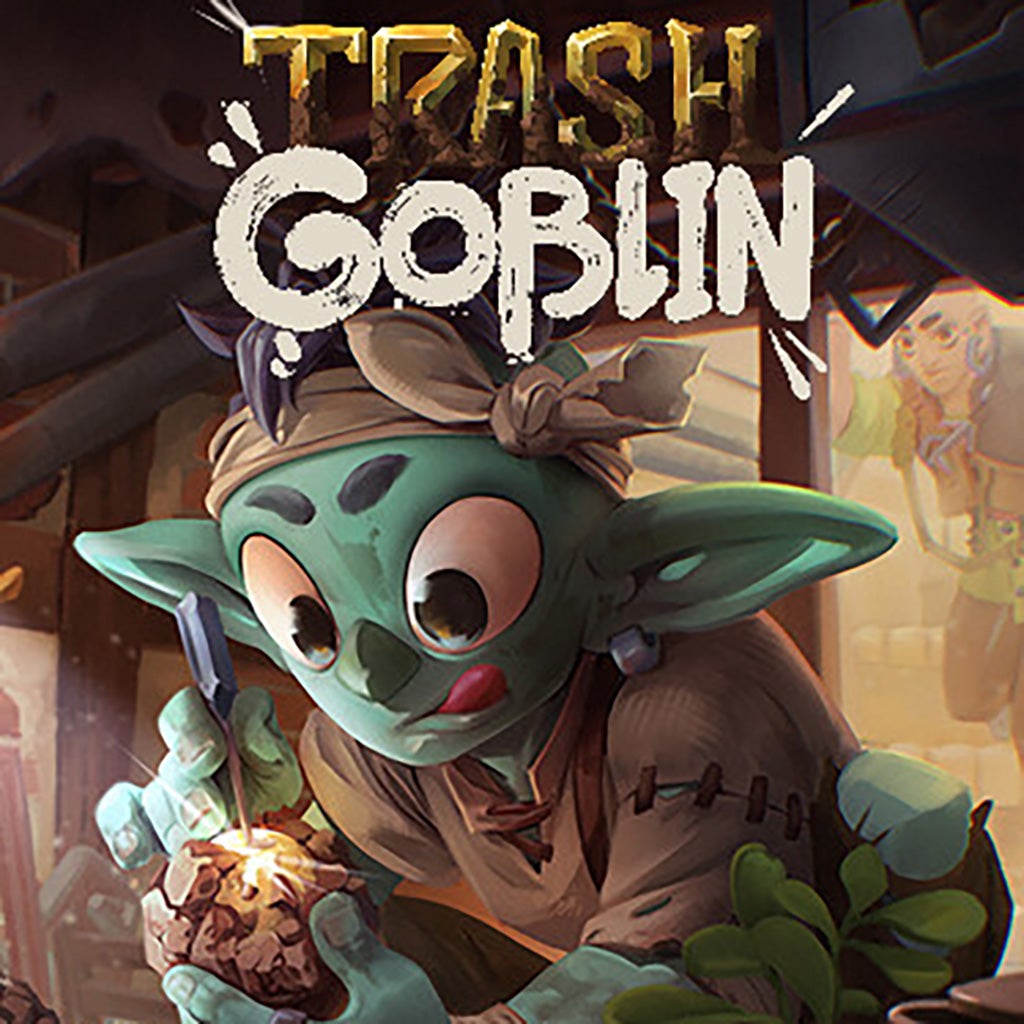
You play as a goblin artisan, finding discarded objects—“trash” in a broad sense—and transforming them into items for sale. The process is straightforward: locate items, clean them, customise them, and sell them to customers with specific (and often unusual) requests.
What makes this process engaging isn’t complexity, but the tactile experience. Cleaning a trinket isn’t just a single button press—it’s an ongoing process. You scrub away grime, reveal hidden details, and gradually turn overlooked objects into valuable items. It’s a small, almost meditative act, repeated throughout the game with subtle variations.
Creativity Over Optimisation
Where many management games emphasise efficiency, Trash Goblin centres on creativity. Customers don’t just want items—they seek specific ones, often with particular traits or customisations. Fulfilling these requests requires not only resources but also imagination.
Upcycling is where the game truly excels. Trinkets can be modified, combined, or enhanced, allowing you to tailor them to customer preferences. There’s no single “correct” solution, and the game rarely penalises experimentation. This freedom encourages players to engage with the system on their own terms, rather than chasing optimal strategies.
The result is a gameplay loop that feels personal. Your shop reflects your choices, your style, and your approach to problem-solving. It’s less about progression in the traditional sense and more about expression.
A World of Oddballs
The customers of Trash Goblin are a constant delight. Inspired by a whimsical fantasy setting, they range from eccentric collectors to curious wanderers, each bringing their own personality and preferences into your shop.
Interactions are brief but memorable. Dialogue tends to be light, often humorous, and sometimes surprisingly warm. These characters don’t just serve as gameplay mechanics—they help build the game’s atmosphere, emphasising its tone of gentle absurdity and kindness.
There’s no traditional overarching narrative, but a strong sense of community persists. Over time, familiar faces return, and your shop becomes part of a larger, loosely connected world.
The “New Horizons” Update
The console release coincides with the 1.4 “New Horizons” update, representing a significant addition. New quests provide extra guidance for players seeking more direction, while new trinkets expand the creative possibilities.
The introduction of New Game+ is especially noteworthy. Although Trash Goblin isn’t a game that demands replayability, this mode offers an opportunity to revisit the experience with more variety, giving long-term players a reason to return.
These updates don’t fundamentally change the game, but they enrich it by adding layers without undermining its core philosophy.
Presentation: Cosy to the Core
Visually, Trash Goblin features a soft, welcoming aesthetic. Colours are warm, animations are gentle, and the overall presentation feels intentionally relaxed. It’s a game designed to make you feel at ease, and it achieves that well.
The shop itself becomes a blank canvas. As you upgrade and personalise your space, it evolves into something uniquely yours. Decorations, tools, and layout choices all foster a sense of ownership that highlights the game’s emphasis on personal expression.
Sound design enhances this beautifully. The soundtrack is unobtrusive yet effective, offering a calming background for your activities. Subtle audio cues—such as scrubbing, placing items, and ambient chatter—boost the sense of immersion.
Progression Without Pressure
Progression in Trash Goblin is deliberately relaxed. Earnings from sales can be used to upgrade your shop, buy better tools, or expand your capabilities. However, there’s no rush—there’s no sense that you must optimise your approach to succeed.
This absence of pressure is both the game’s greatest strength and its most noticeable weakness.
For players seeking a calming, low-stakes experience, it’s ideal. You can dip in and out, play at your own pace, and engage with the systems as much or as little as you like.
But for those who prefer more structured progression or clear objectives, the experience may seem lacking. Without strong external motivation, the loop can become repetitive over prolonged sessions.
Where It Falters
Trash Goblin’s dedication to providing a stress-free experience sometimes sacrifices engagement. The absence of challenge, though deliberate, can make the game seem aimless to some players.
Repetition is another concern. While cleaning and customising trinkets is enjoyable, it doesn’t change significantly over time. New tools and items introduce variety, but the core gameplay loop remains quite similar.
There is also a sense that the game could explore its world more deeply. The setting is charming, but it remains somewhat superficial, with limited narrative expansion.
Final Verdict
Trash Goblin offers a refreshingly gentle experience in a genre often dominated by intensity, challenge, and relentless escalation. It deliberately diverges from those norms, focusing instead on something smaller in scope but equally meaningful: the quiet gratification of restoration, creativity, and connection. Turning discarded items into valued objects isn’t just a gameplay mechanic—it’s the core philosophy of the game, and this ethos is reflected consistently through every system and interaction.
What makes Trash Goblin stand out isn’t traditional mechanical innovation but how it reinterprets familiar ideas. Shopkeeping becomes less about profit and optimisation, and more about understanding customers and expressing creativity through crafted items. Progression isn’t driven by pressure or failure but by curiosity and personal investment in your space. It’s a design approach that feels almost rebellious in its relaxed, player-friendly nature.
However, this philosophy will naturally divide players. Without meaningful stakes or difficulty, some may find the experience aimless if they thrive on challenge or structured goals. The core loop, while satisfying, doesn’t undergo dramatic evolution over time, and repetition might emerge during longer play sessions. There’s also a sense that, while charming, the world could have been explored more deeply, especially in terms of narrative or character development.
Nonetheless, it’s precisely because Trash Goblin refuses to overreach that it succeeds so well. It knows what it aims to be and fully commits to that identity. There’s no unnecessary complexity, no forced tension—just a consistently crafted atmosphere that encourages you to slow down and engage on your own terms.
The “New Horizons” update further reinforces this approach, offering additional content and light structure without altering the essence of the game. It doesn’t fundamentally change the experience but enriches it naturally and appreciatively.
Ultimately, Trash Goblin isn’t trying to be everything to everyone. It caters to a niche, but one it fills exceptionally well. For players seeking something calm, creative, and genuinely comforting, it provides a rare kind of satisfaction—one that endures not through dramatic highs but through its steady, reassuring presence.
In a landscape filled with noise, Trash Goblin succeeds by being quiet—and by trusting that sometimes, that’s exactly what players need.