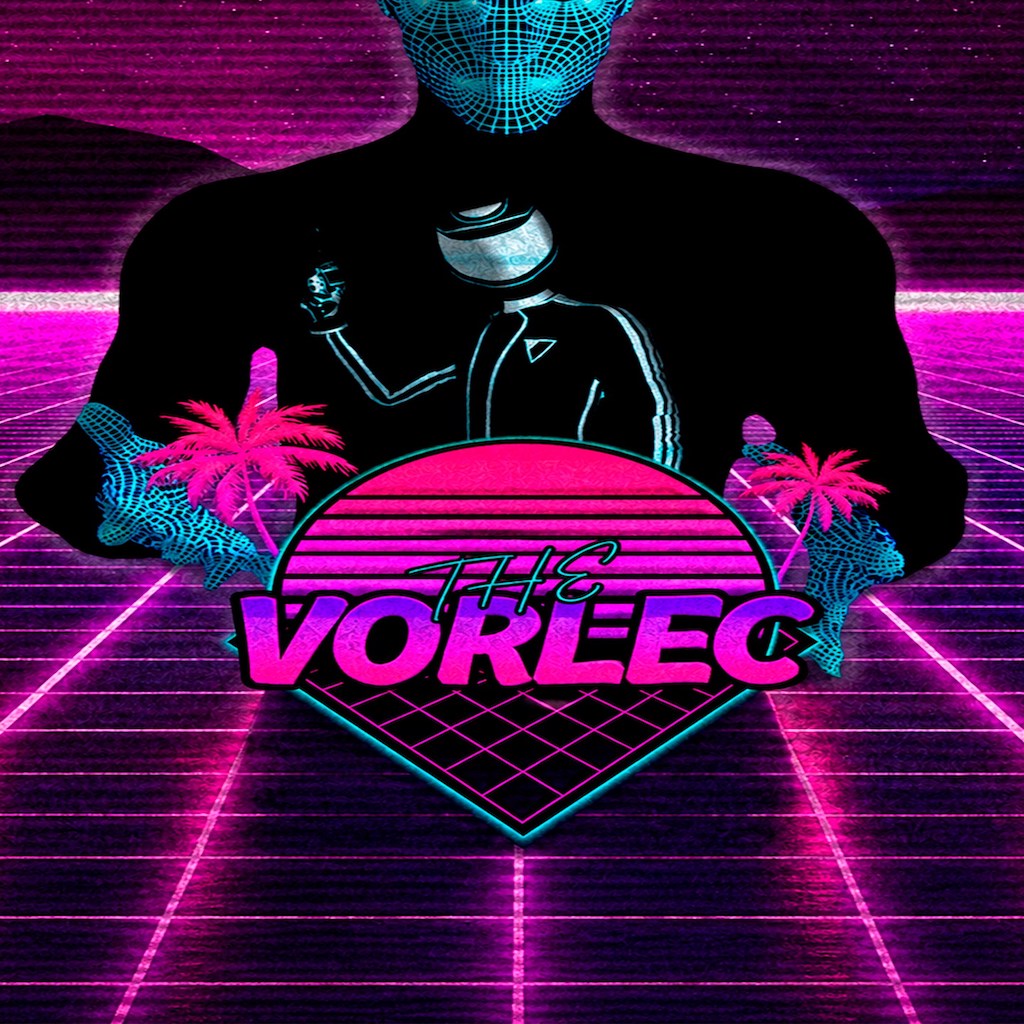
There is something wonderfully nostalgic about a game that seems to have escaped from the imagination of someone who spent their childhood staring at neon lights, old arcade cabinets and futuristic album covers. The Vorlec embraces that aesthetic wholeheartedly, dropping players into a vivid RetroWave world where glowing landscapes, strange dimensions and lethal obstacles combine to create a compact action-platforming adventure. Developed and published by Nor Dreams, it wears its influences proudly while understanding that a strong visual identity can go a long way towards giving a relatively straightforward experience real personality.
At its core, The Vorlec is about movement. You are thrown into dangerous dimensions and expected to dash, jump, wall-run and double-jump your way through environments that seem determined to punish even the slightest mistake. Between the platforming sections are enemies to defeat, environmental puzzles to solve and bosses waiting to test everything you have learned. It is a linear adventure rather than an enormous open world, but that focused approach keeps the game pushing you forwards without getting bogged down in unnecessary distractions.
There is an appealing sense of momentum running through the entire experience. The Vorlec wants you to move with confidence, and when the platforming clicks, there is real satisfaction in chaining movements together and watching the character glide through a dangerous section almost effortlessly. It is not perfect, and there are moments when the repetition shows, but there is enough energy here to make this a worthwhile little trip into the neon unknown.
Welcome To The RetroWave
The first thing that grabs you about The Vorlec is its presentation. The RetroWave aesthetic gives the game an immediate identity, filling its world with glowing colours, futuristic structures and a visual style that feels inspired by the electronic dreams of another era. It is the sort of presentation that can make even a relatively simple environment feel memorable, because everything seems to have been designed around the same bold artistic idea.
The soundtrack complements that beautifully. The synth-driven music provides a constant sense of forward motion, making the platforming feel more energetic than it might otherwise. There is a pleasing relationship between the music, the neon scenery and the movement mechanics, creating the feeling that you are travelling through some strange, interactive electronic album cover.
Visually, it is not necessarily about technical spectacle. The Vorlec succeeds because it has a style rather than because it is attempting to overwhelm you with graphical detail. That distinction matters. Plenty of games can throw impressive effects at the screen, but having a consistent visual identity is something else entirely, and Nor Dreams has clearly understood the value of creating a world that looks unmistakably like The Vorlec.
Movement Is Everything
Platforming is the backbone of the experience, and thankfully the controls are responsive enough to make movement feel satisfying. The ability to dash, double jump and wall-run gives you plenty of options for navigating the game’s hazardous environments. Once you become comfortable with the movement, sections that initially look intimidating can start to feel almost graceful.
That learning process is one of the game’s more rewarding qualities. At first, you may approach an obstacle cautiously, wondering how you are supposed to get past it without falling to your death. After a few attempts, you begin to understand the rhythm and realise that the solution is often to trust the movement system rather than fight against it. There is a lovely moment when a difficult sequence stops feeling impossible and starts to feel natural.
Of course, the game expects you to make mistakes. Platforms can be positioned awkwardly, traps can catch you by surprise, and a poorly timed jump can send you tumbling into whatever unpleasantness awaits below. Fortunately, the challenge generally feels rooted in learning the environment and improving your reactions rather than simply throwing unfair obstacles at you.
A World Designed To Kill You
The environments are full of hazards, and the linear structure allows the game to place them precisely in your path. Moving platforms, dangerous gaps, traps and other environmental challenges force you to pay attention rather than simply holding forward and hoping for the best. There is a pleasing sense that every section is designed to test your mastery of the movement mechanics.
The platforming is at its best when several abilities are combined. A simple jump is rarely enough as the difficulty increases, and you may need to dash towards a wall, run along it and then launch yourself towards another platform. These sequences give the game some of its best moments because they make you feel like you are actually mastering the character rather than simply navigating a series of obstacles.
There is also an appealing rhythm to failure. You try something, fall short, learn from the mistake and attempt it again with a slightly different approach. When you finally make it across, the satisfaction comes from knowing you earned the progress. It is a familiar platforming formula, but it remains effective when the controls are responsive.
Bringing A Gun To A Platforming Fight
Combat offers a welcome change of pace from the platforming. The levels are not empty obstacle courses, and hostile creatures are more than happy to get in your way. Precision ranged attacks and energy abilities give you the tools to deal with them, turning some sections into a mix of movement and combat rather than a purely platforming test.
The combat is relatively straightforward, however. There is enough action to break up long stretches of traversal, but it does not appear to be trying to compete with dedicated third-person shooters. Enemies are there primarily to create another obstacle and keep you moving, rather than to provide an elaborate combat system with dozens of weapons and complex strategies.
That simplicity works reasonably well within the context of the game. The focus remains on movement, and combat does not completely derail the platforming rhythm. There are moments when an enemy encounter can become a little predictable, particularly once you understand the basic patterns, but the overall balance keeps the action moving at a healthy pace.
Puzzles And Dangerous Dimensions
The environmental puzzles offer another chance to slow down and think. After all the frantic movement and combat, having to pause and work out how to progress gives the experience a little breathing space. These puzzles are integrated into the environments rather than feeling like completely separate mini-games, which helps maintain the sense that you are navigating an interconnected world.
They are unlikely to leave seasoned puzzle fans scratching their heads for hours, but they serve their purpose. The best ones make you look at the environment differently and work out how your movement abilities can be used to overcome a particular obstacle. That reinforces one of the game’s central ideas: understanding what your character can do is just as important as reacting quickly.
The dimensions themselves also provide a sense of progression. Travelling through different areas gives the adventure a feeling of movement, even if the environments can occasionally begin to feel somewhat similar. The RetroWave aesthetic ties everything together beautifully, but a little more environmental variety would have helped the later sections feel more distinct.
Facing The Bosses
Boss encounters provide the natural punctuation of the adventure. After working your way through hazards, enemies and puzzles, reaching a boss gives you something more substantial to overcome. These encounters ask you to put your movement and combat skills together, creating a final test of the abilities you have been using throughout the game.
They are enjoyable without necessarily being genre-defining. The straightforward nature of the combat means the bosses do not suddenly transform The Vorlec into a completely different kind of game. Instead, they build on the same principles of movement, positioning and timing.
That consistency is one of the game’s strengths. You are not expected to learn an entirely new system every time you reach a major encounter. The skills you have developed throughout the adventure remain relevant, giving the boss fights a satisfying sense of purpose.
A Little Too Familiar
For all the energy and style The Vorlec brings to the table, it is not without its limitations. The campaign is relatively brief, and the environmental variety sometimes struggles to keep pace with the strength of the visual concept. Once the initial excitement of the RetroWave aesthetic settles, some areas begin to feel familiar rather than genuinely surprising.
Combat is also relatively basic. It does its job, but players looking for a deep third-person action experience may find the encounters somewhat lacking in complexity. The game is strongest when it asks you to move, jump and navigate dangerous spaces, rather than when it asks you to stand still and shoot enemies.
Yet those shortcomings do not completely undermine the experience. In some ways, the shorter campaign is part of the game’s appeal. The Vorlec does not overstay its welcome, and there is something refreshing about a focused adventure that delivers its ideas without stretching them across dozens of hours.
Final Verdict
The Vorlec is a stylish, energetic action platformer with a strong sense of identity. Its RetroWave presentation immediately sets it apart, while the synth soundtrack, responsive movement and dangerous environments combine to create a game that shines when you are hurtling through a neon landscape with barely enough time to think about what comes next.
It does not reinvent either the platforming or third-person combat genres, and its relatively short campaign leaves little room for its ideas to develop. Some environmental repetition and straightforward combat also prevent it from reaching the heights of the very best games in this space. But there is a genuine charm to what Nor Dreams has created, particularly when the movement mechanics start to click and you find yourself effortlessly chaining together jumps, dashes and wall runs.
Most importantly, The Vorlec has personality. It knows what it wants to look and sound like, and it commits to that vision from beginning to end. In a world where many games can sometimes feel visually interchangeable, that alone is worth celebrating.
This is not a sprawling adventure that will occupy your life for weeks. It is a compact burst of neon platforming, synth music, dangerous dimensions and fast action, and there is nothing wrong with that. For players who enjoy retro-futuristic aesthetics and responsive platforming, The Vorlec is well worth stepping into, even if you may find yourself wishing there were just a little more of it.