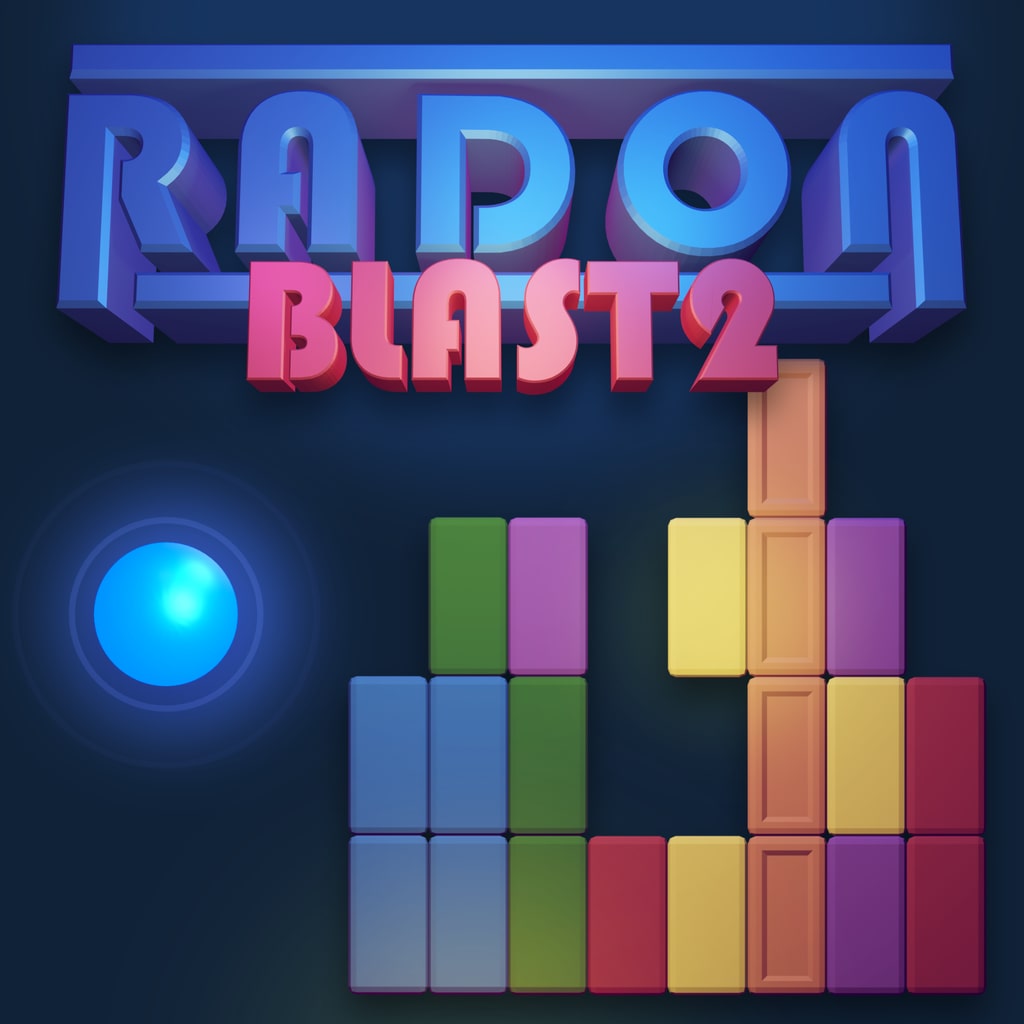
There is something wonderfully timeless about smashing bricks with a bouncing ball. Long before games became enormous cinematic productions with sprawling open worlds and characters with enough dialogue to fill a novel, there were simple arcade ideas that needed almost no explanation. Radon Blast 2 understands that appeal completely. Developed and published by EntwicklerX, this sequel to the 2021 original takes the familiar paddle, ball and brick formula and adds just enough pressure and unpredictability to make a classic concept feel surprisingly tense.
At first glance, Radon Blast 2 looks like the sort of game you could pick up, play for five minutes and put down again without a second thought. In reality, there is a pleasingly addictive rhythm to its gameplay, particularly once the ball starts moving faster and the pressure begins to build. The rules are beautifully straightforward: break the bricks, use bonuses, smash through the force wall and reach the next stage. The catch is that missing the ball can send you backwards, while the ticking clock leaves precious little opportunity to relax.
Breaking The Basics
The heart of Radon Blast 2 remains firmly rooted in the classic brick-breaker formula. You control a paddle at the bottom of the screen, using it to keep the ball bouncing as it tears through formations of bricks above you. It is an idea refined countless times over the decades, and there is a reason developers keep returning to it. When the controls are responsive and the ball behaves predictably enough to reward skill, there is something immensely satisfying about watching a carefully constructed brick formation gradually disappear.
Radon Blast 2 gets that fundamental relationship right. The paddle feels responsive, which becomes increasingly important as the ball accelerates and the number of things happening on screen increases. There is a simple physical satisfaction in positioning the paddle correctly and watching the ball ricochet through a cluster of bricks, especially when several targets disappear in quick succession. It is uncomplicated, but it works.
The real tension comes from the game’s approach to progression. Reaching the next stage is not simply a matter of clearing bricks. The force wall has to be hit repeatedly before it can be destroyed, creating another objective that has to be balanced alongside keeping the ball alive. It gives each stage a little more purpose than simply clearing everything on screen and moving on.
No Two Runs Quite The Same
One of the more interesting additions is the use of randomly sorted stages. Rather than relying entirely on a fixed sequence that players can learn through repetition, Radon Blast 2 introduces an element of uncertainty to each run. That matters because it changes how you approach the game. You cannot simply memorise every layout and know exactly what is coming next.
Randomisation also fits the arcade philosophy rather nicely. Every run becomes an opportunity to see how far you can get with whatever combination of stages and circumstances the game throws at you. Sometimes a layout will feel almost generous, while another can immediately put your reflexes under pressure. That unpredictability helps prevent the experience from becoming too routine, even though the underlying mechanics remain very familiar.
There is also something appealingly old-school about the way the game encourages you to chase your previous performance. The goal is not necessarily to reach some enormous narrative conclusion. It is about getting further, earning more points and proving that you can survive a little longer than you did last time. It is the sort of design that can quietly eat away at your evening because every failed attempt leaves you convinced that the next one will be better.
When The Speed Starts To Hurt
The increasing ball speed is where Radon Blast 2 begins to separate itself from a more relaxed brick breaker. Early sections give you enough breathing room to settle into the rhythm, but as the pace increases, those comfortable reactions become less useful. Suddenly, the paddle has to be positioned almost instinctively, and a fraction of a second can determine whether the ball is safely returned or disappears off the bottom of the screen.
That acceleration creates genuinely exciting moments. You can find yourself watching the ball closely, anticipating its angle and moving the paddle into position before it arrives. Then it ricochets off a brick in an unexpected direction and everything changes. The best arcade games thrive on that mixture of skill and controlled chaos, and Radon Blast 2 understands how to create it without making the controls feel unfair.
The game’s time limit adds another layer of pressure. You only have seconds before the ball explodes, so a cautious approach is not always the safest. You have to keep moving, keep breaking bricks and keep thinking ahead. It is a small addition to the formula, but it gives otherwise familiar gameplay a stronger sense of urgency.
Power Ups And Panic
Power-ups add another welcome layer of variety. Speed bonuses can alter the pace of a run, while multiple balls create opportunities for much bigger scores and considerably more chaos. Seeing several balls bouncing around the screen at once can be enormously satisfying, but it also makes keeping everything under control considerably more difficult.
That risk-and-reward relationship is one of the game’s better qualities. More balls mean more potential destruction and more opportunities to build your score, but they also mean more things to watch. A successful multi-ball sequence can feel like you’ve suddenly taken control of the entire screen, whereas losing one of those precious balls can bring you crashing back to reality rather quickly.
Bonus multipliers are similarly important for anyone who wants to chase genuinely impressive scores. They encourage players to think beyond simply surviving and start considering how efficiently they are clearing stages. That distinction is important because it gives experienced players another reason to keep coming back. Once you understand the basic mechanics, improving your score becomes the real challenge.
The Sting Of Going Backwards
Perhaps the most interesting design decision is what happens when you miss a ball. Rather than simply losing a life and continuing, Radon Blast 2 can send you back to the previous stage. That sounds like a small change, but psychologically it makes mistakes feel considerably more significant.
Nobody enjoys losing progress, particularly when they have just fought their way through increasingly difficult stages. Being pushed backwards can be frustrating, but it also creates a sense of consequence that many traditional brick breakers lack. Suddenly, that ball coming towards the bottom of the screen feels much more threatening because failure is not simply about losing the current attempt. You could find yourself having to fight through territory you thought you had already conquered.
This mechanic will probably divide players. Some will love the added pressure, while others may find it unnecessarily punishing, especially during the faster sections. Personally, I think it suits the game’s arcade personality. Radon Blast 2 is not trying to be a relaxing way to pass the time. It wants you to concentrate, react, and occasionally curse under your breath when the ball takes an unfortunate bounce.
Familiar Territory
For all its strengths, Radon Blast 2 does not completely reinvent the brick-breaker. The underlying mechanics remain extremely familiar, and anyone who has spent years playing Breakout, Arkanoid or one of the many games inspired by them will know exactly what to do almost immediately. There are no revolutionary new systems here that will transform the genre.
That is both a criticism and a compliment. The lack of major innovation can make the game feel like a particularly polished return to a formula we already know extremely well. At the same time, that familiarity makes it wonderfully accessible. You do not need to learn complicated controls or spend hours understanding a convoluted progression system. You pick up the paddle and start breaking bricks.
Ultimately, the question is whether that simplicity is enough to keep you playing. For dedicated arcade fans, I suspect it will be. The randomised stages, escalating speed, power-ups, score multipliers and stage demotion mechanic provide enough small variations to make repeated attempts worthwhile. Players looking for a modern reinvention of the genre, however, may find the experience somewhat conservative.
Final Verdict
Radon Blast 2 is a reminder that sometimes the simplest games can still get their hooks into you. It takes one of gaming’s most recognisable formulas and gives it a brisker pace, unpredictable stage layouts and a few cleverly chosen complications. The increasingly frantic ball speed, ticking timer and possibility of being sent backwards combine to make a familiar experience considerably more nerve-racking than you might initially expect.
There are no grand ambitions here, and that is perfectly fine. Radon Blast 2 is not attempting to tell an epic story or redefine arcade gaming. It simply wants to give players a ball, a paddle, a screen full of bricks and a reason to keep trying for a higher score. For anyone with a soft spot for classic arcade games, that is hardly a difficult proposition to resist.
The sequel’s biggest weakness is also its greatest limitation. Beneath the random stages and additional mechanics, this remains a traditional brick breaker, and players hoping for a dramatic evolution of the formula may come away wanting more. But for those who appreciate the purity of arcade design, Radon Blast 2 offers an enjoyable mix of precision, pressure and nostalgia. It may not break new ground, but it certainly knows how to break bricks.