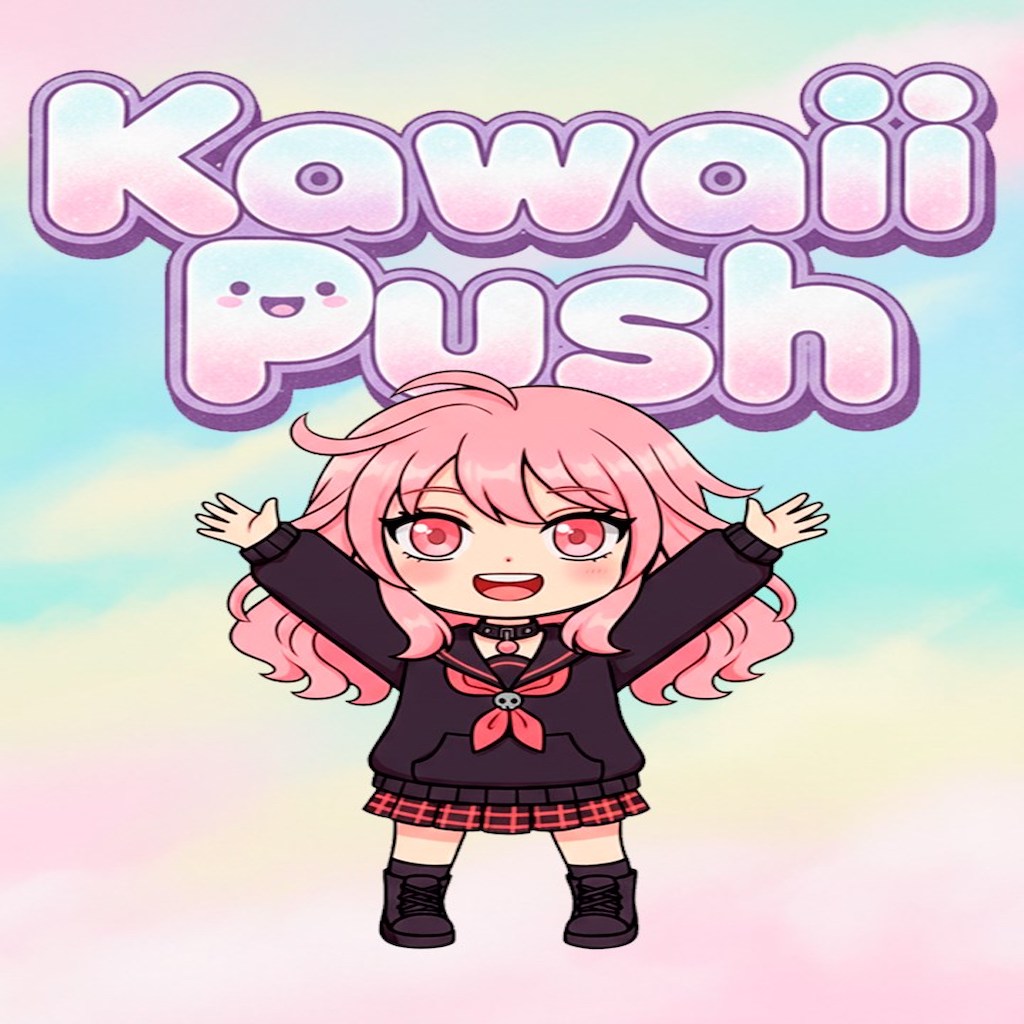
There is something strangely comforting about a good Sokoban puzzle. The rules are simple enough to grasp in seconds, yet the consequences of a single misjudged move can leave you staring at the screen, wondering where it all went wrong. KAWAII PUSH embraces that familiar formula and wraps it in a bright, colourful anime presentation that makes the whole experience feel considerably more welcoming than the sometimes austere world of traditional grid-based puzzle games. Developed and published by Yume Game Studio, it is a gentle little brain teaser that knows exactly what it wants to be.
At its heart, KAWAII PUSH is about moving boxes into their designated positions while carefully navigating each enclosed environment. You control a red-haired girl as she wanders through a series of cute, vibrant stages, pushing blocks around the grid and trying not to trap yourself in the process. There is no frantic combat, no timer breathing down your neck, and no complicated set of systems to learn. Instead, the game simply asks you to stop, think, and work out the best way forward.
That simplicity is a large part of its appeal. In a gaming landscape increasingly filled with experiences demanding constant attention, KAWAII PUSH feels like a small opportunity to slow down. It is the sort of game you can pick up for a few minutes, solve a couple of puzzles, and put down again, or settle into for a longer session when you fancy something that exercises the grey matter without leaving you exhausted.
Cute, Colourful and Comforting
The first thing that stands out is the visual presentation. KAWAII PUSH clearly understands that its charm is not going to come from radically reinventing the Sokoban formula, so it gives the presentation a lot of personality instead. The anime-inspired protagonist and colourful environments create a cheerful atmosphere that contrasts nicely with the sometimes surprisingly cruel logic of the puzzles.
There is something pleasing about seeing such a traditional puzzle concept presented with this much warmth. The red-haired protagonist gives the game a recognisable face, while the colourful surroundings make each puzzle feel like part of a little world rather than simply another collection of squares on a grid. It may not be pushing visual technology to its limits, but that was never really the point. The artwork exists to make the experience inviting, and in that respect it does its job.
The overall presentation also reinforces the game’s relaxing nature. There is no sense that KAWAII PUSH is trying to intimidate you or make every puzzle feel like an examination. Even when you make a mistake, the tone remains light. It creates an environment where thinking through a problem becomes enjoyable rather than stressful, which is precisely the sort of atmosphere a casual puzzle game should aim for.
The Joy of Pushing Things Around
Of course, beneath all the cuteness lies a game built around one of gaming’s oldest puzzle mechanics. Boxes need to be pushed into specific locations, and because they cannot be pulled back towards you, every move must be considered carefully. A box pushed into the wrong corner can become useless, potentially forcing you to rethink the entire puzzle.
That is where KAWAII PUSH can occasionally catch you out. The early stages provide a comfortable introduction to the mechanics, allowing players to understand how movement and box placement work without overwhelming them. As the puzzles become more involved, however, you need to think several moves ahead. It is no longer enough to ask where a box needs to go. You have to work out how to get into the correct position to push it there.
This is classic Sokoban design, and there is something satisfying about watching a seemingly impossible arrangement gradually make sense. You might spend several minutes moving boxes around without making any real progress, only to suddenly spot the sequence you were missing. That little moment of clarity is the real reward. There is no need for a flashy explosion or elaborate celebration because solving the puzzle itself provides the satisfaction.
Think Before You Push
The strongest part of KAWAII PUSH is probably its accessibility. You do not need to be an expert puzzle player to understand what the game expects of you, and the moderately challenging design provides enough resistance to keep your brain engaged without turning every level into a battle of attrition.
That balance is important. Make the puzzles too easy and the experience becomes little more than busywork, but make them excessively difficult and a casual audience can quickly lose interest. KAWAII PUSH generally sits somewhere in the middle. It gives you enough to think about without demanding that you become a master of spatial mathematics.
There is also something inherently relaxing about being allowed to solve a puzzle at your own pace. Without the pressure of combat or a countdown, you can experiment with different approaches and take your time considering the consequences. When a plan goes wrong, you can simply reset and try again. It is an old-fashioned approach to game design, but there are times when old-fashioned is exactly what you want.
Where the Formula Shows Its Age
The downside is that KAWAII PUSH does not bring anything particularly revolutionary to the Sokoban genre. The basic mechanics are extremely familiar, and anyone who has played a substantial number of block-pushing puzzle games will probably recognise the structure almost immediately. There are no major gameplay twists that fundamentally change how you approach the puzzles.
That is not necessarily a serious problem, but it does limit the game’s ability to surprise. Once you understand the central mechanics, much of the experience becomes about solving variations on the same basic challenge. The later stages can therefore feel somewhat repetitive, particularly for experienced Sokoban players who are already comfortable planning several moves ahead.
This is where additional mechanics could have helped. Environmental interactions, unusual block types, switches, moving obstacles, or other puzzle elements might have given the later stages another dimension. KAWAII PUSH instead largely relies on the strength of its core formula, and while that formula remains enjoyable, there comes a point when you may wish it had another trick up its sleeve.
A Puzzle Game With Personality
What saves the experience from feeling generic is the presentation. There are plenty of Sokoban games available, and many of them can blur together after you have pushed enough boxes around enough grids. KAWAII PUSH at least has a distinct visual identity that makes it easier to remember.
The anime-inspired artwork is not simply decoration either. It gives the game a personality that complements the gentle nature of the puzzles. The cheerful protagonist and colourful environments make the experience feel friendly, which is particularly important for a game clearly designed to appeal beyond dedicated puzzle enthusiasts.
That makes KAWAII PUSH an easy recommendation for players who may normally avoid more demanding puzzle games. It does not require you to understand complicated systems before you can enjoy yourself. You can sit down, look at the board and start experimenting almost immediately. For younger players, casual gamers or anyone simply looking for something peaceful to play between larger adventures, that accessibility is a genuine strength.
Is There Enough To Keep You Coming Back?
Replayability in a Sokoban game is interesting because the puzzles themselves do not necessarily need to change to remain enjoyable. Once you have solved a stage, the challenge becomes remembering how you approached it or finding a more efficient route. For players who enjoy optimising their solutions, there can be plenty of satisfaction in revisiting familiar puzzles and trying to improve.
For everyone else, the motivation is likely to come from simply wanting to see what the next puzzle looks like. KAWAII PUSH is at its best when it introduces a layout that initially looks confusing but gradually reveals its solution. That feeling of progression provides a gentle incentive to keep going.
However, the lack of substantial new mechanics means its long-term appeal will depend heavily on how much you already enjoy Sokoban. Fans of the genre are likely to find enough here to settle into a comfortable rhythm, while newcomers may appreciate the simplicity but eventually want something more ambitious. It is enjoyable rather than revolutionary, and that distinction is important.
Final Verdict
KAWAII PUSH does not reinvent Sokoban, and it probably never set out to. Instead, it takes a proven puzzle formula, gives it a colourful anime makeover, and creates a pleasant, accessible experience that is easy to understand yet still capable of making you pause and think. Its biggest strength is how it combines straightforward puzzle design with a cheerful presentation and a relaxed atmosphere.
The lack of significant mechanical innovation does hold it back. Experienced Sokoban players may find themselves wishing for more elaborate environmental puzzles or new gameplay ideas as they progress, while some later stages can begin to feel familiar rather than genuinely surprising. Nevertheless, there is something undeniably likeable about the game’s simplicity. It does not try to overwhelm you with unnecessary features or pretend that every puzzle needs to reinvent the genre.
Sometimes, pushing a box into the right place is enough. KAWAII PUSH understands that, and its cheerful presentation makes the process surprisingly enjoyable. It is a gentle, charming puzzle game that offers a welcome change of pace from more demanding experiences. While it may not leave a lasting mark on the Sokoban genre, it certainly provides a pleasant little place to spend some time.