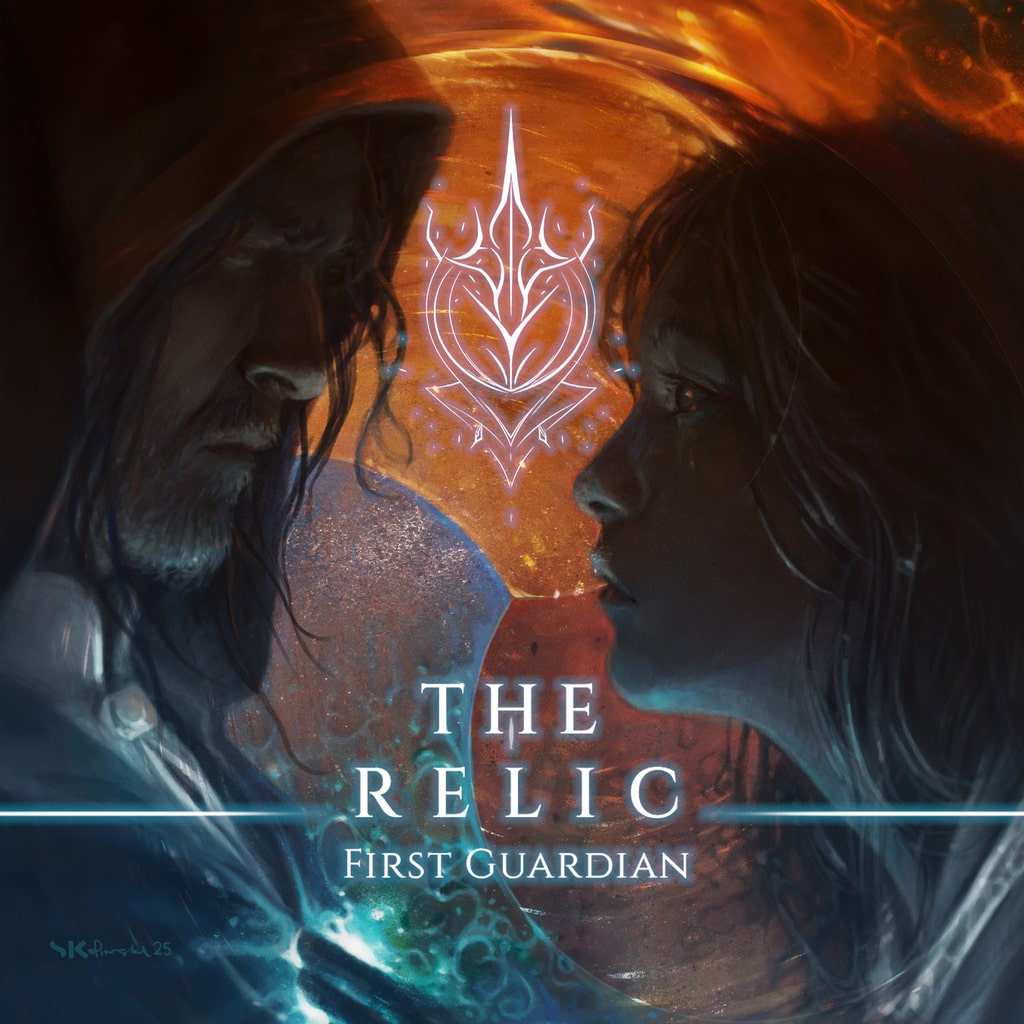
The action RPG genre has grown increasingly crowded over the past decade. Every year brings another dark fantasy adventure promising punishing combat, sprawling worlds and towering bosses eager to test players’ patience. Standing out in such a competitive space is no easy feat, particularly for a small independent team, but The Relic: First Guardian arrives with something increasingly rare in modern games: a genuine sense that its developers are trying to do things their own way.
Developed by Project Cloud Games, a passionate core team of just twelve people, The Relic: First Guardian is an ambitious action RPG that has been six years in the making. The studio has deliberately challenged many of the genre’s established conventions, particularly in combat, vulnerability and progression. Heavily inspired by classic Korean stories and folklore, the result is a dark, gritty adventure that does not always get everything right, but consistently feels like it has something to say.
That ambition becomes even more apparent when considering what has happened since launch. Project Cloud Games has continued to support the game through several patches, incorporating community feedback on stability, NPC behaviour, balancing, rewards, events, combat, progression and localisation. That ongoing commitment matters because The Relic: First Guardian is the kind of game that benefits enormously from refinement. Beneath its rougher edges is an RPG with considerable heart, and it is encouraging to see a small studio continuing to push towards the experience it originally envisioned.
A World Built on Broken Memories
The kingdom of Arsilthus is not a place waiting patiently to be saved. It is a civilisation that has already endured its apocalypse, with the Great Relic’s destruction leaving the land fractured and its people scattered. What remains is a landscape of ruins, forgotten battlefields and remnants of a history that refuses to disappear entirely.
There is a wonderful melancholy running through the world. Rather than bombarding the player with endless exposition, The Relic: First Guardian often lets its environments do the talking. Crumbling temples, abandoned settlements and ancient structures tell stories through their very existence, creating the impression that every location has witnessed events far beyond the player’s immediate adventure.
The Relics themselves reinforce this idea beautifully. They are not merely another form of collectible or stat-boosting resource. They carry echoes of their previous owners, giving the act of discovering them an emotional significance that goes beyond improving your character. Exploration consequently becomes an act of remembrance, with the player piecing together fragments of a world that has almost forgotten itself.
This is where the Korean inspiration becomes particularly important. The game does not simply dress a conventional fantasy setting in vaguely Eastern aesthetics. Its darker interpretation of Korean folklore gives Arsilthus an identity of its own, helping the world stand apart from the familiar castles, knights and European mythology that dominate the action RPG landscape.
Combat That Demands Discipline
Combat is where Project Cloud Games makes perhaps its most interesting attempt to challenge convention. Rather than tying stamina to every attack, The Relic: First Guardian allows players to attack freely, reserving stamina primarily for defensive actions such as dodging and blocking.
It sounds like a small mechanical change, but it completely alters the rhythm of combat. You are encouraged to maintain pressure rather than constantly stopping to recover stamina, yet that aggression must be balanced against the risk that defensive mistakes can leave you dangerously exposed.
This creates a fascinating relationship between aggression and vulnerability. You can attack relentlessly, but you cannot simply mash your way through every encounter. A poorly timed dodge can leave your stamina depleted at exactly the wrong moment, while reckless blocking can put you in an equally uncomfortable position.
The result is combat that feels considerably more fluid than some of its inspirations. Successful defensive manoeuvres create opportunities to retaliate immediately, giving encounters a satisfying rhythm that rewards players for understanding enemy behaviour rather than simply memorising attack patterns.
Magic further expands the system through cooldown-based abilities and separate resource management. Rather than treating powerful abilities as precious commodities to be hoarded indefinitely, the system encourages players to incorporate them into their regular combat rotations. It makes experimentation feel natural and gives different builds room to develop their own rhythm.
Five Weapons, Five Different Journeys
Weapon variety is another area where The Relic: First Guardian deserves credit. The five weapon categories are not merely variations on the same basic combat system with different statistics attached. Daggers, two-handed weapons, longswords, sword-and-shield combinations and battle staffs each encourage noticeably different approaches.
The associated weapon mastery trees reinforce this distinction. Investing in a preferred weapon gradually unlocks new techniques, passive abilities and spectacular ultimate attacks, creating a sense of progression without forcing players to remain permanently committed to a single style.
Perhaps more importantly, the game avoids drowning the player in endless duplicates. Weapons are presented as unique artefacts, each with its own appearance and history. Finding a new weapon therefore feels like discovering something rather than simply replacing a sword with an identical sword that happens to have a larger number attached to it.
That design philosophy complements the game’s wider emphasis on discovery. Equipment becomes part of the world rather than simply another layer of statistics, making the act of exploring Arsilthus considerably more rewarding.
Strength Through Discovery
Character progression is another area where Project Cloud Games has taken a different route. The Relic: First Guardian largely avoids the traditional experience-point treadmill, instead placing greater emphasis on equipment, Relics and passive abilities.
This works particularly well because exploration and character development are closely connected. Finding a powerful Relic can completely change how a build functions, while the game’s wide selection of passive effects allows players to tailor their character to offensive, defensive or elemental strategies.
The ability to freely experiment with these bonuses is especially welcome. If a particular boss exposes a weakness in your current build, there is no need to grind levels until your statistics are high enough to overcome the problem. Changing your equipment and passive combinations can be just as important.
It is a system that encourages players to think about their character rather than simply watching numbers steadily increase. Progress feels earned through curiosity and experimentation, which fits beautifully with the game’s wider emphasis on exploration.
Legends Worth Defeating
Boss encounters naturally become some of the adventure’s biggest highlights. Project Cloud Games has put considerable effort into ensuring that major enemies are not simply enormous health bars with increasingly powerful attacks.
Each boss demands observation and patience. Learning attack patterns, recognising openings and managing defensive resources become essential, particularly as encounters become more elaborate.
There is also a welcome sense of tragedy behind many of these encounters. The game’s recurring themes of forgotten history, loss and corruption extend into its boss design, so these battles often feel like confrontations with remnants of Arsilthus’ past rather than arbitrary obstacles placed in the player’s way.
Some encounters favour overwhelming strength, while others rely on speed and relentless aggression. That variety prevents the boss fights from becoming too predictable and provides some of the most satisfying moments in the entire adventure.
Exploration Rewards Patience
The semi-open structure of Arsilthus strikes a pleasing balance between freedom and direction. There is plenty of room to stray from the critical path, yet the world never feels so vast that exploration becomes exhausting.
Hidden caves, shrines, secret areas and forgotten corners reward players willing to look beyond the obvious route. These discoveries can yield weapons, Relics and additional lore, giving exploration tangible value rather than simply filling the map with arbitrary collectibles.
The environmental design is often impressive. Forests, ruined fortresses, corrupted landscapes and forgotten settlements each possess a distinct visual identity, while the constant sense of decay sustains the oppressive atmosphere that defines the adventure.
There is also satisfaction in returning to previously inaccessible locations. As new abilities and routes become available, familiar areas can suddenly reveal secrets that were once out of reach. This gives the world a sense of cohesion, making exploration feel purposeful rather than merely decorative.
A Small Team With Big Ambitions
It is impossible to discuss The Relic: First Guardian without acknowledging the circumstances surrounding its development. Project Cloud Games is not a huge studio with hundreds of developers working behind the scenes. The game was created by a passionate core team of around twelve people over a six-year development period.
That context makes the game’s ambition all the more striking. There are moments when the limitations of a smaller production are visible, but there are also moments when the team’s creativity shines through. The distinctive combat philosophy, Korean-inspired setting and unusual progression systems demonstrate that Project Cloud Games was never interested in simply producing another anonymous dark fantasy action RPG.
The studio’s willingness to continue refining the game after launch is equally encouraging. Several patches have already addressed areas including stability, NPC behaviour, balancing, rewards, events, combat, progression and localisation. Rather than treating release as the finish line, Project Cloud Games appears to regard it as another stage in the game’s development.
That commitment gives The Relic: First Guardian a slightly different character today than it had at launch. It feels like a project that is still being shaped by its creators and its community, with each improvement bringing it closer to the experience the studio originally imagined.
Rough Edges, But Room to Grow
The game is not without its shortcomings. Animation quality can occasionally fluctuate, particularly during combat transitions, while enemy hit detection can feel less consistent when battles become crowded with visual effects and multiple opponents.
The storytelling will also not appeal to everyone. Players seeking a heavily cinematic experience may find the narrative restrained, as much of the game’s history is conveyed through environments, fragments and discoveries rather than lengthy cinematic sequences.
There are still occasional technical imperfections, although Project Cloud Games’ continued patching shows the studio is actively working to improve the experience. Given the team’s size and the scale of the project, it is difficult not to view some of these rough edges in the context of what has actually been achieved.
More importantly, the problems rarely overwhelm the qualities that make the game distinctive. The foundation is strong, and the continued support suggests that Project Cloud Games understands where further work can make the greatest difference.
A New Chapter Ahead
The future of The Relic: First Guardian looks considerably broader than its initial launch might suggest. Project Cloud Games and Perp Games have announced that the game will arrive on Xbox Series X/S and Xbox Anywhere on September 25, followed by a Nintendo Switch 2 release on October 9.
There is also a more immediate opportunity for players on PC and PlayStation 5, with the game receiving a price reduction from August 26. Players who have paid, or will pay, the full price before that date will also receive an exclusive piece of content for free as a thank-you for supporting the game early.
Before those expanded releases arrive, the game is set to receive a major update as part of Project Cloud Games’ continued effort to improve and refine the experience. For a project created by such a small team, that level of ongoing support is genuinely encouraging.
It also makes the game’s journey particularly interesting. The Relic: First Guardian is no longer simply being judged on what it achieved at launch. It is becoming an evolving action RPG, shaped by developer ambition, player feedback and the lessons learned during its first stage of release.
Final Verdict
The Relic: First Guardian is an impressive achievement from a remarkably small development team. Its combat system is bold enough to challenge established conventions, its progression encourages experimentation, and its interpretation of Korean folklore gives Arsilthus an identity that many larger action RPGs struggle to establish.
It is not perfect. Technical imperfections remain, some animations lack polish, and the restrained storytelling will not suit everyone. Yet beneath those imperfections lies something far more important: personality.
After six years of development, Project Cloud Games has created a world that feels like it belongs to them. The Relic is not simply another attempt to imitate the biggest names in the action RPG genre. It takes familiar foundations and bends them to its own ideas about vulnerability, combat, discovery and memory.
The continued post-launch support only strengthens that impression. Seeing the studio respond to community feedback and work on stability, combat, progression, balancing, rewards and localisation demonstrates a level of commitment that deserves recognition.
The Relic: First Guardian proves that a small team does not need blockbuster resources to produce an ambitious action RPG with its own voice. It needs conviction, patience and something worth saying. Project Cloud Games clearly has all three.