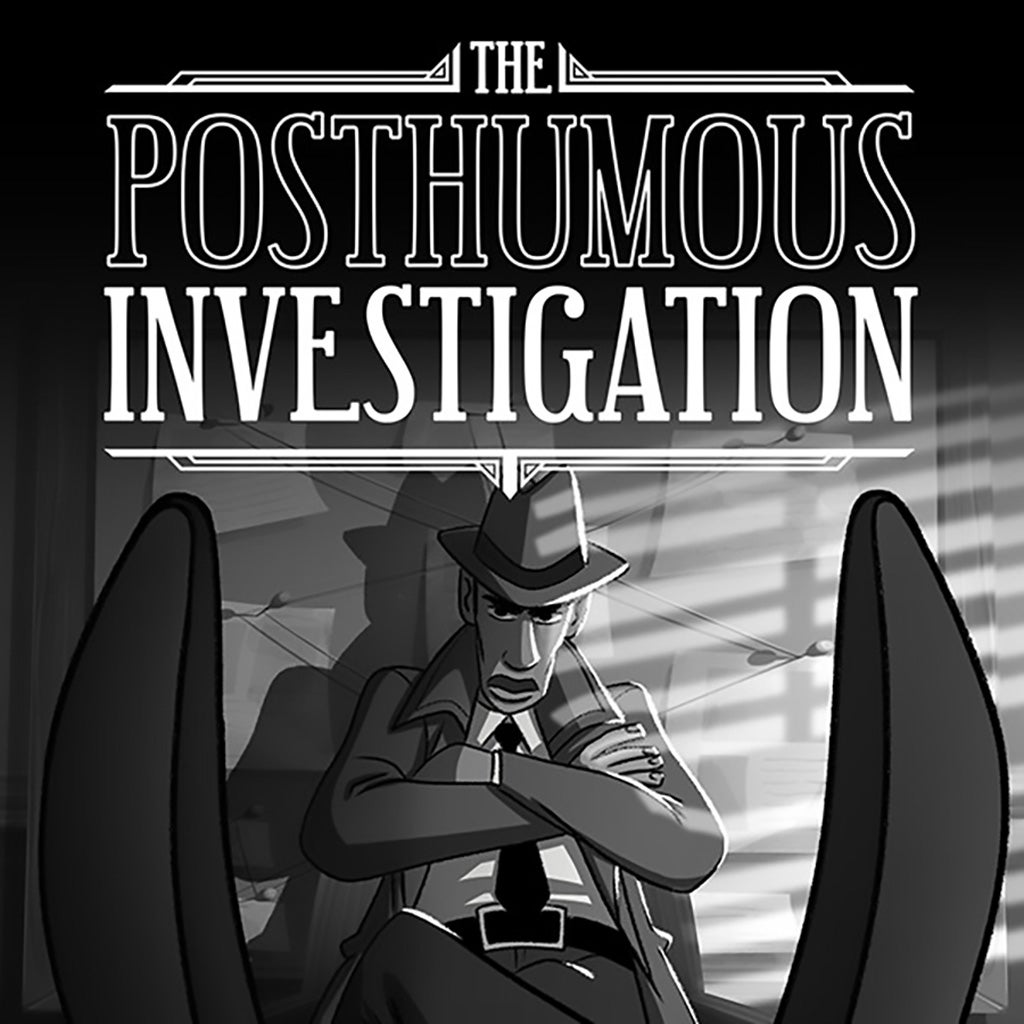
There are many ways to begin a detective story, but being hired by a dead man is certainly one of the more memorable options. The Posthumous Investigation wastes little time establishing that this isn’t going to be an ordinary point-and-click adventure. You step into the shoes of a private investigator tasked with solving a crime for Brás Cubas, an extremely wealthy and rather eccentric man who has the considerable inconvenience of already being dead. Worse still, you have just one day to uncover what happened before the clock runs out and the whole thing begins again.
That time loop is the foundation on which practically everything else is built, and it is wonderfully clever. Your first day is less about solving the murder and more about understanding the world around you. Who goes where, who meets whom, what they say, and, perhaps most importantly, what they don’t say all become pieces of a much larger puzzle. Every reset gives you another chance to notice what you missed before, and the satisfaction comes from gradually turning a seemingly impossible mystery into something you can actually understand.
Welcome To 1937 Rio
The setting immediately gives The Posthumous Investigation a distinct identity. This is 1937 Rio de Janeiro, rendered in a beautifully hand-drawn monochrome style that makes the entire world look as though it has been lifted from the pages of an old illustrated novel. Streets, buildings and interiors are steeped in atmosphere, while the stark black-and-white presentation lends even the most ordinary locations an air of suspicion.
It is a setting that feels particularly appropriate for a story inspired by Machado de Assis. His influence is woven into the game’s writing and themes, with social observation, irony and dark humour sitting alongside the central murder mystery. You aren’t simply investigating a collection of suspects. You are also wandering through a world filled with personalities, class differences, contradictions and people who have plenty to say while revealing remarkably little about themselves.
One Day, Fourteen Suspects
The cast of 14 characters is at the heart of the investigation. Rather than waiting around for you to interrogate them whenever you feel like it, these people have lives of their own. They follow routines, meet other characters, visit particular locations and carry on with their business whether you are watching or not.
That makes simply observing the world surprisingly important. You might follow someone during one loop to discover where they go, then use that knowledge in the next cycle to intercept them elsewhere. Eventually, patterns begin to emerge. A character who claimed never to have met another suspect suddenly turns up somewhere they shouldn’t be, or a seemingly innocent conversation takes on an entirely different meaning once you know what happened earlier in the day.
It is this gradual accumulation of knowledge that makes the game so compelling. You aren’t just collecting clues. You are learning how the entire day works.
Master The Loop
Time loops have become increasingly popular in games, but The Posthumous Investigation understands that the real pleasure comes from using information rather than simply repeating events. Once you’ve discovered something, you don’t need to rediscover it every time the day resets. Your knowledge becomes your greatest weapon, allowing you to approach familiar situations with entirely different intentions.
A previously inaccessible door can suddenly become useful once you’ve discovered a code. A character who refused to talk might become much more cooperative once you know something about their schedule. A meeting that seemed completely irrelevant on your first attempt can later become the key to understanding the entire case.
The game therefore turns repetition into progression. The day may keep repeating, but you don’t. With every cycle, you become more informed, more confident and increasingly able to manipulate the routines around you.
Thinking Like A Detective
The Thinking Board is where all those observations begin to come together. Rather than simply throwing clues into an enormous inventory and hoping the correct answer eventually reveals itself, the game asks you to make connections between evidence, people, locations and events. It becomes your personal detective’s workspace, allowing you to reconstruct the timeline and gradually build a coherent theory.
This is one of the strongest elements of the entire experience because it makes you feel as though you’re actually investigating rather than simply following a series of objectives. When you make a connection yourself, there is a genuine little spark of satisfaction. You aren’t being told that you’ve solved something. You’ve worked it out.
That distinction matters enormously in a detective game. The best mysteries make you feel clever without making you feel as though the game is cheating, and The Posthumous Investigation generally strikes that balance beautifully.
No Hand Holding
This is not an adventure that constantly points to the next clue with a giant flashing sign. It expects you to pay attention, remember conversations and think about what you’ve seen. At times, that can be demanding, particularly if you’ve become accustomed to modern adventure games that are extremely generous with hints.
Personally, I found that refreshing. There is something much more satisfying about remembering that a particular character was somewhere at a certain time and then realising that their story doesn’t quite add up. You begin to develop your own theories, test them against the evidence and occasionally discover that you were spectacularly wrong. Those moments are part of the fun.
The game also embraces the idea that there isn’t necessarily a single interpretation of every accusation. Different conclusions can have their own internal logic, which gives the final stages an interesting sense of freedom. Instead of simply asking whether you’ve found the answer the developers wanted, the game asks whether your reasoning makes sense.
Conversations Matter
Dialogue is obviously a major part of the experience, and thankfully the writing is strong enough to make those conversations worth paying attention to. The characters have distinctive personalities, while Machado de Assis’s influence gives the script a literary quality that sets it apart from the usual murder-mystery fare.
There is plenty of wit here, but it isn’t afraid to turn darker when the story demands it. The humour often comes from the absurdity of the people you encounter rather than from obvious jokes, which makes it feel more natural. You might find yourself smiling at a particularly sharp exchange one moment and then reconsidering what you’ve just heard when a new piece of evidence changes the context entirely.
A Noir World In Black And White
Visually, this is one of those games where the art style does much of the heavy lifting. The monochrome presentation could easily have made the world feel flat, but instead it gives almost everything a distinctive sense of depth and mood. Strong shadows, expressive characters and carefully framed environments make Rio feel like a place where secrets could be hiding behind every doorway.
There is also something timeless about the presentation. It doesn’t simply try to imitate a modern noir film. The hand-drawn aesthetic gives the game its own visual language, one that feels connected to the story’s literary roots. Even when you are simply walking from one location to another, there is a sense that you’re moving through an illustrated mystery novel.
Music For A Long Night
The audio follows the same philosophy. Rather than bombarding you with dramatic music every time something suspicious happens, the soundtrack is restrained and atmospheric. Acoustic and jazz-influenced sounds help establish the noir mood, while ambient city noises make the streets and interiors feel considerably more alive.
That restraint is particularly important in a game built around repetition. You will return to familiar locations and events many times, so the audio needs to establish atmosphere without becoming exhausting. The Posthumous Investigation generally gets that balance right, allowing the dialogue, environmental sounds and occasional musical flourishes to carry the mood.
The Beauty Of Repetition
The most impressive thing about The Posthumous Investigation is how it makes repeating the same day feel rewarding rather than tedious. Each cycle gives you another piece of information, and that information changes how you approach what comes next. Eventually, you stop seeing the loop as a limitation and start seeing it as your greatest advantage.
There is a wonderful moment in any good time-loop mystery when the world suddenly seems to make sense. You understand why someone is somewhere, why another person lied, and what seemed like a collection of unrelated events suddenly forms a coherent sequence. The Posthumous Investigation is very good at creating those moments, and they are exactly why the investigation keeps pulling you forward.
A Mystery With A Difference
There are, naturally, a few things that won’t appeal to everyone. This is a deliberate game, and its text-heavy approach means you need to be prepared to read, observe and think rather than constantly pressing buttons. The pace can also feel slow if you’re looking for a fast-moving thriller, particularly during the early loops when you’re still learning everyone’s routines.
For me, however, that patience is rewarded. This is a mystery that wants you to participate in the investigation rather than simply watch it unfold. It gives you the tools, presents the evidence, and then asks you to put everything together yourself. That makes the eventual breakthroughs feel earned.
Final Verdict
The Posthumous Investigation is a distinctive detective adventure that takes the familiar ingredients of point-and-click mysteries and gives them a fascinating new twist. The 24-hour time loop is seamlessly integrated into the investigation, turning observation and accumulated knowledge into the most important tools in your arsenal. Add the Thinking Board, 14 individual characters, branching conversations and a setting steeped in Brazilian literary history, and you have a mystery that feels refreshingly different from the crowd.
The monochrome artwork is gorgeous, the writing is witty, and the noir atmosphere is remarkably effective. More importantly, the game respects the intelligence of its player. It doesn’t constantly tell you where to look or what to think, instead allowing you to build your own theories and decide which pieces of evidence actually matter.
It won’t be for everyone. Players who prefer their adventures fast, heavily guided and packed with action may find the deliberate pace a little difficult to settle into. But if you enjoy sitting down with a proper mystery, taking notes, watching suspicious characters and experiencing that wonderful moment when a dozen seemingly unrelated clues suddenly click together, there is a lot to love here.
There is something wonderfully appropriate about investigating the final day of a man who has already died. You know the ending, at least in the broadest sense, but the journey towards understanding it is filled with secrets, contradictions and surprises. The Posthumous Investigation proves that sometimes the best way to solve a murder is to live through it again and again until the truth finally has nowhere left to hide.