There is something wonderfully fitting about a Fire Emblem game built around fate. This is a series that has always been fascinated by the choices we make, the people we meet and the consequences that follow us onto the battlefield, and Fire Emblem: Fortune’s Weave takes that idea and runs with it. Set within the prosperous Dagdan Empire, a land that has supposedly enjoyed 1,500 years of divine rule, the game throws its heroes into the Heroic Games, an enormous tournament where victory brings an extraordinary prize: one wish. Naturally, when four very different people enter the same competition for very different reasons, things are never going to remain as simple as a tournament.
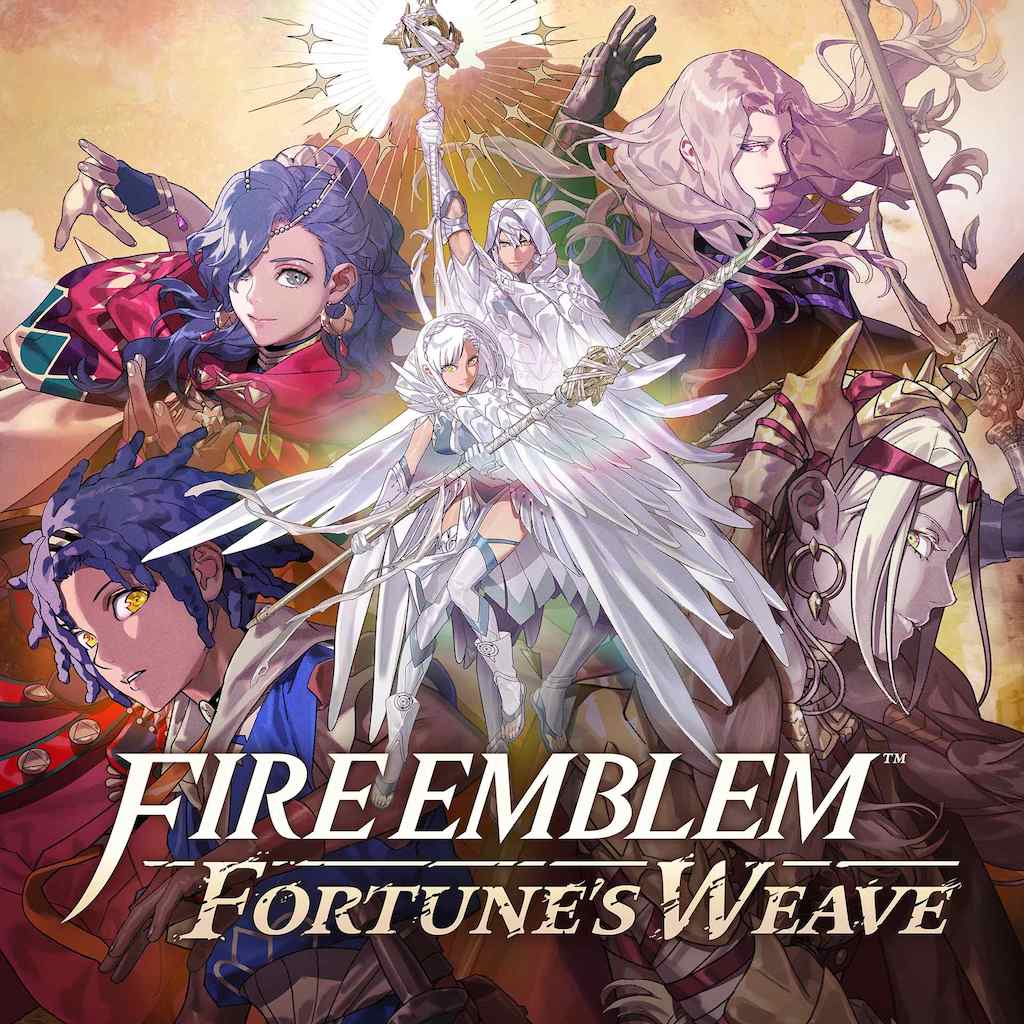
What makes the premise particularly interesting is that there isn’t one straightforward hero whose journey you follow from beginning to end. Instead, Fortune’s Weave gives you four Flame Lords in Cai, Dietrich, Theodora and Leda, each with their own motivations, personalities and ideas about what that coveted wish could mean. Their stories gradually intertwine, while the mysterious Eshmel and the threat of the demon god Balor add a more dangerous layer to proceedings. What begins as a competition for glory slowly starts to feel like something much bigger, and that sense of a much darker story lurking beneath the surface is one of the game’s greatest strengths.
Four Heroes, Four Destinies
Cai is perhaps the easiest character to connect with immediately. A young boy determined to win the Heroic Games because his father has been imprisoned gives his journey an emotional simplicity that works beautifully against the increasingly complex world around him. Dietrich, meanwhile, is a swordsman who seems almost incapable of being satisfied unless a stronger opponent awaits ahead, making his campaign feel more focused on combat and personal strength. Then there is Theodora, a queen carrying the hopes and ambitions of her homeland on her shoulders, while Leda enters the Games with revenge firmly in her sights.
The clever part is that these aren’t simply four variations on the same campaign. Each route offers a different perspective on the Dagdan Empire and introduces its own mechanics, characters and challenges, making the decision over which story to pursue feel genuinely meaningful. One route might place greater emphasis on commanding battalions, while another can push you towards arena combat or political manoeuvring. This means that switching between campaigns doesn’t simply feel like replaying the same game with a different protagonist. Instead, each one adds another piece to the larger puzzle.
A World Worth Fighting For
Dagsion itself is a particularly enjoyable place to spend time between battles. The capital becomes the beating heart of the Heroic Games, packed with people to meet, places to explore, and activities that can help prepare your forces for what comes next. You aren’t simply waiting for the next tactical battle to begin. Time away from combat is just as important, whether you’re training characters, recruiting potential allies, strengthening relationships, or heading beyond the city walls to find new opportunities.
This gives Fortune’s Weave a lovely rhythm. There is always the sense that another battle is approaching, but you have some control over how prepared you are when it arrives. Do you spend your time improving your strongest fighters, developing a promising new recruit, exploring somewhere dangerous for valuable experience, or simply building relationships with the people around you? These decisions might not always feel monumental in isolation, but over the course of a campaign they contribute to a wonderfully personal sense of progression.
The Fire Emblem Formula Evolves
Naturally, the tactical battles remain the heart of the experience, and this is where Fortune’s Weave feels most comfortably familiar. Anyone who has spent years moving units around a Fire Emblem battlefield will immediately understand the appeal, but there is enough going on here to keep the formula from feeling tired. Combat Arts, Blaze Arts, class abilities and careful positioning all play their part, encouraging you to think beyond simply moving towards the nearest enemy and hitting them.
The lack of a traditional weapon triangle also changes how encounters unfold. Rather than relying on a simple rock, paper, scissors system, you have to consider the individual strengths of your units, their abilities, their positioning and how their skills work together. It makes battles feel less predictable and, at times, considerably more satisfying. When a carefully planned combination of abilities turns what looked like a losing situation into a decisive victory, Fortune’s Weave delivers exactly the kind of tactical satisfaction that has made this series so enduring.
When Preparation Meets Battle
The preparation outside combat is just as important as what happens once the battle begins. Training grounds give you opportunities to hone your units, while exploration and side activities offer additional ways to strengthen your party. The game clearly wants you to become invested in these characters rather than viewing them simply as pieces on a grid, and that investment pays dividends when the fighting turns serious.
There is also a wonderful sense of pressure created by the game’s time management. You have limited opportunities to prepare before important matches, so you can’t do absolutely everything. That forces you to decide where your attention should go, and those decisions can make each campaign feel distinctly personal. It isn’t about finding one perfect routine and repeating it forever. It is about deciding what matters most to you at that particular moment.
More Than Just Arena Battles
One of the biggest surprises is how much Fortune’s Weave manages to fit around its core tactical combat. Dungeon exploration introduces a different pace altogether, taking your party into more traditional 3D environments where exploration and combat can sit alongside one another. These sections help break up the larger battlefield encounters and give the adventure a greater sense of scale.
The Dagsion arenas provide yet another change of pace, particularly for those who enjoy testing their characters against increasingly demanding opponents. This variety helps the game avoid falling into the trap of becoming a procession of similar grid battles. There is always another activity to investigate, another character to meet, or another reason to wander away from the main objective for a while.
Fate, Time And The Bigger Picture
Then there is Eshmel, the time-travelling figure whose story adds a fascinating layer to the events surrounding the Heroic Games. The ability to interact with different points in the timeline gives the narrative considerably more scope, particularly as the threat surrounding Balor begins to emerge. It also fits beautifully with the game’s central themes of fate and consequence.
There is something particularly satisfying about watching apparently unrelated events begin to connect. A conversation that initially seems insignificant can take on a different meaning later, while choices made in one part of the story can echo into another. Fortune’s Weave clearly enjoys playing with the idea that history isn’t necessarily fixed, and that makes the journey through its multiple campaigns feel more rewarding than simply ticking off four separate storylines.
A Beautiful Dagdan Empire
Visually, Fortune’s Weave is a striking game. The Mediterranean inspiration gives the Dagdan Empire a distinctive identity, with bright environments, warm sunlight and architecture that feels markedly different from some of the more traditional fantasy settings the series has explored. Dagsion, in particular, has a sense of grandeur that makes it feel like a capital worthy of hosting an event of this scale.
The character designs are equally strong, giving the large cast plenty of personality before they even open their mouths. Battle animations have a satisfying impact too, particularly when Combat Arts and special abilities fly across the screen. On the Nintendo Switch 2, the presentation benefits from the additional hardware power, allowing the world and its characters to feel considerably more polished without losing the visual personality that makes Fire Emblem so recognisable.
A Soundtrack With A Sense Of Place
The music deserves special mention for supporting the game’s shifting moods. The orchestral arrangements have a grandeur that suits the scale of the Heroic Games, while Mediterranean influences give the Dagdan Empire its own musical identity. Battle themes have the necessary energy, but it is the quieter pieces that often leave the strongest impression.
The soundtrack knows when to step forward and when to let a scene breathe. Emotional conversations are given room to land, tense moments gradually build, and major confrontations receive the musical treatment they deserve. It is the sort of score that makes you notice the music even when you aren’t consciously thinking about it, which is exactly what a good RPG soundtrack should do.
A Huge Adventure With A Lot To Say
The one potential drawback is also one of the game’s greatest ambitions. There is a lot here. Four major campaigns, multiple perspectives, time travel, tactical battles, exploration, relationships, training and side activities can make Fortune’s Weave feel demanding at times. There will inevitably be players who find the time management and campaign switching a little overwhelming, particularly when they are trying to see everything the game has to offer.
Personally, though, that ambition is part of what makes the experience so compelling. This isn’t a game that wants to rush you through a handful of battles before sending you towards a final boss. It wants you to live in its world, understand its characters and gradually piece together the bigger story. There is an almost novelistic quality to the way the different perspectives eventually begin to overlap, which makes the considerable investment of time feel worthwhile.
Final Verdict
Fire Emblem: Fortune’s Weave is a hugely ambitious tactical RPG that understands exactly what makes Fire Emblem special while being prepared to push the formula somewhere new. The four protagonists give the story an unusually broad perspective, while Eshmel’s time-travelling narrative adds a fascinating sense of mystery and consequence. Around them sits a wonderfully deep collection of tactical combat, dungeon exploration, character development, relationship-building and time management, all wrapped up in one of the series’ most distinctive settings.
It isn’t always a game that makes life easy for the player. There is a lot to keep track of, and the sheer size of the adventure means its pacing won’t suit everyone. Yet when everything clicks, Fortune’s Weave delivers that wonderful Fire Emblem feeling of becoming attached to your characters, planning your next move and then watching that plan either come beautifully together or spectacularly fall apart. Those moments are where the game truly shines.
The Heroic Games may promise a single wish to whoever reaches the end, but Fire Emblem: Fortune’s Weave offers something considerably more valuable along the way: a sprawling adventure filled with characters you genuinely want to see succeed. It is tactical, dramatic, beautiful and occasionally wonderfully heartbreaking, with enough ideas to keep even seasoned Fire Emblem players engaged. The Nintendo Switch 2 has gained another substantial RPG, and this is a journey that deserves to be taken.