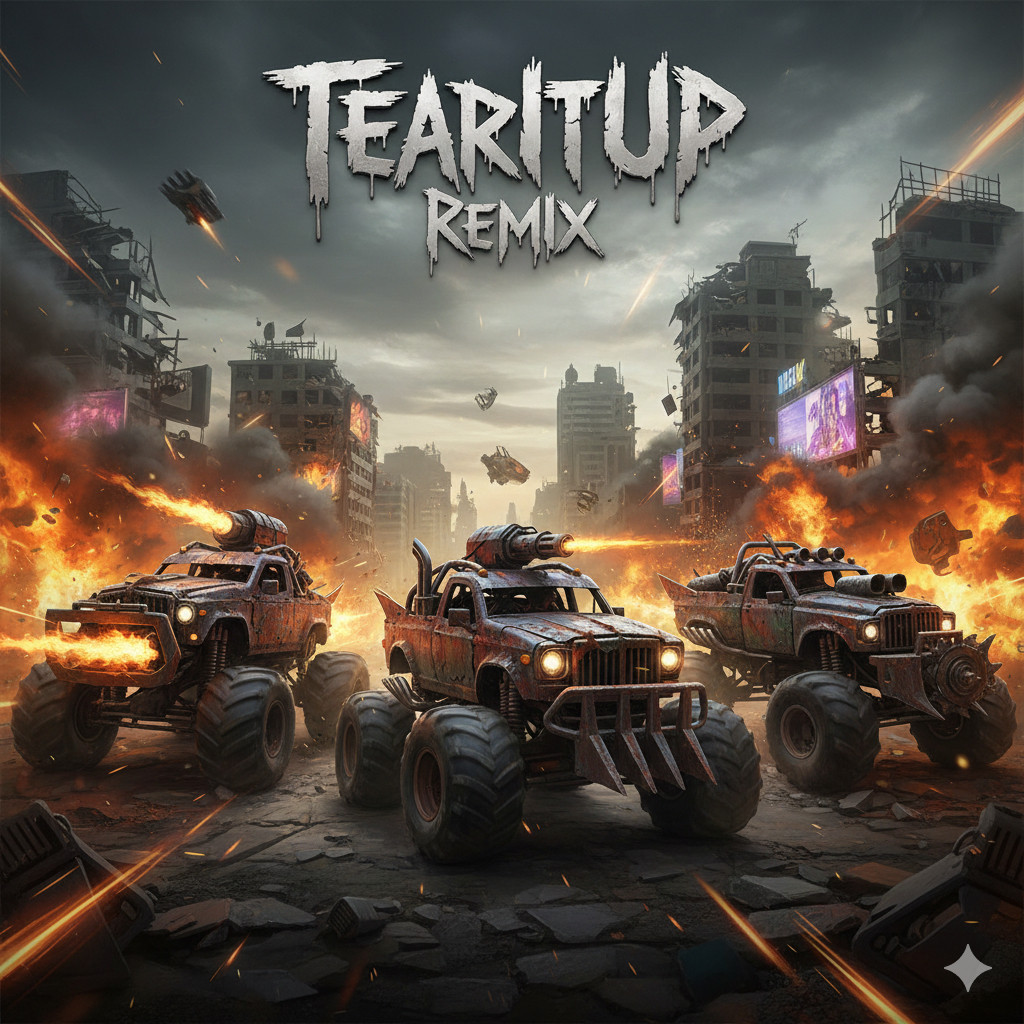
In an era where party and casual multiplayer titles dominate social gaming spaces, TearItUp Remix enters the fray with a brightly coloured, high-octane blend of competitive mayhem and twitch-based chaos. On its surface, TearItUp Remix resembles many of the genre’s better-known titles: an explosive mix of cartoon-chaos arenas, physics-driven interactions, and objective-based play fences that separate organised competition from unrestrained free-for-all fun. What sets it apart — at least in intention — is its remix culture approach: modular stages, mash-ups of game modes, and a frenetic experience that leans into replayability without demanding deep mastery.
Yet as engaging as TearItUp Remix can be in short bursts, it struggles to sustain depth beyond its initial novelty. Its biggest strengths — frenetic activity, accessibility, and variety — are also the roots of its greatest limitations: shallow progression systems, repetitive mode structures, and a balance that favours spectacle over strategic sophistication. This is a title designed for quick laughs and social play, not deep competitive endurance.
First Impressions: Fast, Loud, and Visually Playful
TearItUp Remix makes a strong first impression. Its opening screens, bold colour palette, and dynamic soundtrack signal that this is not a game to be taken seriously in an e-sports sense, but rather enjoyed as chaotic interactive entertainment. The aesthetic is a mash-up of cartoon whimsy and abstract art — characters are exaggerated caricatures, arenas are vibrant and destructible, and visual feedback (explosions, distortions, particle effects) are tuned for maximum sensory impact.
From the moment matches begin, the pace rarely slows. Players drop into compact arenas designed to amplify contact, collision, and objective interactions. Whether racing to collect power-ups, hauling flagged objects, or simply chasing high-score streaks, there is a consistently high tempo to matches that rarely lets tension dissipate. It’s a game that thrives on the spectacle of motion — avatars zooming across platforms, bouncing off hazards, and triggering ragdoll physics with gleeful abandon.
This kinetic energy is TearItUp Remix’s strongest weapon, and it works exceptionally well in multiplayer sessions with friends. When four to eight players are sharing a couch or an online lobby, matches consistently deliver memorable moments and unpredictable outcomes. Every session feels fresh simply because the chaos can unfold in innumerable ways.
Gameplay and Modes: Accessible, if Uneven
The core gameplay loop in TearItUp Remix is deceptively simple: enter an arena, pursue the objective, and try to come out on top. Movement is responsive and intuitive, button inputs translate cleanly into accelerated action, and the physics system provides satisfying feedback that emphasises impact and interaction. Combat is less about precision and more about opportunism — bumping opponents, timing power-up usage, and taking advantage of environmental hazards.
Modes range from standard competitive objectives (capture zones, free-for-all score races, team skirmishes) to more inventive challenges (moving objectives, timed survival rounds, and area-control contests). For casual play, this mix provides adequate variety. The remix element comes into play as modes and arenas blend familiar mechanics into hybrid formats, forcing players to adapt rather than repeat memorised patterns.
However, while the variety of modes is broad, the depth within each mode is more modest. Matches can feel shallow because victory often hinges on momentary advantage rather than sustained strategy. For example, a player who secures a power-up early can dominate a round almost by attrition alone, and matches can sometimes conclude before opportunities for meaningful counterplay emerge. As a result, TearItUp Remix excels at short, explosive sessions but struggles to hold engagement across extended play without significant external incentives.
Progression and Customisation: A Step Too Light
One of the game’s more disappointing aspects is its progression framework. While TearItUp Remix offers unlockable cosmetic items, player badges, and a few avatar customisation options, the deeper layer of long-term rewards and progression feels thin. There is little incentive to optimise play or pursue mastery beyond acquiring playful skins and visual flair.
Rewards for winning or completing objectives are minimal — cosmetic tokens and incremental badges that have little functional impact on subsequent matches. Given how well the core gameplay loop engages players in the moment, this lack of meaningful advancement is a missed opportunity. A stronger progression system — incorporating unlockable abilities, match modifiers, or more ambitious unlock trees — could have given TearItUp Remix a reason to sustain repeated sessions beyond pure social enjoyment.
This is not to say that the current progression is without value. Cosmetic items are fun, and there is genuine satisfaction in unlocking new visual identities for characters and arenas. However, when compared to the meta-structures in contemporaries, the framework here feels lightweight and underdeveloped.
Multiplayer and Social Dynamics
Multiplayer is clearly where TearItUp Remix thrives. With local couch play or online lobbies, matches become social events — full of laughter, surprise upsets, and improvisational play. In these environments, the game’s strengths are amplified: quick matches, simple objectives, and unpredictable physics interactions are ideal for players of mixed skill levels.
The game’s ability to entertain in short bursts makes it especially suitable for parties, casual streams, and gatherings where technical mastery is secondary to shared amusement. The multiplayer design encourages players to experiment and improvise rather than punish missteps; everyone is guaranteed to have moments of triumph, embarrassment, and chaotic reversal.
However, online infrastructure has room for improvement. Matchmaking can be inconsistent, and the absence of robust ranked structures or matchmaking filters means that competitive balance is often an afterthought. During peak times, lobbies fill quickly; during quieter periods, players may struggle to find matches that fit their preferred mode or group size. Though these issues do not break the multiplayer experience, they highlight a lack of investment in the game’s long-term competitive fabric.
Audio and Tech Presentation
TearItUp Remix embraces a bold audiovisual style that complements its gameplay philosophy. The soundtrack is energetic — pulsing beats and exuberant themes that maintain momentum without grating on the senses. Sound effects are exaggerated in ways that reinforce physicality: collisions thump with weight, power-up activations crackle with bright tones, and ambient effects contribute to a sense of vibrancy within arenas.
Visually, the game leans into a colourful, almost surreal aesthetic. Arenas are detailed with interactive elements that influence play — explosive barrels, shifting platforms, hazards and bounce pads — all of which contribute to the unpredictable rhythm of matches. While the graphics do not push hardware boundaries, they are cohesive and functional, ensuring clarity even in the midst of high-speed chaos.
Performance on both base and current-generation hardware is generally smooth, though online connectivity issues — latency spikes and occasional frame drops in heavier sessions — can momentarily detract from gameplay. Still, these are technical blemishes rather than structural faults, and they rarely outstay their welcome.
Final Assessment
TearItUp Remix is a highly entertaining party game that excels in short-form multiplayer chaos and casual competition. Its strengths lie in energetic design, accessible controls, and unpredictable interactions that keep matches lively and fun. However, its limited progression systems, imbalance at times between skill and chaos, and lighter competitive infrastructure prevent it from evolving into a deeper competitive platform.
For players seeking an approachable, social multiplayer game that emphasises fun over finesse and chaos over calculation, TearItUp Remix delivers in spades. Its appeal is strongest in shared play — local or online — where the laughter and surprises outweigh the absence of sophisticated meta play. For those looking for a more structured, strategic experience, the game’s frenetic energy may be less compelling over extended sessions.