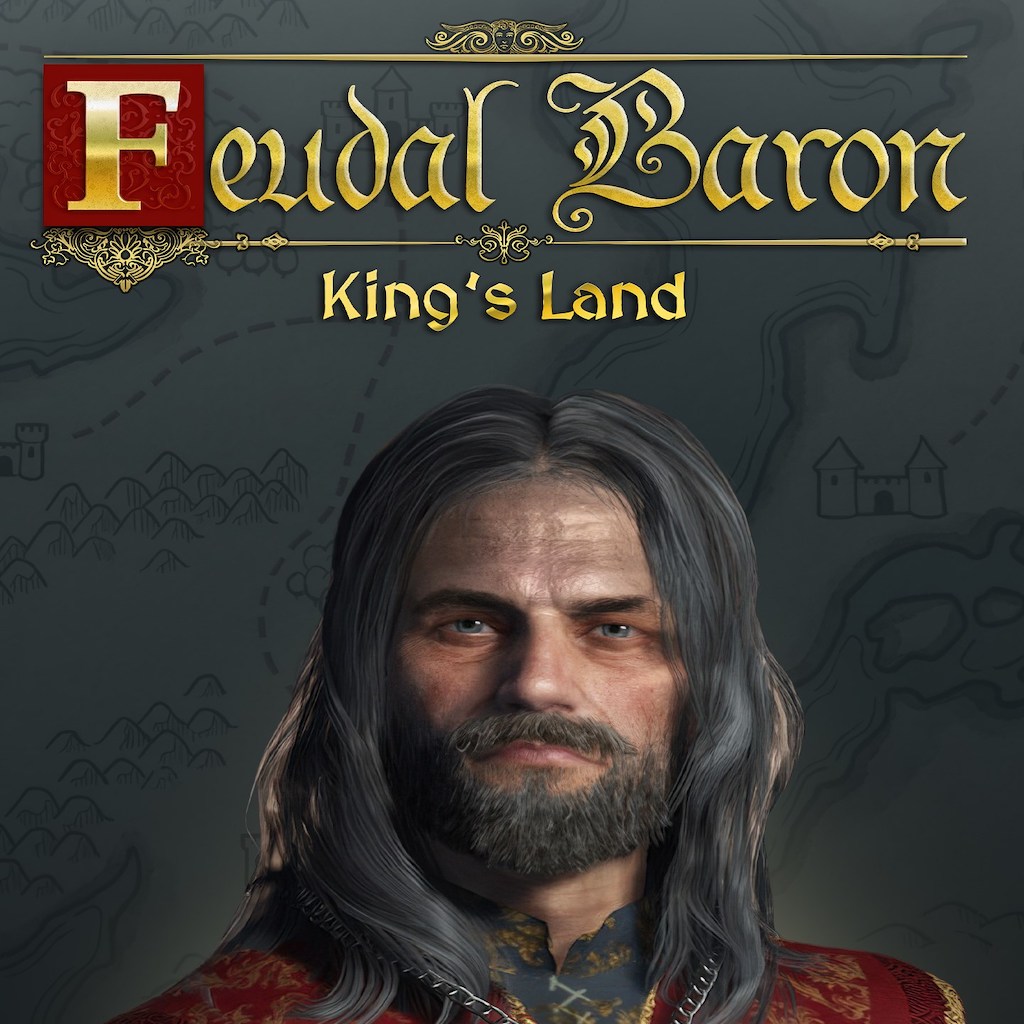
The medieval city builder genre has always been built on patience. There is something deeply satisfying about watching a small settlement slowly transform into a thriving kingdom, as simple dirt paths become bustling streets and scattered villagers coalesce into a powerful society. While many games in this space focus on grand empires and sweeping historical campaigns, Feudal Baron: King’s Land takes a more personal approach. Here, you are not a legendary monarch commanding an entire civilisation from above. You are a baron striving to prove yourself, turning a struggling collection of tents into a prosperous medieval domain.
Developed by Sim Farm S.A., Feudal Baron: King’s Land focuses on the challenges of managing a single territory and all that entails. Starting with only a handful of followers and limited resources, your task is to build an economy, maintain your people’s happiness, defend against raiders, and eventually become powerful enough to challenge the king’s authority. It is a game about responsibility, where every decision has consequences and every successful upgrade feels earned.
The game successfully combines traditional city-building mechanics with political management and tactical battles, creating an experience that feels more involved than simply placing buildings and watching numbers rise. It recognises that ruling a medieval settlement was about more than gathering resources. It was about keeping people fed, healthy, loyal, and prepared for the dangers that surrounded them.
From Humble Camp to Medieval Capital
The opening moments of Feudal Baron: King’s Land perfectly capture the appeal of the journey ahead. Your future kingdom begins as a fragile collection of tents, home to a small group of determined settlers. There are no impressive castles, wealthy markets, or towering churches. Instead, you start with the basics and must carefully plan every step towards expansion.
The early campaign serves as a natural introduction to the game’s many systems. Rather than overwhelming players with endless tutorials, the story gradually introduces new responsibilities as your barony grows. You begin by gathering essential resources, then slowly expand into more complex production chains, public services, and military preparation.
This approach works particularly well because it makes progression feel meaningful. Constructing a new workshop or marketplace is not just another item ticked off a checklist. It represents another step towards stability and independence. Watching villagers move through a settlement you designed fosters a genuine sense of ownership.
The building system is one of the game’s most interesting features. Unlike some city builders that let you place structures almost anywhere, Feudal Baron encourages careful planning through its building range system. Production chains need to be connected efficiently, so your fields, mines, workshops, storage facilities, and marketplaces must work together as part of a larger machine.
The Economy of a Growing Kingdom
Managing resources is where Feudal Baron: King’s Land truly finds its identity. The game recognises that a medieval settlement cannot survive on basic supplies alone. Your citizens require food, shelter, entertainment, education, healthcare, and spiritual support. Keeping everyone satisfied is a constant balancing act.
Taverns provide entertainment and boost happiness, while churches and graveyards maintain spiritual wellbeing and help manage the consequences of population growth. Schools foster a more advanced society, while medical facilities become essential when disease begins to spread through your settlement. These systems prevent the city from feeling like a collection of buildings and instead make it feel like a living community.
Production chains are particularly satisfying once they run smoothly. Watching resources move from farms to storage facilities, then into workshops where they become valuable goods, creates a rewarding sense of efficiency. The game encourages players to think like a medieval administrator, constantly seeking ways to improve productivity and reduce waste.
Trade also plays an important role in expanding your influence. When your own resources are limited, neighbouring settlements can offer valuable opportunities. Choosing when to buy, sell, or stockpile materials adds another strategic layer that keeps the economy engaging throughout longer campaigns.
A Baron’s Power Comes From Politics
Running a kingdom is not just about buildings and resources. It is also about managing the people who live within your walls. Feudal Baron: King’s Land introduces a political system that lets you influence your population through a range of decrees and decisions.
When times are good, you can organise celebrations and festivals to boost happiness and strengthen loyalty. However, when problems arise, you may have to make difficult choices. Higher taxes can provide immediate financial support but risk angering your citizens. Harsh measures may suppress a rebellion quickly but could damage your reputation.
These decisions help create some of the game’s most memorable moments by forcing you to think beyond simple optimisation. A successful ruler is not just someone who produces the most resources. They are someone who understands the needs of their people and knows when compromise is necessary.
The political systems are not as deep as those in dedicated grand strategy games, but they add valuable personality to the experience. They make your settlement feel less like a machine and more like a place with genuine problems that require careful leadership.
Defending the Realm
One of Feudal Baron’s most distinctive features is its inclusion of direct combat. When raiders attack your territory, you are not simply watching an automated calculation decide the outcome. Instead, the game shifts into Battle Mode, letting you command your defensive forces and respond to threats.
These battles offer a welcome change of pace from the slower city management. Protecting your walls, positioning troops, and managing limited resources create moments of genuine tension. A carefully planned defence can save your settlement, while a poorly prepared army can undo hours of progress.
The combat system does not match the complexity of dedicated real-time strategy games, but it works well within the broader experience. These battles feel like natural consequences of your decisions rather than separate action sequences. If you neglect your military or fail to maintain your economy, the consequences eventually arrive at your gates.
A Strong Console Adaptation
Bringing a detailed strategy game to consoles is always a challenge, but Feudal Baron: King’s Land handles the transition impressively. The controller layout makes navigating menus and managing production chains surprisingly comfortable. While there is naturally more information to process than in a simple action game, the interface remains clear and accessible.
The visual style also helps the game perform well. The colourful low-poly presentation gives the medieval world plenty of charm without demanding excessive hardware power. Watching your settlement grow, especially during busy moments with multiple production lines running, remains enjoyable throughout.
There are occasional moments when the depth of the simulation can feel slightly overwhelming, particularly when several problems arise at once. Managing a growing population, maintaining resources, and preparing for attacks can become demanding. However, this complexity is also what makes success feel rewarding.
Final Verdict
Feudal Baron: King’s Land is a thoughtful and engaging medieval city builder that blends economic management, political decisions, and tactical defence. It may not reinvent the genre, but it offers a strong identity through its focus on the personal challenges of ruling a single barony.
The satisfaction comes from seeing your decisions shape the world around you. Every building placed, every trade agreement made, and every battle won contributes to the story of your kingdom. It is not about instantly becoming a powerful ruler. It is about earning that position through careful planning and perseverance.
While the combat could offer more depth and some systems may feel familiar to experienced strategy players, Feudal Baron: King’s Land delivers a rewarding simulation of medieval leadership. For fans of city builders who enjoy watching a settlement grow from nothing into a thriving civilisation, this is a journey well worth taking.