Mascot horror has become one of the most crowded corners of modern indie gaming. Every few months, another twisted childhood icon emerges from the shadows, chasing players through abandoned factories, forgotten theme parks, or decaying buildings. On paper, Steamboat Incident looks firmly in that category. A deranged, cartoon-inspired monster stalks you through a haunted vessel as you solve puzzles and desperately search for an escape route. The premise immediately raises concerns about familiarity.
Yet despite those concerns, Steamboat Incident manages to carve out an identity of its own through atmosphere. Developed by Mascot Bro Studio and brought to consoles by Ratalaika Games, this compact horror adventure trades sprawling environments for a tightly focused setting that feels genuinely oppressive. The result is a short but effective experience that knows exactly what kind of fear it wants to create.
Lost at Sea
The story is deliberately simple. You awaken aboard an old steamboat stranded in the middle of a seemingly endless ocean. Kidnapped by a monstrous creature that has spent decades trapped and forgotten, you have only one objective: survival. There are no grand conspiracies, no lengthy exposition dumps, and no attempts to overcomplicate the premise.
Instead, the game relies on environmental storytelling. The rusted hallways, abandoned cabins, and damaged machinery tell their own tale of neglect and decay. As you move through the vessel, uncovering clues and piecing together what happened aboard this floating nightmare, a sense of unease gradually settles.
The narrative will not win awards for originality, but it serves its purpose well. The mystery provides enough motivation to keep exploring without distracting from the central tension. Sometimes horror works best when it leaves gaps for the imagination to fill, and Steamboat Incident understands that.
A Ship Full of Shadows
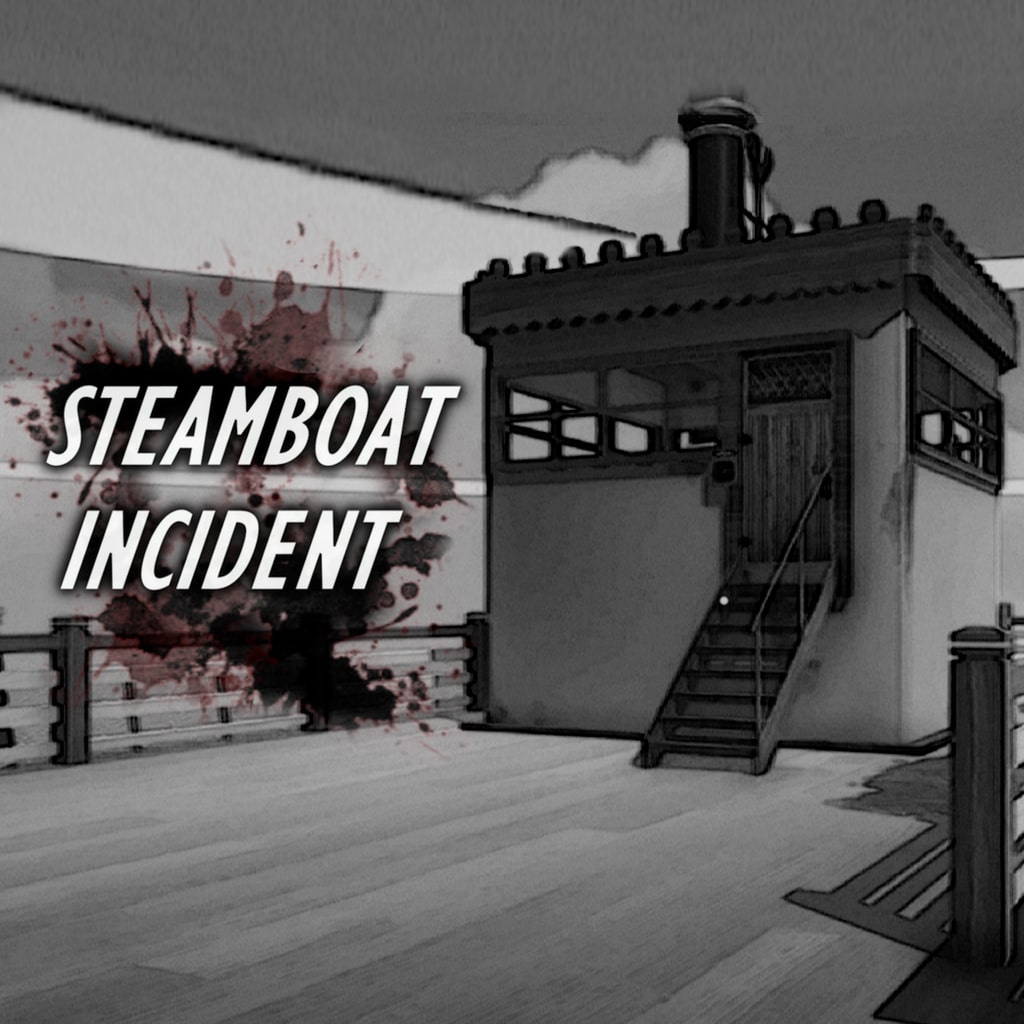
The star of the show is undoubtedly the steamboat itself. Horror games live or die by their setting, and this vessel proves an inspired choice. Unlike sprawling mansions or massive industrial complexes, the ship feels inescapably confined. Every corridor seems just a little too narrow. Every room feels like a trap waiting to spring shut behind you.
The constant presence of the ocean contributes enormously to the atmosphere. Even when nothing is actively hunting you, the distant sound of waves crashing against the hull creates an unsettling backdrop. There is a feeling that nowhere is truly safe, because even if you escaped the monster, there would still be nowhere to run.
The visual presentation is relatively modest, especially compared with bigger horror productions, but it makes effective use of lighting and environmental detail. Flickering lamps cast long shadows across wooden decks. Rust creeps across metal surfaces. Dim hallways disappear into darkness, inviting equal measures of curiosity and dread.
What impressed me most was how consistently the game maintains its mood. Many horror titles struggle to balance tension and exploration, but Steamboat Incident rarely loses its grip. Even routine backtracking feels nerve-racking because the environment never allows you to relax completely.
Hide, Run, Survive
At its core, Steamboat Incident is a stealth survival game. You are not a fighter. There are no shotguns hidden away for a dramatic final confrontation. If the creature finds you, your options are limited to running, hiding, or hoping you can break line of sight before it is too late.
This approach works largely because the monster remains threatening throughout the experience. Too many horror games allow their antagonists to become predictable after a few encounters. Here, every unexpected noise and every distant footstep still triggers a moment of panic.
Hiding beneath tables, slipping into rooms, and navigating around patrol routes become second nature as the game progresses. The stealth mechanics are fairly straightforward but effective. The focus remains on tension rather than complexity, which suits the experience perfectly.
There are moments when the AI can feel slightly inconsistent, and a few encounters may result in trial-and-error frustration. Thankfully, these issues never become overwhelming. The game generally does a good job of making failures feel like the result of poor decisions rather than unfair design.
Puzzle Solving Under Pressure
The puzzles form the backbone of progression. Your ultimate goal is to repair the ship’s wheel and escape, which requires locating various components and tools scattered throughout the vessel. Crowbars open new paths, clues reveal hidden solutions, and environmental observations often point towards the next objective.
None of the puzzles are especially complex, but they strike a satisfying balance between accessibility and engagement. More importantly, they are heightened by the constant threat of the monster. Solving a puzzle while knowing something could be approaching around the next corner is infinitely more stressful than solving it in complete safety.
The game understands pacing remarkably well. Moments of exploration are regularly interrupted by stealth sequences, preventing either element from becoming stale. Just as you begin to settle into a comfortable rhythm, the creature reminds you that comfort is a dangerous illusion. This balance keeps the relatively short campaign engaging from start to finish.
Familiar Waters
For all its strengths, Steamboat Incident struggles to escape the shadow of its influences. Anyone who has played recent mascot horror games will recognise many of the mechanics immediately. The formula of exploring an abandoned location, solving puzzles, and avoiding a monstrous pursuer is hardly groundbreaking in 2026.
The creature itself, while visually memorable, occasionally feels like another entry in a growing catalogue of corrupted childhood mascots. The game’s strongest ideas stem from its nautical setting rather than its antagonist.
The short runtime is another consideration. Most players will likely complete the adventure within a few hours. While the concise structure prevents the game from overstaying its welcome, it also leaves little room for deeper storytelling or mechanical evolution.
Some players may finish the experience wanting more variety or a stronger payoff to the mystery. The journey is enjoyable, but it ends just as it feels like it could begin to explore even more ambitious ideas.
Final Verdict
Steamboat Incident succeeds because it understands the power of atmosphere. Rather than chasing elaborate mechanics or bloated runtimes, it focuses on delivering a tense, claustrophobic horror experience and delivers exactly that. The decaying steamboat proves an excellent setting, while the blend of stealth, exploration, and puzzle-solving keeps the experience engaging throughout its brief campaign.
It does not entirely escape the familiar tropes of modern mascot horror, and its short length may leave some players wishing for more substance. However, the strong environmental design, effective tension, and consistently unsettling atmosphere elevate it above many of its peers. For horror fans seeking a focused evening of suspense, Steamboat Incident is well worth boarding. Just do not expect a relaxing cruise.