Few things can make a stack of paperwork feel as threatening as an armed soldier. Even fewer can make balancing a family’s medical bills feel as stressful as fighting a final boss. Yet Teller’s Duty manages both with remarkable confidence, taking a seemingly mundane banking job and turning it into one of the most compelling narrative simulations in recent memory.
Developed by Hiscory and co-published by Gamersky Games, Teller’s Duty wears its inspirations proudly. Comparisons to Papers, Please are inevitable, but rather than simply copying that formula, it adapts it to a completely different setting. Instead of guarding a national border, you sit behind a bank counter in the fictional nation of Kertasia during a difficult period in 1980. What begins as a simple teller position quickly becomes a relentless battle against bureaucracy, poverty, corruption, and your own conscience.
At its heart, Teller’s Duty understands something many narrative games struggle with. It recognises that meaningful choices are not about selecting a dialogue option from a menu. They are about deciding what you are willing to sacrifice when every option carries consequences.
Every Customer Matters
The core gameplay loop initially seems straightforward. Customers approach your counter with deposit slips, withdrawal requests, identification cards, and supporting documents. Your task is to verify the information, comply with current government regulations, process transactions, and avoid costly mistakes.
For the first few days, the work feels manageable. The rules are relatively simple, customers are mostly cooperative, and you settle into the routine. Then the government introduces new regulations.
Suddenly, procedures change. New forms appear. Existing policies are altered. Certain transactions require additional documentation. Previously accepted paperwork becomes invalid overnight. The game constantly expands its rulebook, keeping players alert throughout every shift.
What makes this system so effective is how naturally the complexity escalates. New mechanics rarely feel overwhelming because they are introduced gradually, yet after several in-game weeks you may find yourself juggling multiple regulations simultaneously while a growing queue of impatient customers waits for service. The pressure becomes intense, but it is also incredibly satisfying. Every successful day feels genuinely earned.
Bureaucracy as Survival Horror
Teller’s Duty excels at transforming routine administrative work into something surprisingly suspenseful. Each document carries weight because mistakes have consequences. A missed detail could result in financial penalties. A failure to follow policy might attract unwanted attention from management. A fraudulent transaction could put your job at risk. Unlike many simulation games where errors merely slow progression, mistakes here directly affect your ability to survive.
Your salary is not just a score counter. It represents food on the table. It represents rent payments. Most importantly, it represents your mother’s medical treatment.
This constant financial pressure gives every shift emotional stakes. When a customer begs for help despite lacking the required paperwork, you cannot simply view the situation as a game mechanic. You begin weighing the potential reward against the potential punishment. Helping them may bring financial gain or personal satisfaction. It could also lead to disciplinary action that threatens your family’s future. Those dilemmas form the emotional backbone of the experience.
Moral Choices That Feel Genuine
Many games advertise meaningful decisions but ultimately funnel players towards predictable outcomes. Teller’s Duty avoids that trap by grounding its choices in everyday realities.
The people who approach your counter are not faceless statistics. They are struggling citizens trying to navigate an increasingly absurd system. Some are desperate. Some are dishonest. Some are simply caught in circumstances beyond their control.
The game presents more than one hundred unique customer encounters, many of which leave a lasting impression. You meet individuals trying to support their families, citizens trapped by government regulations, and people willing to bend the rules just to survive another day.
Because your own financial situation remains precarious throughout the campaign, these encounters never feel detached. Every decision affects both the customer and your future. The result is a steady stream of uncomfortable choices that rarely offer clear right or wrong answers.
Building a Life Between Shifts
The workday may be the primary gameplay focus, but Teller’s Duty becomes far more compelling once you step away from the bank. After each shift, you must manage your finances and personal responsibilities. Rent needs paying. Groceries need buying. Taxes never disappear. Medical expenses continue to mount.
These systems could easily have felt like simple menu management, yet they create a powerful sense of ownership over your character’s life. Every financial decision matters because resources remain limited.
Even small expenditures require careful consideration. Should you spend money improving your living conditions, or send extra funds home to support your mother? Can you afford a personal luxury, or should those savings be reserved for emergencies?
The inclusion of optional responsibilities, such as caring for a stray cat, further humanises the experience. These moments provide brief emotional relief from the otherwise oppressive atmosphere while reinforcing the game’s themes of compassion and responsibility.
A World Built on Oppression
The setting of Kertasia deserves considerable praise. Although fictional, the country feels believable thanks to its oppressive bureaucracy, economic instability, and constantly shifting regulations. Government policies often appear arbitrary and poorly conceived, causing frustration not only among citizens but also among the employees tasked with enforcing them.
The game’s worldbuilding rarely relies on lengthy exposition. Instead, information emerges naturally through customer interactions, workplace conversations, and policy updates. This subtle approach allows players to piece together the broader political picture without ever feeling overwhelmed by lore.
The atmosphere grows increasingly bleak as the narrative progresses, yet moments of humanity continue to shine through the darkness. These contrasts prevent the story from becoming emotionally exhausting.
Presentation That Supports the Experience
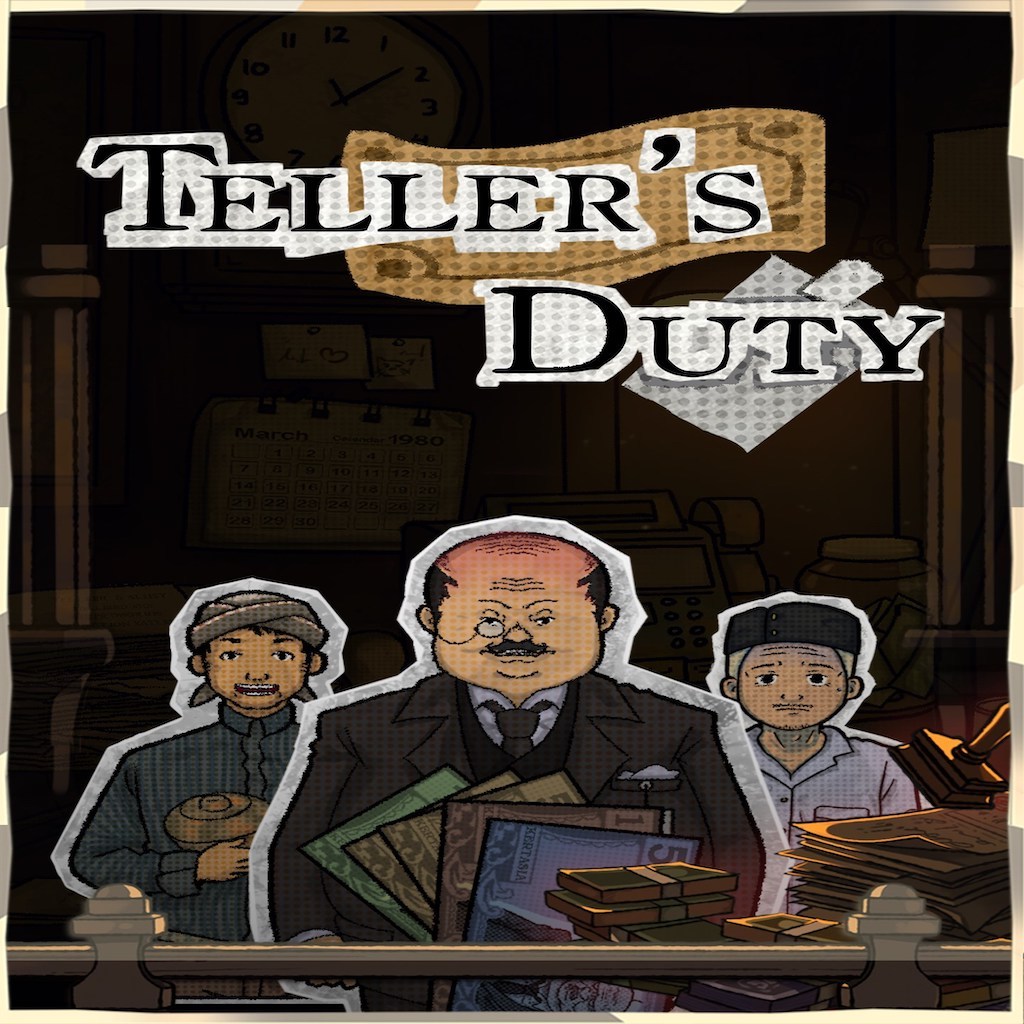
Visually, Teller’s Duty adopts a muted, paper-heavy aesthetic that suits its themes. Documents clutter your workspace. Stamps, forms, and identification cards dominate the screen. The interface remains clean and functional while conveying the drab reality of life inside a struggling financial institution.
The art direction does an excellent job of establishing mood. Nothing feels glamorous. Everything feels worn, practical, and burdened by years of institutional decay.
Audio design follows a similar philosophy. The soundtrack remains understated for much of the experience, allowing the sounds of paperwork, stamping documents, and customer interactions to take centre stage. This restraint helps maintain immersion and amplifies the tension during particularly stressful moments.
Not Without Flaws
Despite its many strengths, Teller’s Duty is not flawless. Some customer interactions can feel repetitive in longer sessions. While the unique story encounters are consistently engaging, routine transactions occasionally blur together. The writing is generally strong, but certain conversations lack the emotional nuance found elsewhere in the game.
There are also moments when the growing complexity of regulations can feel slightly overwhelming. While this serves the narrative purpose of depicting bureaucratic absurdity, it may frustrate players who prefer a more streamlined experience. Thankfully, these issues rarely overshadow the game’s greatest strengths.
Final Verdict
Teller’s Duty succeeds because it recognises that powerful storytelling does not require grand battles or world-ending threats. Sometimes the most compelling drama comes from ordinary people trying to survive impossible circumstances.
By combining meticulous paperwork mechanics with meaningful moral choices and genuine emotional stakes, it transforms a humble bank-teller role into a gripping examination of responsibility, sacrifice, and human resilience. Every form you process, every rule you enforce, and every decision you make contributes to a larger story that lingers long after the final shift ends.
It may share DNA with Papers, Please, but Teller’s Duty ultimately establishes its own identity. Beneath the paperwork and regulations lies one of the most absorbing narrative simulations in recent years, proving that even the dullest desk job can become unforgettable when handled with care.