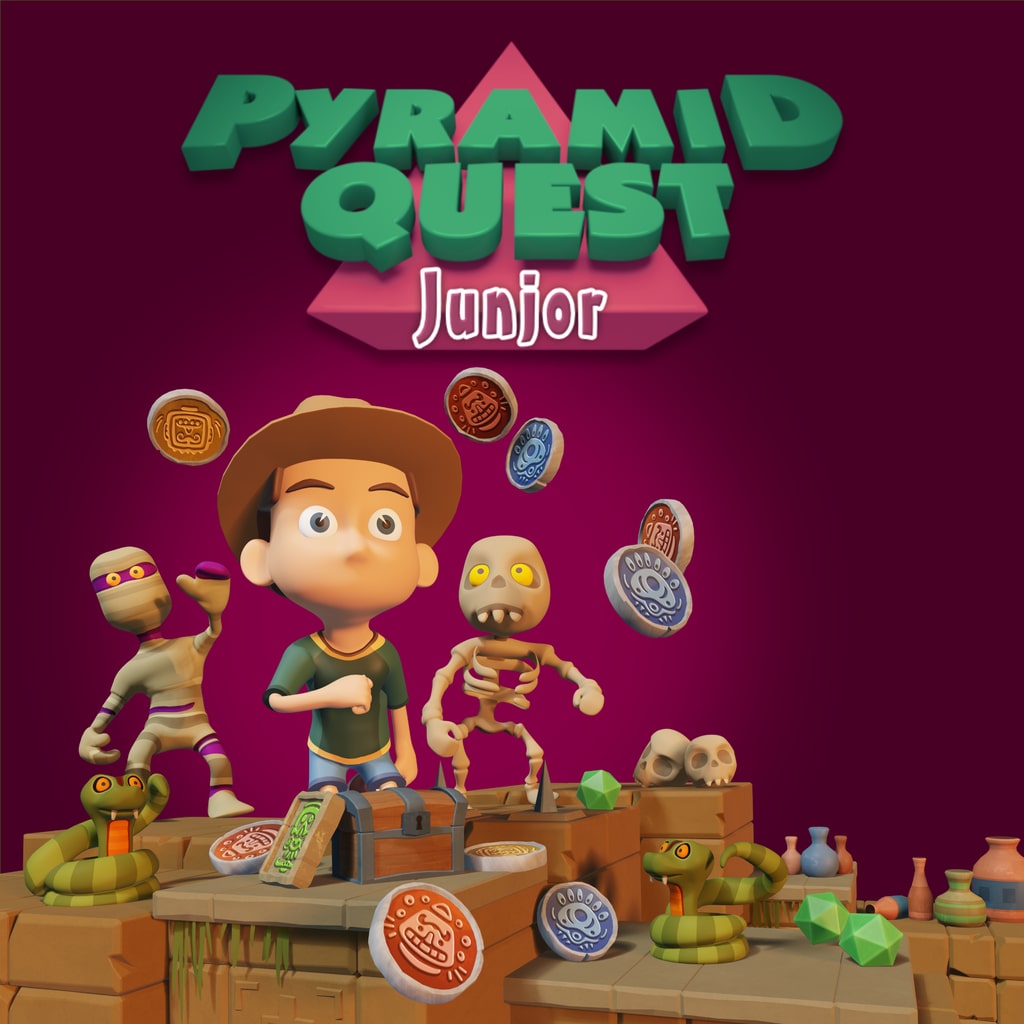
There is something undeniably comforting about games that wear their inspirations proudly. Pyramid Quest Junior does not chase modern trends, massive open worlds, or endless progression systems. Instead, it looks back to an era when adventure meant exploring mysterious ruins, collecting treasures, avoiding traps, and uncovering secrets around every corner.
Developed by EntwicklerX, Pyramid Quest Junior builds on the original Pyramid Quest, reshaping it into something far more approachable. The result is a family-friendly platforming adventure that retains the spirit of classic exploration games while removing much of the frustration that can make those older experiences feel intimidating. It may not reinvent the genre, but it succeeds in creating an enjoyable treasure hunt that players of all ages can appreciate.
A Journey Into Ancient Ruins
The premise is refreshingly simple. Each stage places you in an Egyptian-inspired labyrinth filled with treasures, hazards, enemies, and hidden pathways. Your objective is to find three pieces of a scattered artefact before unlocking the exit and advancing to the next level.
That straightforward goal gives the game a pleasing sense of purpose. Every room you enter feels part of a larger puzzle, encouraging exploration without becoming overwhelming. There is always another coin to collect, another diamond hidden behind a platform, or another route waiting to be discovered.
Unlike many modern platformers that bombard players with objectives and tutorials, Pyramid Quest Junior trusts players to learn through experimentation. Younger audiences will find the structure easy to understand, while older players may appreciate the old-school simplicity that drives the adventure forward.
Exploration Takes Centre Stage
What immediately sets Pyramid Quest Junior apart from many budget platformers is its focus on exploration rather than pure action. The game is not interested in turning every room into a combat arena. Instead, it asks players to observe their surroundings, search for artefact pieces, and carefully navigate environmental hazards.
The levels are designed around curiosity. You are constantly encouraged to stray from the obvious path in search of rewards. Sometimes that reward is a pile of coins. Other times it is a shortcut or one of the crucial artefact fragments needed to complete the stage.
This approach creates a satisfying rhythm. Progress rarely feels rushed, allowing players to absorb their surroundings and enjoy the process of discovery. While the stages are more streamlined than those in the original Pyramid Quest, they still contain enough twists and hidden routes to keep exploration engaging. The result feels closer to a classic treasure-hunting adventure than to a traditional action platformer.
Accessible Without Being Mindless
One of Pyramid Quest Junior’s greatest strengths is its careful balance of accessibility and challenge. Many games designed for younger audiences fall into the trap of becoming so easy that they lose all sense of accomplishment. Pyramid Quest Junior largely avoids that mistake. Enemies are less aggressive than in the original game, and hazards are spaced more generously, but players still need to pay attention.
Timing jumps remains important. Traps still punish careless movement. Enemies can still knock you off course if approached recklessly. The difference is that failure rarely feels unfair. Mistakes become learning opportunities rather than reasons to quit in frustration. That distinction makes an enormous difference, particularly for younger players who are still developing confidence in platforming mechanics.
There is genuine satisfaction in successfully navigating a tricky section or finally locating a well-hidden artefact piece. The game rewards patience and observation without demanding lightning-fast reflexes.
Platforming That Feels Familiar
Movement in Pyramid Quest Junior is deliberately traditional. The protagonist moves with a deliberate weight that recalls older platform games rather than modern high-speed adventures.
At first, that slower pace can feel slightly dated. Players accustomed to ultra-responsive modern platformers may need a few minutes to adjust. Once the controls settle into muscle memory, however, the movement complements the exploratory design well.
Jumps require thought. Platforming sequences encourage careful positioning rather than reckless speed. This measured approach reinforces the game’s relaxed tone and ensures younger players can keep up with the challenges.
The platforming itself rarely reaches spectacular heights, but it remains consistently enjoyable throughout the adventure. Sometimes consistency is more valuable than ambition.
A Charming Visual Style
Visually, Pyramid Quest Junior embraces a colourful 2.5D presentation that suits its family-friendly focus perfectly. The Egyptian environments are filled with warm colours, ancient architecture, hidden chambers, and familiar adventure-game imagery. Stone corridors, golden treasures, mysterious artefacts, and lurking creatures all contribute to an atmosphere that feels welcoming rather than threatening.
The art direction does not push technical boundaries, but it has a certain charm that carries the experience. Character animations are simple yet effective, and environmental details help each level maintain a sense of adventure.
The biggest visual weakness is repetition. While the levels themselves vary in layout, the overall aesthetic remains largely unchanged throughout the game. You spend a lot of time looking at similar sandstone walls, ancient ruins, and desert-themed scenery. Fortunately, the gameplay loop remains engaging enough that the repetition rarely becomes a major issue.
Sound Design That Complements the Adventure
The audio presentation follows a similar philosophy. Music gently supports the action without overwhelming it. The soundtrack leans into adventurous themes that evoke the feeling of exploring forgotten ruins and searching for lost treasure. It is never particularly memorable, but it consistently fits the tone of the game.
Sound effects are functional and clear. Coins sparkle pleasantly when collected, jumps feel responsive, and hazards provide enough audio feedback to keep players aware of danger. Nothing here will leave a lasting impression, but the audio supports the adventure without becoming distracting.
Built for Families
Perhaps the most admirable quality of Pyramid Quest Junior is its understanding of its audience. This is not a game trying to impress hardcore platforming veterans with brutal difficulty or advanced mechanics. Instead, it offers a welcoming introduction to exploration-focused platformers.
Parents seeking something suitable for younger players will find plenty to appreciate. The challenge level remains approachable, the controls are easy to learn, and the overall tone stays positive throughout.
At the same time, older players can still enjoy the game’s treasure-hunting structure and nostalgic design philosophy. There is a timeless quality to searching ancient ruins for hidden artefacts that transcends age groups. That broad accessibility becomes one of the game’s greatest strengths.
Final Verdict
Pyramid Quest Junior succeeds because it knows exactly what it wants to be. It does not try to compete with blockbuster platformers or reinvent exploration games. Instead, it focuses on delivering a charming, approachable treasure-hunting adventure that welcomes players of all skill levels.
Its platforming is enjoyable, its exploration remains rewarding, and its streamlined design removes much of the frustration often found in retro-inspired games. While visual repetition and a lack of mechanical depth prevent it from reaching greater heights, the overall experience remains consistently pleasant from start to finish.
Sometimes a game does not need grand ambitions to be worthwhile. Sometimes all it needs is a sense of adventure, a handful of hidden treasures, and a willingness to let players enjoy the journey at their own pace. Pyramid Quest Junior delivers exactly that.