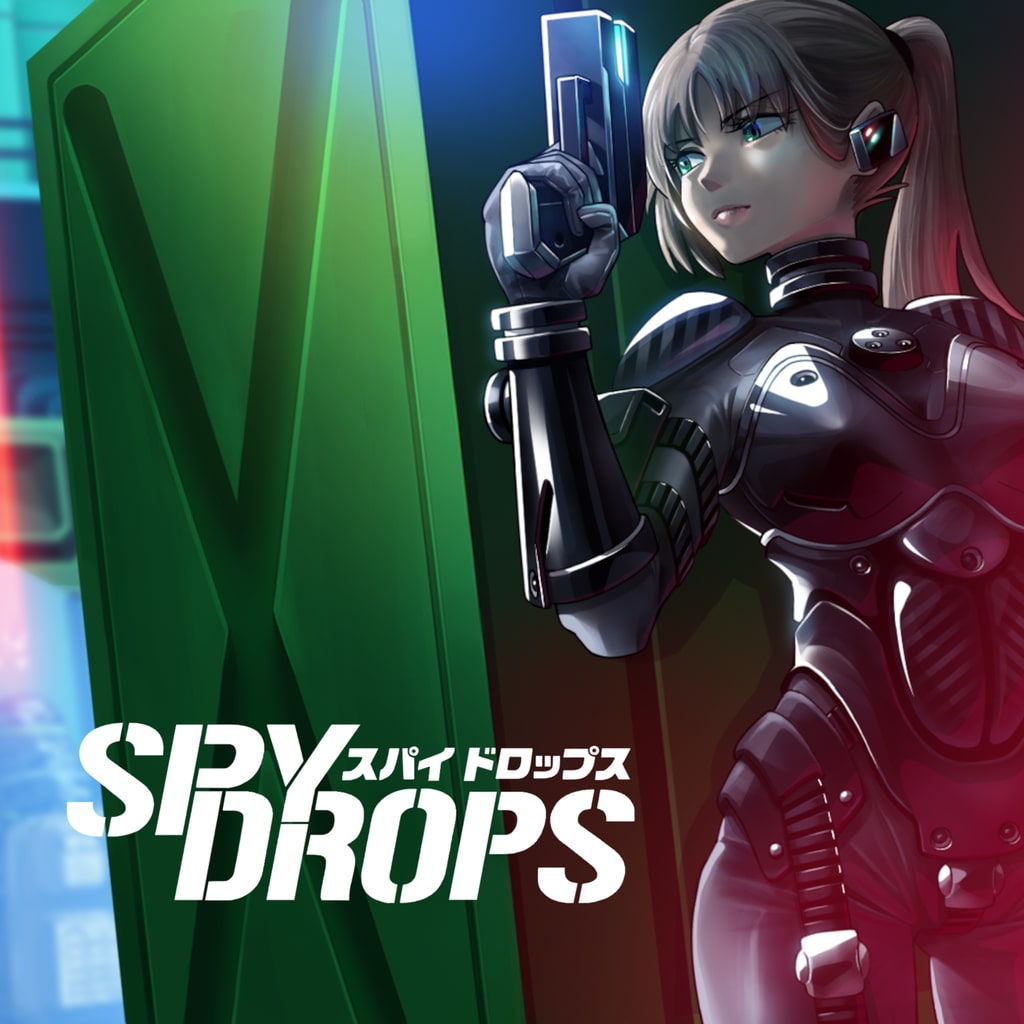
Spy Drops does not ease you into espionage. It drops you straight into it. One moment you are staring at a mission briefing, the next you are already boots-on-the-ground, crawling through guarded facilities that change shape every time you return.
There is a deliberate simplicity to its setup. You are a counter-terror operative, deployed into hostile zones with shifting objectives, limited intel, and a toolkit that is meant to compensate for what you do not know. There is no sprawling narrative thread tying everything together. Instead, the game frames itself as a series of operations. Clean, repeatable, and constantly unpredictable.
It feels less like a modern stealth epic and more like a tactical arcade loop built for repetition. And that is very much the point.
Stealth as Improvisation, Not Perfection
At its core, Spy Drops is about adaptation. Each mission is procedurally generated, meaning enemy placements, patrol routes, and objectives shift every time you deploy. You cannot rely on memorisation. You cannot brute-force familiarity. Every run demands fresh attention.
That unpredictability is where the game finds its tension. You are constantly weighing risk against reward, deciding whether to push deeper into a facility or extract early with partial intel. Guards do not follow scripted paths you can exploit forever. They behave just consistently enough to read, but not enough to predict completely.
The stealth mechanics themselves are deliberately streamlined. Hiding, timing movement, using cover, and managing line of sight form the backbone of every encounter. It is not a simulation of espionage so much as a distilled version of it, where clarity and responsiveness matter more than complexity.
Gadgets, Tools, and Tactical Identity
Where Spy Drops begins to distinguish itself is in its gadget system. You are not just sneaking through levels. You are actively reshaping how those levels behave.
Drones allow you to scout ahead and tag threats before committing. Hacking tools open shortcuts or disable security systems that would otherwise lock down entire sections of a map. And then there is the more unusual addition, the “Dream Catcher” ability, which bends certain enemy behaviours in unpredictable ways, adding a layer of controlled chaos to otherwise rigid situations.
What makes the system work is not just variety, but necessity. You are encouraged to experiment because no single approach remains reliable across missions. A route that worked perfectly in one deployment might be completely unusable in the next.
This creates a subtle but constant pressure to stay flexible. Spy Drops does not reward perfectionist stealth as much as it rewards improvisation under uncertainty.
A Return to 90s Stealth Energy
Visually and structurally, Spy Drops leans heavily into its 1990s inspiration. The aesthetic is deliberately lo-fi, with simplified character models, functional environments, and an almost arcade-like clarity to its presentation. It is not trying to compete with photorealistic stealth games. It is trying to echo a different design philosophy entirely.
There is something refreshing about that restraint. Modern stealth games often bury their systems under layers of cinematic polish. Spy Drops does the opposite. It pulls everything forward so you can see exactly how the systems interact at any given moment.
That clarity extends to its console enhancements as well. The addition of an orbital camera and improved aiming controls on PlayStation 5 and Xbox Series X|S makes moment-to-moment navigation smoother without compromising the game’s retro identity.
Tension Through Uncertainty
The procedural structure is both Spy Drops’ greatest strength and its most divisive feature. Because missions are generated rather than authored, they sometimes lack the handcrafted tension peaks you would expect from more traditional stealth design. There are fewer carefully staged “set piece” infiltrations.
Instead, tension emerges organically. A guard patrols a corridor you hoped would be clear. A security system activates in a room you had already mapped mentally. An extraction point becomes compromised at the worst possible moment.
That unpredictability creates a different kind of stealth experience. Less choreographed, more reactive. Less about mastery of a fixed space, more about adapting to a shifting one.
It can feel slightly uneven at times, but it rarely feels dull.
Multiplayer and Competitive Edge
One of the more surprising additions is its “Spy vs Spy” local multiplayer mode. Here, the focus shifts from AI stealth puzzles to direct competition. Players attempt to infiltrate or sabotage each other’s objectives while managing limited visibility and shared awareness of the environment.
It is chaotic in a way the single-player campaign is not. Mistakes feel sharper, victories more personal. It is not the main attraction, but it adds a welcome layer of unpredictability and replayability for those who want something beyond solo infiltration.
Combined with global leaderboards, Spy Drops quietly encourages mastery. Not in a story-driven sense, but in a score-chasing, efficiency-optimising way.
Repetition, Limits, and Design Intent
It is important to understand what Spy Drops is not trying to be. It is not a narrative-heavy espionage thriller. It is not a cinematic stealth sandbox. It is a replayable tactical loop built around variation within constraint.
That design choice does come with limitations. Environmental variety can feel modest after extended play, and the procedural generation, while effective, occasionally produces layouts that lack strong thematic identity. You may not remember specific missions so much as the patterns they form over time.
But that is also part of its philosophy. This is a game about systems, not set pieces.
Final Verdict
Spy Drops is a focused, mechanically confident stealth action game that trades cinematic spectacle for procedural tension and replayable design. It understands the appeal of old-school espionage games and reshapes that energy into something more immediate and unpredictable.
Its greatest strength lies in how it forces adaptation. No mission can be fully solved in advance, and no strategy remains permanently safe. That keeps the experience tense, even when individual missions feel structurally simple.
It may not satisfy players looking for narrative depth or handcrafted stealth storytelling, but for those who enjoy mastering systems through repetition and improvisation, it offers something quietly compelling.