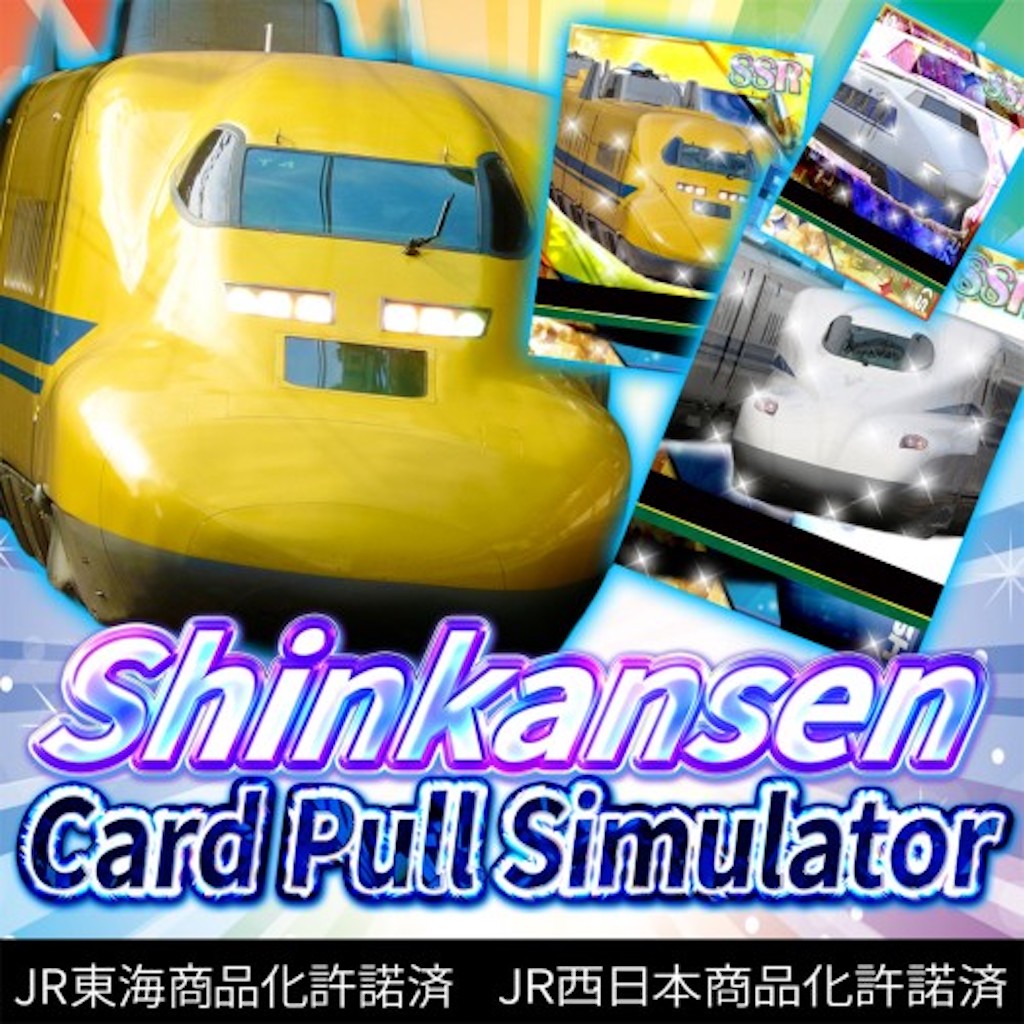
There is a very specific kind of calm that Shinkansen Card Pull Simulator is built around, and it establishes that tone almost immediately. This is not a game interested in challenge, escalation, or even traditional progression systems. Instead, it focuses entirely on repetition, sensory feedback, and the slow accumulation of a highly specific kind of collection.
Developed and published by Railworks Interactive, this April 2026 release revolves around a simple loop. You earn rail credits through minimal daily commuting tasks, then spend them on themed booster packs containing digital cards inspired by Japan’s Shinkansen bullet train network. These include train models, engineer profiles, historical ticket stubs, and archival railway artefacts presented with surprising attention to detail.
What sounds narrow on paper becomes strangely absorbing in practice, largely because the game understands exactly what it wants to be and never tries to expand beyond that identity.
The Ritual at the Centre of Everything
Opening packs is the core experience, and everything else is built to support it. Each pull is treated as a small ritual rather than a mechanical action. The pacing is deliberate, the transitions are slow, and the feedback is carefully tuned to make each moment feel tactile even without physical interaction.
Sound design carries a large part of this experience. The rustle of packaging, the soft separation of materials, and the subtle audio cues that accompany rare pulls all contribute to a sense of physical presence. Nothing is rushed, and nothing is exaggerated. Even high rarity cards are introduced with restraint rather than celebration.
This creates an unusual emotional rhythm. Instead of excitement or anticipation, the game leans into calm expectation. The act of opening packs becomes something closer to settling into a routine than chasing a reward. It is repetitive by design, but that repetition is the point.
Progression Built on Routine
Progression in Shinkansen Card Pull Simulator is intentionally slow and structured around consistency rather than achievement spikes. Daily commuting tasks are simple, almost meditative, designed to simulate routine engagement rather than test skill or attention.
There is no pressure to optimise or accelerate progress. Instead, the game rewards regular interaction over extended periods of time. Log in, complete basic actions, earn credits, open a few packs. That is the entire loop.
Over time, this leads to the gradual formation of a digital archive that feels more like a curated collection than a traditional progression system. Completing sets is not framed as a dramatic milestone, but as a natural outcome of sustained engagement.
For some players, this lack of urgency may feel limiting. There is little structural escalation, and the experience does not evolve dramatically over time. Instead, it maintains a consistent rhythm from beginning to end. That consistency is both its identity and its constraint.
Collection as Quiet Focus
The binder system is where the long term appeal of the game resides. As collections expand, the archive becomes increasingly detailed, offering a structured record of trains, personnel, and historical artefacts that gradually form a kind of digital museum.
There is a quiet satisfaction in organising and completing sets. The game does not push completion as a goal to rush toward. Instead, it allows it to emerge naturally over time.
This creates an unusual relationship with progression. Rather than striving toward defined endpoints, players engage in a process of accumulation and arrangement. It feels closer to maintaining a personal archive than completing a game in the traditional sense. That approach will not suit everyone, but it is internally consistent with the game’s overall design philosophy.
Sensory Design and Physical Illusion
A large part of what makes the experience effective is its sensory design. Haptic feedback, where supported, is used to simulate the resistance of opening packs, while sound design reinforces the illusion of physical handling.
The goal is not realism in a technical sense, but familiarity. It evokes the memory of collecting physical items rather than attempting to replicate the exact mechanics of them.
This sensory layering is what prevents repetition from feeling empty. Without it, the loop would quickly become mechanical. With it, each interaction gains subtle texture that sustains engagement over time. It is a system built on small, consistent sensations rather than dramatic feedback.
A Game Defined by Slowness
Everything about Shinkansen Card Pull Simulator is designed around slowness. There are no rapid progression systems, no high intensity mechanics, and no structural urgency. Even rewards are presented in a way that avoids exaggeration.
This makes it best suited for short, repeated sessions rather than extended play. It is not designed to be consumed quickly or mastered efficiently. Instead, it exists as something to return to gradually over time.
That design choice gives it a very specific identity. It feels less like a traditional game and more like a digital routine built around calm interaction.
The trade-off is clear. While the experience is cohesive, its extremely narrow focus and deliberately slow pacing will not appeal to players seeking variety, challenge, or mechanical depth.
Final Verdict
Shinkansen Card Pull Simulator is an exercise in controlled minimalism. It takes a highly specific concept, collecting train themed cards through structured daily interaction, and builds an experience entirely around repetition, sensory feedback, and gradual accumulation.
Its greatest strength lies in its consistency of tone and design. The audio work, haptic feedback, and pacing all reinforce a unified experience that remains stable from beginning to end. Its limitations are equally clear, particularly in its narrow scope and intentionally slow progression, which limit its appeal outside of its intended audience.
Still, within those boundaries, it is remarkably cohesive. It understands exactly what it is and commits fully to that identity without compromise. It does not demand attention. It simply offers a quiet loop to return to.