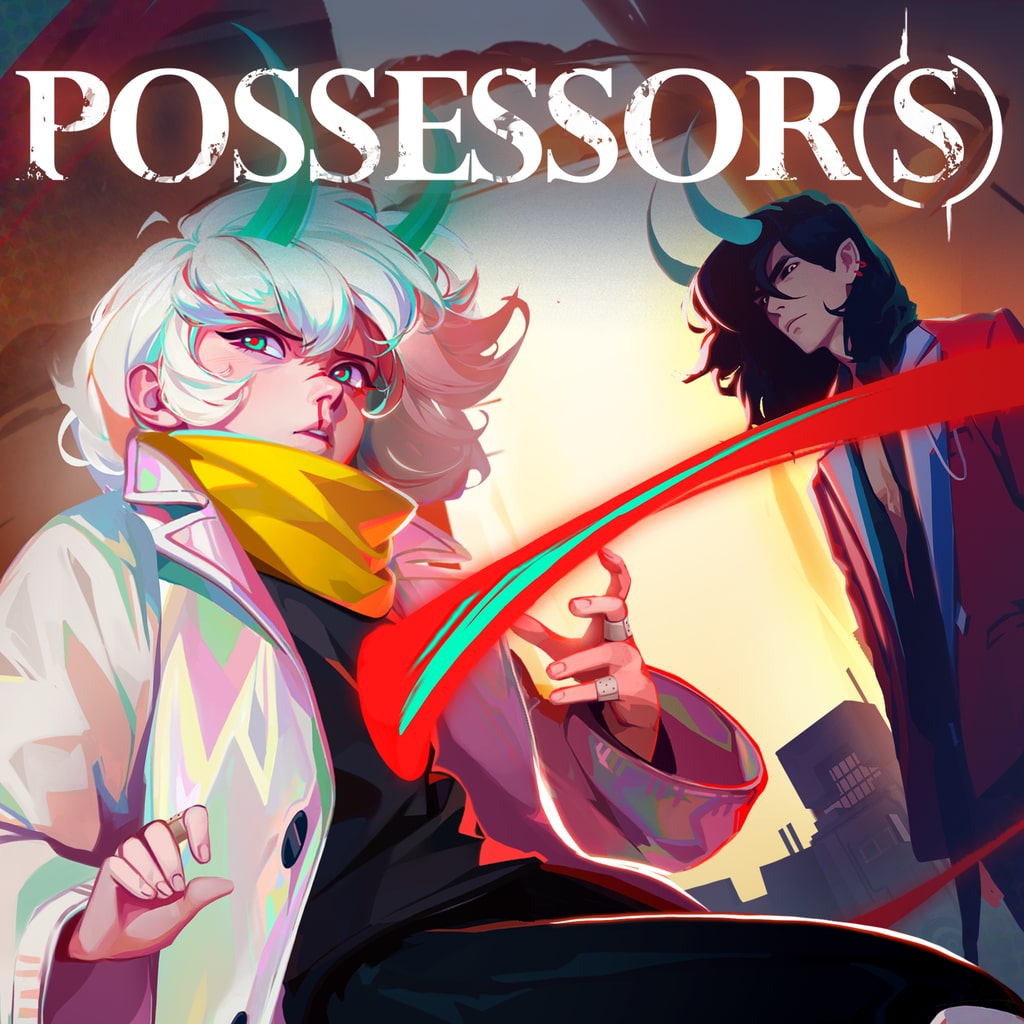
There is a restless energy running through Possessor(s) that feels familiar if you have spent time with Heart Machine’s previous work. It is present in the movement, in the way environments pull you forward, and in the quiet tension between beauty and collapse. But this time, that energy is split between two voices sharing the same body, and that internal conflict shapes almost everything the game becomes.
Released in November 2025 and published by Devolver Digital, Possessor(s) follows Luca, a high school student caught in the ruins of Sanzu City after an interdimensional catastrophe. Survival comes at a cost. She forms a pact with Rhem, a demon in need of a host, and the two are forced into an uneasy coexistence as they navigate a fractured metropolis filled with hostile entities and lingering questions.
It is a premise that could easily lean into spectacle alone, but Possessor(s) is more interested in tension, not just external danger but internal disagreement. It is a game about movement through space, but also about negotiation between two minds that do not fully trust each other.
A City That Feels Broken, Not Empty
Sanzu City is not just a backdrop. It feels like a place interrupted mid-existence. Skyscrapers lean into voids that should not be there. Aquariums sit half-flooded and silent. Infrastructure exists without purpose, as though whatever held it together simply stopped.
The interconnected world design follows a familiar search-action structure, but it carries a distinct emotional tone. Exploration is not framed as discovery in the traditional sense. It feels more like uncovering what has already gone wrong.
Progression is tied to ability upgrades and environmental mastery, as expected, but the layout encourages observation rather than speed. Routes loop back on themselves, shortcuts reveal hidden layers, and areas that once felt inaccessible slowly become readable as your movement options expand.
There is a constant sense that the city is larger than you can currently understand. That feeling never fully disappears, even late into the game.
Combat That Feels Like Motion, Not Just Impact
Where Possessor(s) distinguishes itself most clearly is in its combat design. Inspired by platform fighters, encounters are built around movement, positioning, and momentum rather than static exchanges.
You are not simply trading hits with enemies. You are juggling them, launching them, repositioning mid-air, and chaining actions together in a way that feels fluid rather than segmented. The line between traversal and combat is intentionally blurred.
This gives fights a distinct rhythm. Success depends as much on how you move as on which abilities you use. Ground and aerial attacks flow into each other, creating sequences that feel reactive yet controlled.
At its best, combat feels expressive. You are not just executing mechanics. You are shaping encounters through movement.
However, that same emphasis on precision can create friction. Some encounters demand a level of timing that can feel unforgiving, particularly when environmental hazards or tightly spaced arenas are involved. When the flow breaks, it does so sharply.
Two Voices, One Body
The relationship between Luca and Rhem is central to the experience and handled with a surprising degree of restraint. Their dynamic is not built on immediate trust or easy cooperation. It is defined by tension, negotiation, and gradual adjustment.
This is reflected in the dialogue. Conversations are often fragmented, with both characters pushing against each other’s perspectives. Rhem is not a guide in the traditional sense. He is a presence with his own priorities, and those priorities do not always align with survival.
This internal conflict extends into gameplay. Abilities feel like shared tools rather than personal extensions, reinforcing the idea that control is not entirely yours.
Over time, the relationship evolves, but not in a clean or predictable way. It shifts through small moments rather than dramatic turning points, giving it a sense of authenticity that suits the game’s tone.
Narrative That Prefers Fragments Over Answers
The story of Possessor(s) unfolds through environment, character encounters, and partial revelations rather than direct exposition. The Agradyne Corporation, the catastrophe, and the nature of the entities you face are explored in fragments rather than explained outright.
This approach creates intrigue but also distance. You are rarely given a complete picture, and the game does not rush to provide one.
For some, this will be a strength. It makes the world feel larger and more mysterious. For others, it may feel incomplete, particularly when narrative threads remain unresolved longer than expected.
What holds it together is tone. Even when details are unclear, the emotional direction remains consistent. Loss, displacement, and uncertainty run through every part of the experience.
Movement as Identity
Traversal is where Possessor(s) feels most aligned with Hyper Light Drifter and Solar Ash, but it builds on those foundations with a stronger sense of physical weight.
Abilities unlock gradually, each one expanding how you interact with the environment. Dashes, jumps, and traversal tools are not just upgrades. They are ways to reinterpret spaces you have already seen.
Returning to earlier areas with new abilities feels natural rather than forced. The world is designed to reveal itself in layers, rewarding attention and memory as much as mechanical progression.
There is clear satisfaction in mastering movement, especially when it begins to flow seamlessly into combat. When everything aligns, traversal and combat feel like parts of the same system rather than separate modes.
Style That Carries the Experience
Visually, Possessor(s) is striking without being overwhelming. Hand-drawn characters move against layered 3D environments, creating a sense of depth that reinforces the city’s scale without sacrificing clarity.
Colour is used carefully. Bright tones stand out against otherwise muted spaces, drawing attention to key elements without cluttering the screen.
Audio design complements this restraint. Music is present but not dominant. It supports the atmosphere rather than defining it, allowing environmental sound and silence to carry emotional weight.
The overall presentation feels cohesive. Nothing draws attention away from the experience. Everything supports it.
Final Verdict
Possessor(s) is a confident evolution of the ideas Heart Machine has explored before. It refines movement, deepens combat, and grounds its world in a tone that feels both fractured and deliberate.
Its greatest strength lies in how its systems connect. Combat, traversal, and exploration feed into one another, creating a consistent sense of motion that carries through the entire experience. Its narrative, while compelling in tone, can feel distant at times because of its fragmented delivery, and its precision-focused combat may not suit players seeking a more forgiving rhythm.
Even so, it leaves a strong impression. It is a game that values feeling over explanation, movement over spectacle, and tension over resolution. It does not hand you control completely. It asks you to share it.