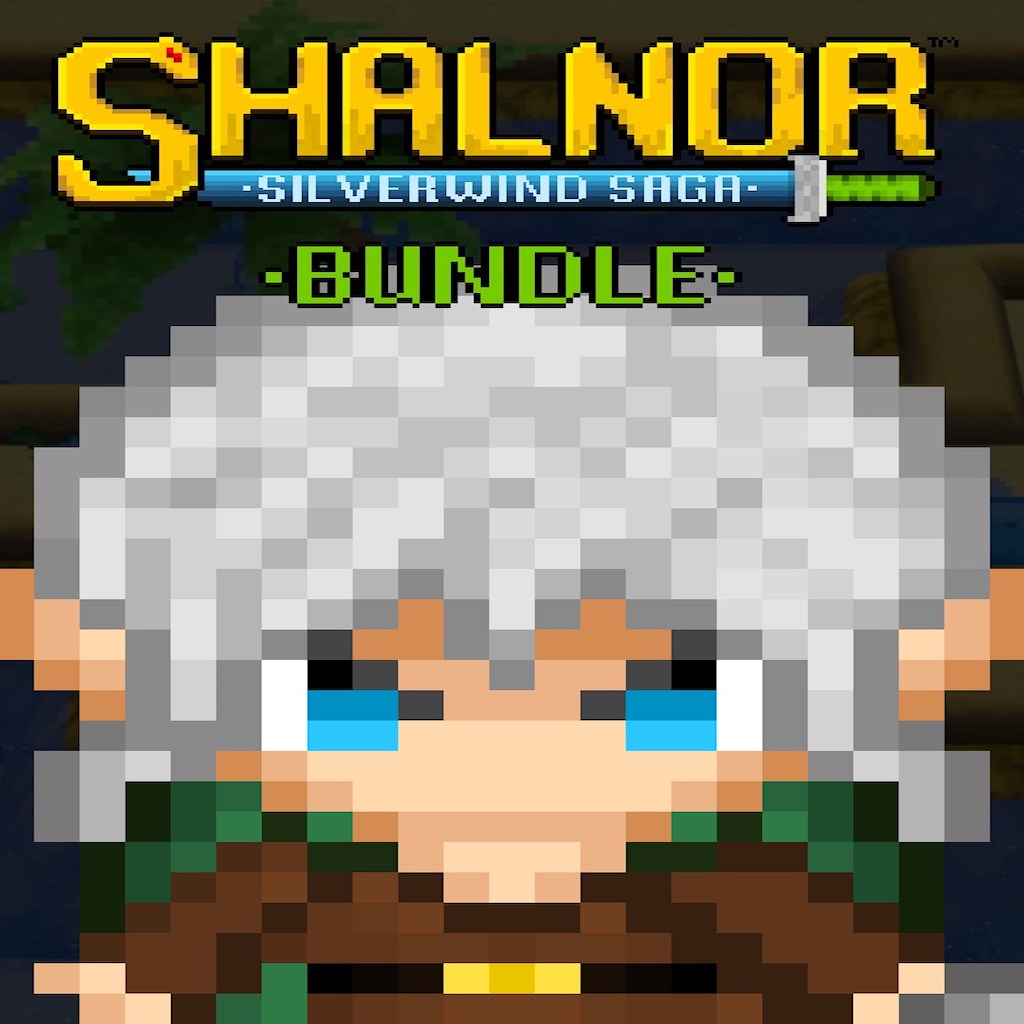
There is something wonderfully comforting about a good old-fashioned top-down adventure. Give me a little hero, a sword, a colourful world, a few suspicious-looking dungeons, and a collection of monsters that clearly need hitting, and I am usually willing to give it a go. Shalnor: Silverwind Saga Bundle taps directly into that nostalgic feeling, bringing together two retro-inspired action RPG adventures starring Rynna, a young elven heroine with more than enough trouble on her hands. Developed and published by solo indie creator Johnny Ostad, this is a decidedly old-school affair that blends classic 16-bit exploration with the frantic monster-smashing of a Gauntlet-style dungeon crawler.
The bundle contains both Silverwind Saga and Silverwind Saga 2, giving players two complete adventures to work through. The first sees Rynna arrive on an island that was once a popular tourist destination but has been abandoned thanks to the presence of the Slime Queen. The sequel takes things in a darker direction, with an evil Necromancer bringing ruin to an already dangerous island and trapping the souls of the dead in the world of the living. The stories are uncomplicated fantasy fare, but that works rather well here because Shalnor is much more interested in letting you explore, fight, and find increasingly useful toys than burying you under pages of exposition.
A Love Letter to 16 Bit Adventures
Anyone who grew up playing classic top-down adventures will immediately recognise the inspiration behind Shalnor. The perspective, colourful environments, dungeons, equipment hunting and the gradual discovery of new areas all carry that unmistakable Zelda flavour. It never feels as though the game is trying to hide its influences. Instead, it embraces them with the sort of enthusiasm you might expect from someone who spent far too many hours exploring the overworld of a 16-bit classic and thought, “I fancy making one of those.”
That nostalgia is one of the bundle’s biggest strengths. There is a pleasant simplicity to moving Rynna around the world, discovering somewhere new and wondering what unpleasant creature is waiting around the next corner. The environments provide enough variety to keep the adventure visually interesting, with lush tropical shores giving way to more sinister locations in the sequel. It is a colourful world, but one that can turn surprisingly gloomy when the undead start making themselves at home.
The beauty of this approach is that Shalnor does not need to spend hours teaching you how everything works. The basic language of the game is instantly understandable. You explore, find equipment, fight enemies, overcome hazards and eventually work your way towards the next major confrontation. There is something quite refreshing about that clarity, particularly when so many modern RPGs seem determined to introduce seventeen different progression systems before allowing you to enjoy yourself.
From Holiday Island to Haunted Nightmare
The premise of the first Silverwind Saga is rather amusing when you stop to think about it. This island was once a haven for tourists, presumably somewhere people went to relax, enjoy the scenery and perhaps take a few photographs. Now it is crawling with monsters because of the Slime Queen, so the nearest thing to a holiday activity is probably trying not to get eaten. Rynna arrives with something to prove, and her journey quickly becomes a trial by sword, monsters and increasingly dangerous encounters.
Finding powerful weapons and useful items is central to that journey. Exploration therefore has a genuine purpose, because you are not simply wandering around admiring the scenery. There is always the possibility that the next room, chest or hidden corner contains something that could make your life considerably easier. That sense of discovery is an important part of the old-school adventure formula, and Shalnor captures it nicely.
Then comes Silverwind Saga 2, which swaps the Slime Queen for an altogether more sinister problem. An evil Necromancer has transformed the already dangerous island into an even more hostile place, filling it with monsters and undead creatures while trapping souls that should have moved on from the world of the living. Rynna once again has to grab her weapons and get to work, this time with a considerably more ominous purpose behind her adventure.
When Zelda Meets Gauntlet
Where Shalnor distinguishes itself from a straightforward Zelda clone is in its approach to combat. The dungeon encounters have a distinct Gauntlet flavour, with Rynna facing waves of monsters in compact, dangerous areas while also dealing with traps and environmental hazards. Sword attacks form the backbone of the action, but simply charging into every fight swinging wildly is not always the smartest option.
The environments themselves can become weapons. Floor spikes, swinging blades and magical traps can all be used against the creatures trying to bring Rynna’s adventure to an abrupt end. There is something particularly satisfying about letting a horde of enemies chase you into a hazard and watching the environment do some of the dirty work. It adds a small tactical element to what could otherwise be a straightforward hack-and-slash affair.
This also gives the combat encounters a different rhythm from the exploration sections. One moment you can be calmly searching for an item or working out where to go next, and the next you are surrounded by monsters with projectiles flying across the screen. The contrast works well and prevents the adventure from becoming entirely about wandering from room to room in search of the next treasure chest.
Finding Better Ways to Fight
Equipment progression provides another reason to keep exploring. Hidden weapons, magical artefacts and other upgrades give Rynna more tools to tackle the increasingly dangerous opposition. There is a simple pleasure in finding something new and immediately wanting to test it against the next group of enemies, particularly when an upgrade lets you approach a previously difficult encounter with a little more confidence.
The equipment also feeds into exploration, as certain improvements can unlock previously inaccessible areas. That creates a satisfying little loop of discovery. You find something useful, realise it could help you reach somewhere you could not access before, and then start thinking about what else might be hiding beyond the obstacle.
Boss encounters provide another step up in difficulty, with multi-phase battles demanding more attention than standard monster groups. These confrontations give the adventures something to build towards, and after spending time exploring and gathering equipment, finally facing the major threat feels like a natural reward for your efforts.
A Pixel Art World With Personality
Visually, Shalnor wears its retro influences proudly. The hand-crafted pixel art has a colourful 16-bit quality that suits the game’s modest ambitions perfectly. Characters and monsters are instantly readable, environments have their own identity, and there is enough variety between locations to stop everything from becoming one big blur of green grass and brown dungeon walls.
The contrast between the two games is particularly effective. The first adventure can lean into the brighter tropical-island setting, while the sequel brings in undead-infested ruins and a more sinister atmosphere. It is not trying to deliver photorealistic visuals, of course, but that is entirely beside the point. The pixel art has charm, and charm can carry a surprisingly long way.
The chiptune soundtrack completes the retro package. There is something about energetic electronic music accompanying a little elf charging into a dungeon with a sword that just feels right. It gives the games that familiar arcade-adventure atmosphere and helps maintain momentum as the fighting intensifies.
Two Adventures for the Price of One
The real strength of the bundle is that you are not simply getting a single short retro adventure. You get two chapters following the same heroine, with the second game building on the basic formula while giving the setting and story a darker direction. Silverwind Saga establishes the concept, while Silverwind Saga 2 gives Rynna another reason to pick up her sword and march towards danger.
There is a slight downside to the formula, however. Combat can become repetitive during longer dungeon sections, particularly when you have fought through several groups of enemies using broadly similar tactics. The environmental traps help, and the equipment progression provides some incentive to continue, but there are occasions when the hack-and-slash routine begins to feel like it is running on autopilot.
That repetition is worth mentioning because it prevents Shalnor from reaching the upper echelons of the genre. The foundations are solid and the presentation has plenty of personality, but the experience does not always have enough mechanical variety to keep things feeling fresh throughout. Thankfully, the compact nature of the adventures means it does not become an unbearable problem.
Final Verdict
Shalnor: Silverwind Saga Bundle is a charming throwback to a simpler era of action RPGs. Its blend of Zelda-inspired top-down exploration and Gauntlet-style combat is enjoyable, while the traps, equipment upgrades and hidden items give the straightforward formula enough variety to remain engaging. The colourful pixel art and lively chiptune soundtrack also capture the spirit of the 16-bit era without feeling completely stuck in the past.
The two adventures complement one another nicely, with the first game’s tropical, monster-filled setting giving way to the sequel’s darker undead menace. Rynna is an appealing little hero to spend time with, and there is genuine satisfaction in watching her become better equipped before taking on increasingly dangerous enemies and bosses. It is not a revolutionary RPG, nor does it pretend to be one, but sometimes a game does not need to reinvent the wheel to be enjoyable.
There is a warmth to Shalnor that comes from its simplicity. It feels like the sort of game made because someone genuinely loves this style of adventure, rather than because every retro trend has been identified on a spreadsheet. The occasional repetition keeps it from being an essential purchase for every RPG fan, but for anyone who still gets a little excited at the sight of a pixelated dungeon, a suspicious treasure chest and a sword waiting to be swung, this bundle has plenty to offer.