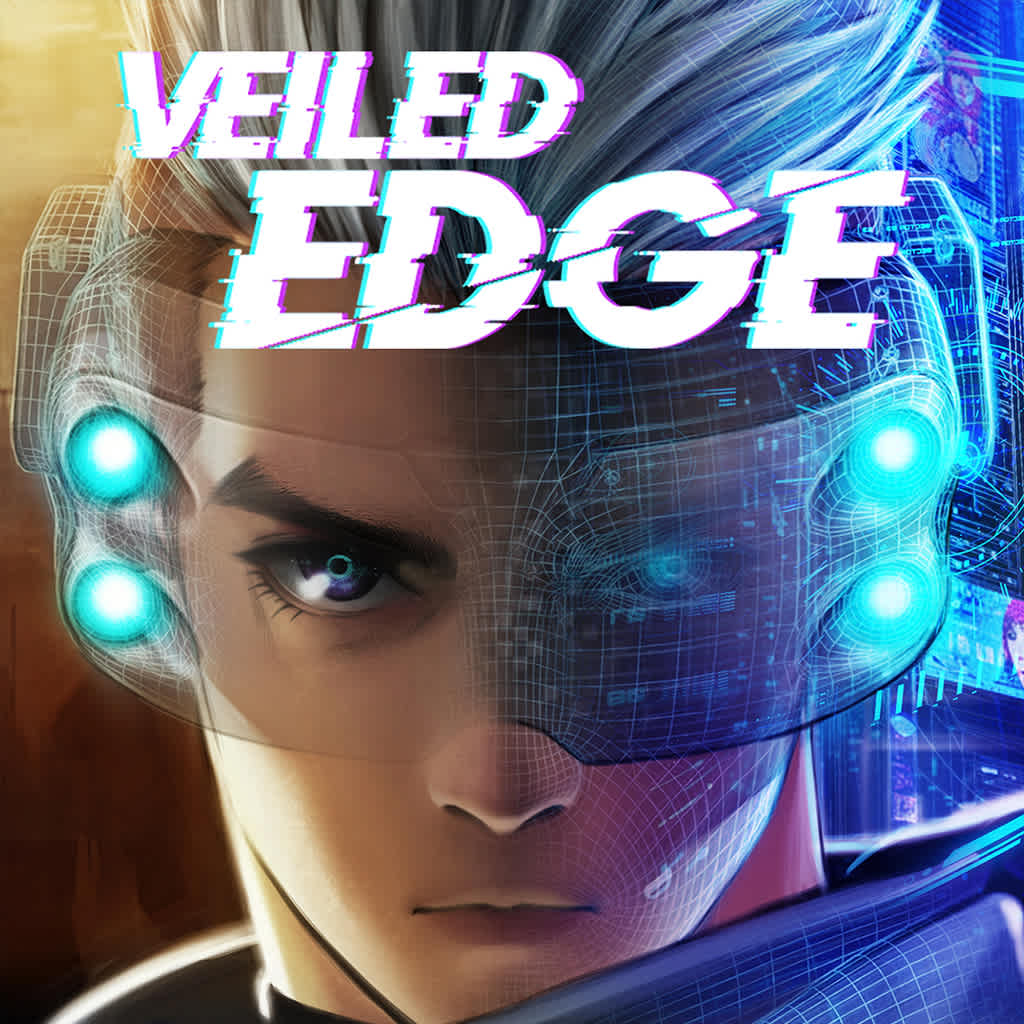
Cyberpunk settings are hardly in short supply these days. Neon cities, virtual realities, mysterious corporations and hackers pulling apart the fabric of the digital world have become familiar territory for games of all shapes and sizes. Yet every now and then, something comes along that takes those ingredients and gives them a slightly different flavour. Veiled Edge is one such game, because rather than simply telling a cyberpunk story through a familiar action-adventure framework, it keeps changing the rules beneath your feet.
Set in the year 2099, Veiled Edge unfolds in a world where the distinction between reality and virtual reality has almost disappeared. Full Dive technology allows people to enter simulated worlds so convincing that separating the real from the artificial becomes increasingly difficult. Into this strange landscape step Rapid, a former special forces mercenary now working as a corporate investigator, and Lena, a brilliant young hacker whose skills prove just as important as Rapid’s ability to cut through whatever stands in his way.
Developed by ONW Studio Inc and published by GaniTani, Veiled Edge combines fast-paced 2D action, platforming, puzzles, environmental hacking and a story-driven science-fiction mystery. On paper, that sounds like a lot to cram into one game. Surprisingly, it largely works, largely because the developers have built the experience around variety rather than trying to force every chapter into the same mould.
Welcome To 2099
The story begins with a seemingly straightforward investigation into the disappearance of a child in one of the Full Dive virtual environments. Naturally, things do not remain straightforward for long. What begins as a missing-persons investigation gradually becomes considerably more sinister as Rapid and Lena uncover evidence of a much larger conspiracy involving corporations, artificial worlds and secrets someone clearly wants buried.
The setting offers plenty of opportunities for the story to move beyond the usual dark cyberpunk city. You will explore neon-drenched urban environments, research facilities, amusement parks and other simulated locations, each with its own visual identity and gameplay ideas. That constantly changing backdrop helps keep the adventure feeling fresh, even when the central mystery takes a little time to reveal where it is heading.
Rapid and Lena also make a likeable partnership. Rapid provides the physical presence, while Lena brings the technical expertise, and their differing abilities give the game a natural reason to alternate between combat and hacking. There is a pleasing sense that neither character would be quite as effective without the other, which helps the relationship feel important to the gameplay rather than existing solely for the story.
A Game That Refuses To Sit Still
The most interesting thing about Veiled Edge is undoubtedly its willingness to change genres. Rather than deciding what kind of game it wants to be and sticking to that formula for the entire campaign, each chapter can introduce a different style of play. One moment you might be tackling precision platforming, while another section can shift towards hack-and-slash combat, exploration or environmental puzzles.
It is a bold approach, and one that could easily have gone horribly wrong. Constantly changing the rules can make a game feel disjointed, particularly if mechanics are introduced and abandoned before they have time to develop. Veiled Edge occasionally runs into that problem, with some chapters inevitably feeling more substantial than others, but the overall effect is surprisingly refreshing.
There is something genuinely exciting about reaching a new chapter and wondering what the developers are going to throw at you next. Familiarity never has quite enough time to become boring, because just as you start settling into one style of play, the game gives you something else to learn. It creates a wonderfully unpredictable rhythm that suits the unstable nature of its virtual reality setting.
Rapid Brings The Action
When Veiled Edge settles into traditional action, Rapid is an enjoyable character to control. Combat is fast, responsive and built around movement as much as standing still and swinging a weapon. Dashes, melee attacks and projectile counters keep you mobile, creating encounters that reward quick reactions.
There is a pleasing sense of momentum to the combat. Rapid can move around the battlefield with enough speed to make encounters feel energetic, and the pixel animation gives each attack a satisfying visual punch. You are encouraged to keep moving rather than waiting patiently for enemies to come towards you, which makes even relatively straightforward encounters feel more active.
Boss battles naturally provide the biggest tests. These encounters give the game’s combat systems an opportunity to stretch their legs, requiring you to pay attention to enemy patterns while finding opportunities to attack. They are not always revolutionary, but they provide a welcome punctuation mark at the end of the more exploratory sections.
Lena’s Hacking Changes The Rules
Lena’s abilities are arguably the most distinctive part of the gameplay. Rather than treating hacking as a simple menu-based distraction, Veiled Edge lets her abilities directly manipulate the environment around you. Lasers can be reprogrammed, structures altered, and previously inaccessible routes revealed.
This creates genuinely satisfying moments when you realise the obstacle in front of you is not something to defeat but something to change. A trap that initially seems impossible to pass might become harmless after Lena alters its behaviour, while a seemingly solid section of the environment may reveal a hidden route once the right system has been manipulated.
The hacking mechanics also fit well with the central premise. In a world where reality is effectively software, changing the environment through code feels like a natural extension of the setting rather than an arbitrary gameplay gimmick. It gives Veiled Edge a mechanical identity of its own and helps separate it from the many other cyberpunk action games competing for attention.
Something New Around Every Corner
The genre changes are not the only source of variety. Veiled Edge also features arcade-style minigames during certain hacking and simulation sequences, and these brief diversions offer temporary stat boosts and access to additional lore. They reinforce the sense that you are constantly moving between layers of a digital world.
Hidden routes and optional challenges are scattered throughout the adventure. They encourage exploration beyond the obvious path, which is particularly welcome in a game where environments can change dramatically from one chapter to the next. Players who simply want to follow the story can do so, while completionists have reasons to poke around and see what has been tucked away.
That said, the constant variety comes with a price. Not every idea is equally refined, and some mechanics feel more developed than others. A particular chapter might introduce an excellent gameplay concept only for the game to move on before it has had a chance to reach its full potential. It is an understandable side effect of such an ambitious structure, but it does prevent every section from feeling equally memorable.
Pixel Art With Plenty Of Personality
Visually, Veiled Edge is one of its strongest features. The pixel art is detailed without becoming cluttered, and the cyberpunk environments are filled with neon lighting, glowing signs and intricate background details. Despite the amount happening on screen, the action generally remains readable, which is particularly important when combat and platforming become frantic.
The different virtual worlds also give the artists plenty of room to experiment. Neon city streets have a very different personality from research facilities or colourful amusement parks, and the changes in scenery help reinforce the idea that you are constantly travelling through different simulated realities.
Character animation is another highlight. Rapid’s combat moves have a good sense of weight and speed, while the overall presentation retains the charm of traditional pixel art without feeling stuck in the past. It is the sort of visual style that can make you pause for a moment simply to appreciate the amount of detail packed into a small environment.
A Soundtrack From The Digital Shadows
The audio complements the visual presentation well. Punchy combat effects give Rapid’s attacks the impact they need, while digital glitches and electronic effects reinforce the game’s virtual reality setting. The soundtrack leans heavily into synthwave territory, providing an appropriately futuristic backdrop to the adventure.
The music also shifts in intensity when the action demands it, helping boss encounters and more dangerous sections feel suitably dramatic. It never completely overwhelms the gameplay, which is important given how much time you spend moving between different styles of play.
It is not necessarily the sort of soundtrack that will define the game on its own, but it does an excellent job of creating a consistent atmosphere. When combined with the pixel art, it gives Veiled Edge a strong identity that endures even as the mechanics underneath change.
The Risk Of Doing Too Much
Veiled Edge deserves credit for taking a risk. For an indie developer making a cyberpunk action game, there is a much safer route, namely choosing a familiar genre and polishing it to within an inch of its life. Instead, ONW Studio Inc has created something far more experimental, and while the results are not flawless, the ambition is hard not to admire.
The biggest weakness is that the genre-hopping occasionally leaves you wanting more. A particularly enjoyable mechanic might appear in one chapter and then disappear, while another section may feel less engaging because its central idea does not work quite as well. It can occasionally feel as though you are playing several smaller games stitched together rather than one perfectly unified experience.
Yet there is also a strange charm to that structure. Veiled Edge feels like a game that genuinely wants to surprise you. In an industry where familiarity can sometimes be mistaken for quality, there is something refreshing about an adventure that is willing to take the occasional wrong turn in search of something different.
Final Verdict
Veiled Edge is an ambitious cyberpunk adventure with a wonderfully restless personality. Its story of virtual worlds, corporate conspiracies and disappearing people provides an effective framework for a game that is far more interested in variety than convention. Rapid’s fast-paced combat works well, Lena’s environmental hacking offers the most distinctive gameplay idea, and the constant shifts in genre keep the campaign moving.
It is not always completely successful. Some chapters are stronger than others, and certain mechanics feel as though they could have benefited from more time in the spotlight. The genre-shifting structure can occasionally make the adventure feel fragmented, but it also prevents the experience from becoming stale.
Most importantly, Veiled Edge has character. The detailed pixel art, electronic soundtrack and colourful collection of virtual worlds create a setting that is easy to become invested in, while the relationship between Rapid and Lena gives the story a human touch beneath all the technology and corporate intrigue.
For players who enjoy their cyberpunk with a little experimentation, Veiled Edge is well worth investigating. It may not perfect every one of its ideas, but I would much rather play a game willing to take a few risks than another polished but forgettable trip through a neon city. In a genre that has become increasingly crowded, Veiled Edge manages to carve out a little space of its own.