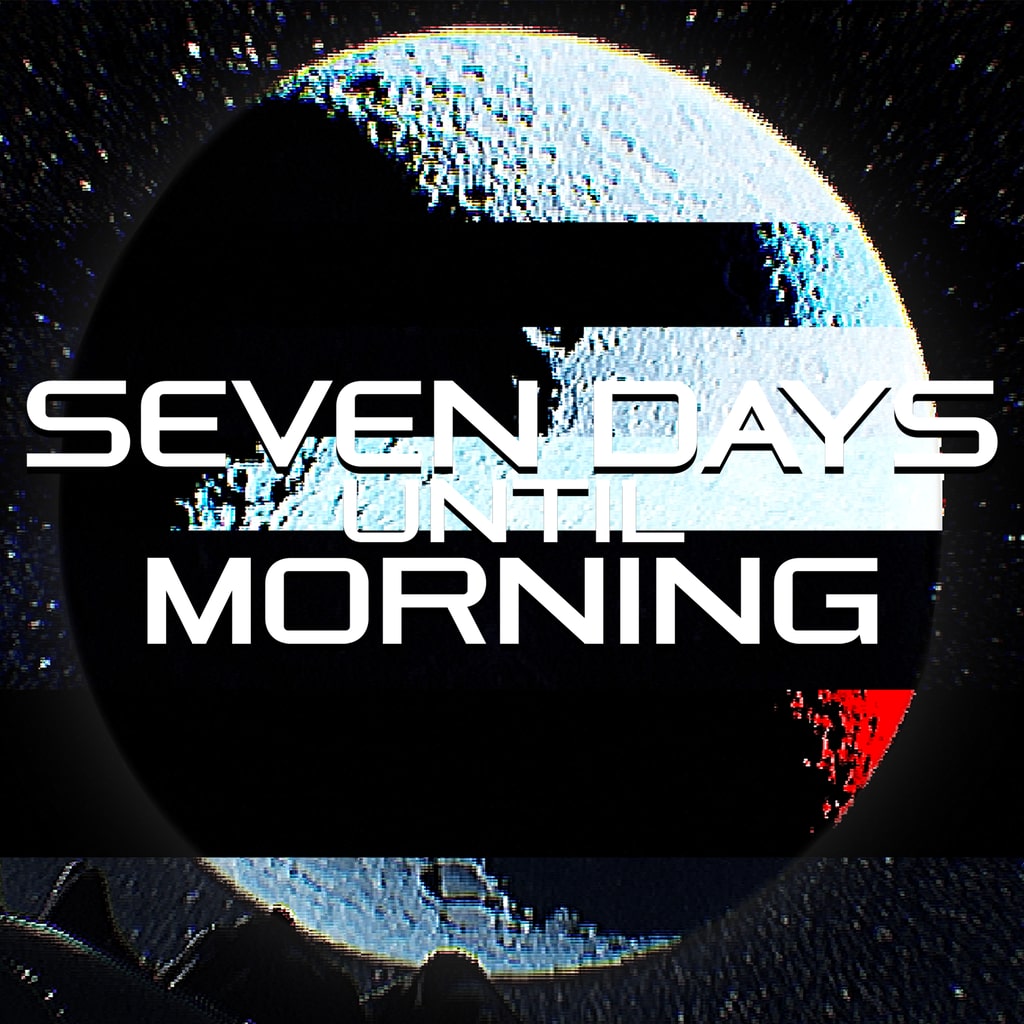
Indie horror has always thrived on isolation. Whether it is a deserted spaceship, a forgotten facility, or a lonely stretch of wilderness, some of the genre’s most effective experiences recognise that fear often stems from being completely cut off from the rest of the world. Seven Days Until Morning takes that idea to an extreme. Rather than trapping players in a haunted house or abandoned laboratory, developer Foamy strands them on Pluto, millions of miles from civilisation, as humanity itself collapses elsewhere in the solar system.
It is a wonderfully bleak premise that immediately captures the imagination. You are not trying to save the world. You are not fighting monsters or searching for a miracle cure. Your goal is simply to survive one week inside a crumbling emergency bunker while the universe outside slowly falls apart. That sense of helplessness defines the entire experience and gives Seven Days Until Morning a distinctive identity among modern horror games.
The story is intentionally sparse, revealing details through environmental storytelling, terminal readouts, surveillance systems, and the gradual discovery of what happened before your arrival. After crash-landing on Pluto, you find refuge in a centuries-old shelter that has long since fallen into disrepair. It may be humanity’s last sanctuary, but it is barely holding together.
The result is a narrative that feels intimate despite its cosmic scale. While larger science-fiction stories often focus on grand battles and galaxy-spanning conflicts, Seven Days Until Morning is interested in something much smaller and, in many ways, more terrifying. It asks what it would feel like to sit alone at the edge of existence while everything you have ever known disappears beyond the stars.
Keeping the Lights On
The bulk of the gameplay centres on maintaining the bunker’s increasingly fragile systems. At first glance, the objectives seem straightforward. Monitor power systems, manage reactor stability, check surveillance feeds, and ensure nothing catastrophic happens before morning. Naturally, things are never that simple.
Every system feels only moments from failure. Electrical networks require constant attention, reactor components demand regular maintenance, and unexpected problems arise at the worst possible moments. The game creates tension not through combat but through responsibility. Every task feels important because a single mistake can have serious consequences.
What makes the gameplay loop compelling is how these responsibilities overlap. While dealing with one crisis, another may be developing elsewhere in the facility. A reactor issue might draw your attention away from surveillance monitors. A failing power system might force you to abandon another important task. The constant juggling act creates a surprisingly effective sense of panic.
Unlike many horror games that rely on scripted jump scares, Seven Days Until Morning generates fear through pressure. The knowledge that everything depends on your actions creates a persistent level of anxiety that rarely lets up throughout the experience.
Pluto as a Character
One of the game’s greatest strengths is its atmosphere. Despite its modest production values, Seven Days Until Morning excels at creating a believable sense of place. The bunker feels old, forgotten, and neglected. Dimly lit corridors stretch into darkness. Machinery groans under decades of wear and tear. Pipes rattle beyond the walls, while distant metallic echoes suggest the facility is alive in ways it perhaps should not be.
Sound design deserves particular praise. Every alarm, mechanical clang, and humming generator contributes to an environment that feels genuinely unsettling. There are moments when simply walking down an empty hallway becomes nerve-racking because the game has conditioned you to expect something to go wrong.
Outside the bunker, Pluto itself looms as a constant presence. The frozen wasteland beyond the blast doors reinforces the feeling of absolute isolation. There is nowhere to run and nobody coming to help. The hostile environment transforms the bunker from a prison into a lifeline, making every maintenance task feel even more important.
The atmosphere often succeeds where much larger horror games struggle. It understands that uncertainty can be more effective than direct threats. By allowing players to imagine what may be lurking beyond their limited view, it creates tension that remains remarkably consistent throughout the adventure.
Trial and Error in the Darkness
As effective as the atmosphere is, Seven Days Until Morning is not without flaws. The biggest issue stems from its reliance on trial-and-error gameplay. Certain systems require memorisation, experimentation, and repeated failure before their logic becomes fully apparent. While this approach can reinforce the sense of learning how an unfamiliar facility operates, it can also lead to frustration.
Some failures feel earned because they result from poor decision-making. Others feel less satisfying because the game does not always communicate information clearly. Unexpected game-over screens occasionally appear with little warning, forcing players to repeat sections even when they already know exactly what needs to be done.
The relatively short running time softens this issue somewhat. Most players will likely finish the game within a few hours, so repeated attempts never become overly exhausting. Even so, there are moments when the balance between challenge and frustration feels slightly uneven.
The controls and interactions can also feel a little rough around the edges. This is very much an indie production, and certain animations, interface elements, and environmental interactions lack the polish of larger releases. Thankfully, these shortcomings rarely undermine the core experience.
A Small Horror Game with Big Ideas
What ultimately makes Seven Days Until Morning memorable is its commitment to its concept. It never tries to become something it is not. There are no unnecessary action sequences, no elaborate progression systems, and no attempt to stretch the experience beyond its natural length.
Instead, Foamy delivers a focused piece of science-fiction horror built around atmosphere, tension, and isolation. The game’s modest scope allows every element to support its central theme. From the maintenance systems to the environmental storytelling, everything reinforces the feeling of being stranded at the end of the world.
There is also something refreshingly human about the experience. Beneath the science-fiction setting and survival mechanics lies a story about loneliness, resilience, and the desperate desire to keep going even when hope feels distant. Those emotional undercurrents lend the adventure a surprising amount of weight.
Not every mechanic lands perfectly, and players who dislike trial-and-error design may find parts of the experience difficult to embrace. Yet for those willing to meet it on its own terms, Seven Days Until Morning offers a genuinely distinctive horror journey that stands apart from more conventional genre offerings.
Final Verdict
Seven Days Until Morning is not a blockbuster horror epic, nor does it try to be. It is a compact, atmospheric indie experience that turns routine maintenance tasks into genuine dread. Its strongest moments stem from Pluto’s oppressive loneliness, the constant pressure of keeping a dying bunker alive, and the unsettling sense that humanity’s final days are unfolding somewhere far beyond your reach.
The gameplay occasionally stumbles because of trial-and-error frustrations and abrupt failure states, but those issues never completely overshadow the experience’s remarkable atmosphere. For players seeking a short but memorable dose of science-fiction horror, this lonely week on Pluto is well worth enduring.