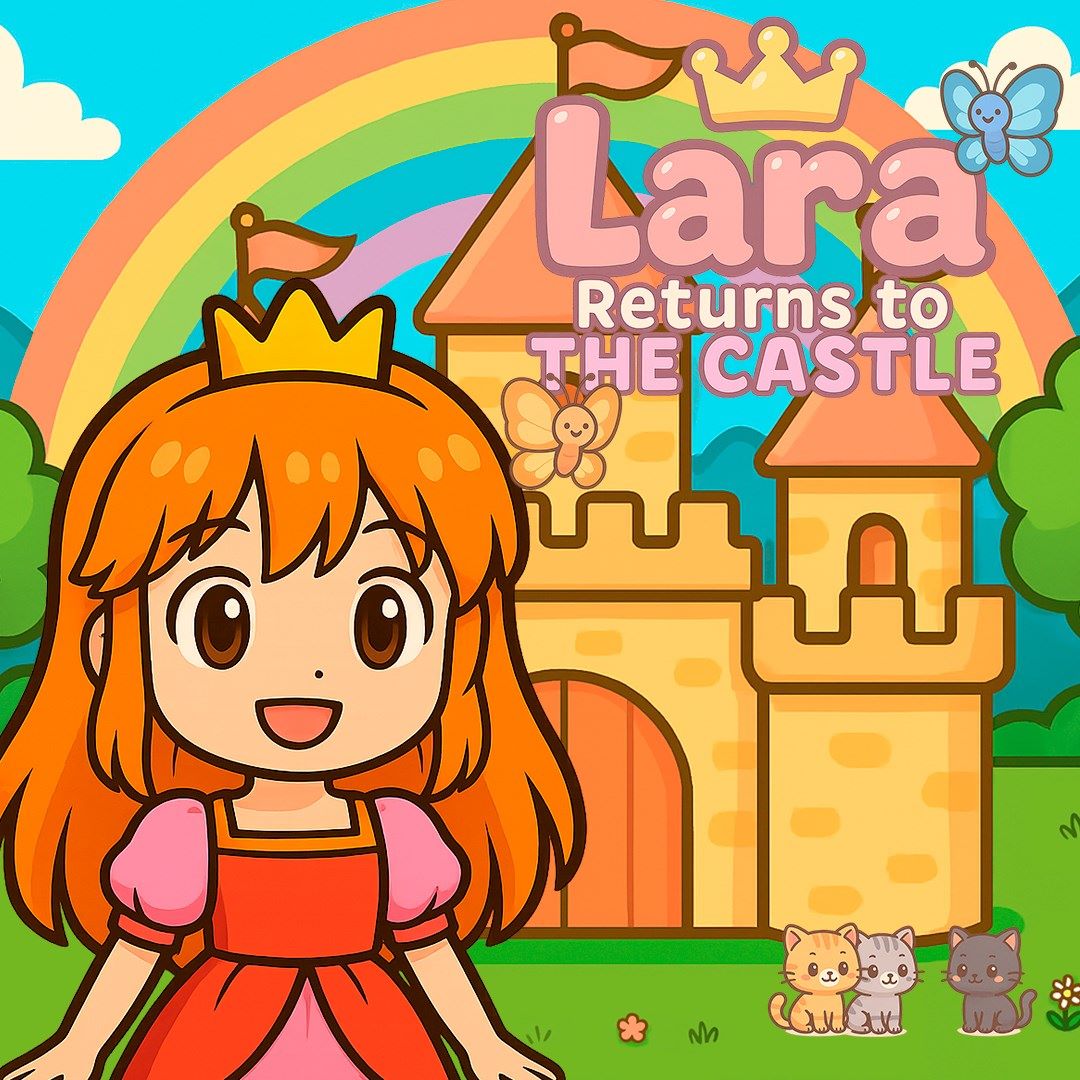
Platformers live and die by feel. You can dress them in fairy-tale colors, wrap them in a gentle story, and fill the stages with sparkling collectibles, but if the jump lacks rhythm or the challenge feels hollow, the magic fades quickly. Lara Returns to the Castle, a modest release from Yume Game Studio, understands at least half of that equation. It’s a bright, earnest adventure starring Princess Lara, a heroine who gets lost picking flowers and ends up navigating a gauntlet of traps on her way home. The result is a game that’s sweet, accessible, and occasionally delightful—yet held back by design that rarely rises above competent.
A Simple Tale Told with Petals
The premise could fit on the back of a storybook. Lara wanders from her castle in search of flowers, loses her way, and must traverse a series of dangerous stages to return. Magical blooms act as keys, opening portals to the next area once enough are collected. There are no dark conspiracies, no tragic backstories—just a straightforward quest motivated by curiosity and a desire to get home before dinner.
That lightness is one of the game’s strengths. In an era where even mascot platformers feel compelled to justify themselves with elaborate lore, Lara Returns to the Castle is refreshingly unpretentious. The tone is closer to a Saturday morning cartoon than an epic, and it commits to that identity with cheerful confidence.
Running, Jumping, Flower Picking
Mechanically, the game follows familiar 2D platforming rules. Lara runs, jumps, avoids spikes, dodges moving hazards, and collects glowing flowers scattered across compact levels. Each stage acts as a self-contained obstacle course, gradually introducing new traps—swinging blades, crumbling platforms, timed gates—that test your timing more than your creativity.
Controls are responsive enough, though they lack the razor precision of genre leaders. Jumps feel slightly floaty, which makes certain later challenges trickier than they should be. The difficulty curve rises steadily, yet rarely surprises; most deaths come from misjudging distances rather than clever level design.
The portal system provides a gentle structure. Instead of racing straight to an exit, you must gather enough flowers to activate the gateway forward. This encourages exploration, but the stages are generally small and linear, so “exploration” often means checking the obvious side path rather than uncovering secrets. Hidden areas exist, yet they seldom reward more than a few extra petals.
Visual Charm Doing Heavy Lifting
Where the game truly shines is presentation. Yume Game Studio has crafted a colorful, storybook aesthetic with soft outlines and pastel palettes. Lara herself is expressive and endearing, animated with enough personality to carry the otherwise thin narrative. Environments—from sunlit meadows to gloomy castle corridors—are pleasant if not particularly distinctive.
Music follows the same pattern: light, melodic tracks that fit the fairy-tale mood without lingering in memory. The overall vibe is cozy, almost soothing, which makes the occasional spike-filled massacre feel oddly out of place. The game wants to be gentle, yet platformers require a measure of cruelty, and the balance isn’t always graceful.
Challenge Without Surprise
As the adventure progresses, traps become denser and timing windows narrower. For younger or casual players, this escalation will feel satisfying; for veterans, it may feel routine. The game rarely introduces mechanics that transform how you play. There are no new abilities, no dramatic shifts in rules—just more complicated arrangements of the same obstacles.
This restraint keeps the experience approachable but limits its ceiling. Compare it to classics that constantly reinvent themselves with double jumps, wall runs, or physics gimmicks; Lara Returns to the Castle prefers to stay in safe territory. The result is a platformer that’s pleasant moment-to-moment yet struggles to create standout levels you’ll remember next week.
Checkpoints are generous, preventing frustration, and failure reloads quickly. These modern comforts make the game ideal for short sessions, though they also reduce tension. You rarely fear experimentation because consequences are minimal.
Who Is Princess Lara For?
The target audience feels broad but skewed toward younger players and newcomers to the genre. There’s nothing here that would scare off a child or a parent playing alongside them. Violence is abstract, stakes are low, and the protagonist’s motivation—collect pretty flowers to go home—radiates wholesome energy.
Hardcore platform fans, however, may find the package too thin. Without speedrun incentives, complex movement, or inventive puzzles, replay value depends largely on how much you enjoy the basic loop. Completionists can chase perfect flower counts, but rewards for doing so are modest.
Rough Edges in the Castle Walls
Technical performance is mostly stable, though occasional collision quirks can cause unfair deaths near edges or moving platforms. Level variety also repeats visual themes a bit too eagerly, making long sessions blur together. A few boss encounters or narrative beats could have injected personality beyond the opening premise.
Still, it’s hard to be overly harsh toward a game that never promises more than it delivers. Lara Returns to the Castle aims to be a charming, straightforward platformer and largely achieves that goal. Its shortcomings are sins of modesty rather than ambition.
Final Thoughts
In the crowded kingdom of indie platformers, Princess Lara doesn’t claim the throne, but she earns a comfortable seat in the garden. The journey back to the castle is brief, colorful, and gently challenging—perfect for players seeking a relaxed adventure rather than a gauntlet of precision.
Yume Game Studio has crafted a title with heart, even if its mechanics play it safe. With a bit more inventiveness and bolder level design, future outings could bloom into something special. For now, this is a pleasant stroll through petals and pitfalls—nothing revolutionary, but warm enough to welcome you inside the gates.