There is something undeniably charming about rediscovering a game most players outside Japan have never heard of. Firework Thrower Kantaro’s 53 Stations of the Tokaido was released in 1986, an era when developers were still experimenting with what home console games could be. Storytelling was simple, mechanics were often unforgiving, and success often depended on persistence as much as skill.
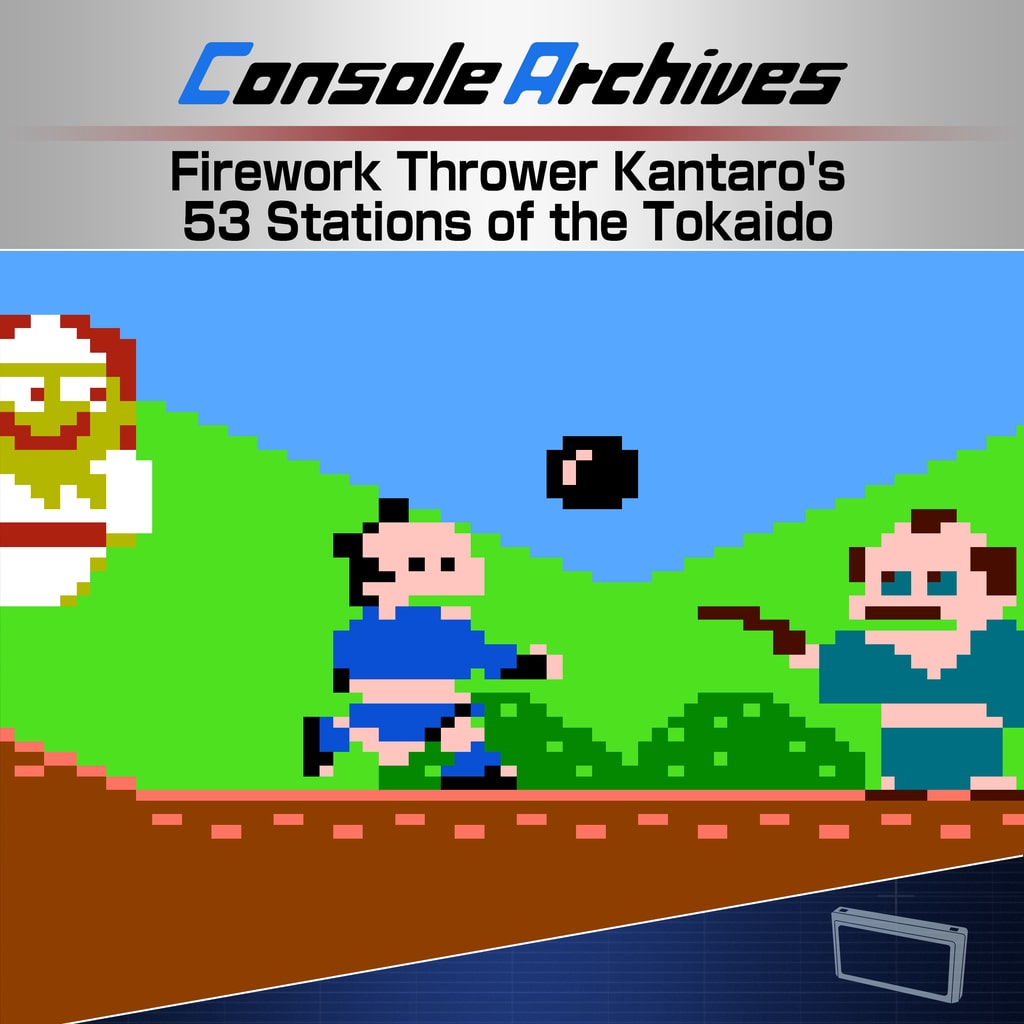
The premise is wonderfully unusual. You play as Kantaro, a travelling fireworks craftsman on a long journey to Edo, where his fiancée Momoko awaits. Along the way, enemies seek to steal his secrets, forcing him to defend himself with fireworks and explosives as he navigates the famous Tokaido route.
Even today, the concept stands out. While many games of the era borrowed heavily from fantasy adventures or science fiction themes, Kantaro’s journey embraces Japanese history and culture in a way that feels refreshingly unique. It immediately establishes an identity that sets it apart from countless other retro platformers.
More Than Just a Side Scroller
At first glance, the gameplay appears straightforward. Players move from left to right, avoiding hazards, defeating enemies, and surviving increasingly challenging stages. However, Kantaro’s use of fireworks as both a weapon and a strategic tool adds an unusual twist to the formula.
Rather than simply jumping on enemies or firing conventional projectiles, Kantaro relies on explosive devices that demand careful placement and timing. Some enemies can be eliminated with direct attacks, while others require a more thoughtful approach. Mastering these mechanics is essential for survival.
The problem is that the game rarely explains itself well. Like many titles from the mid-1980s, it often expects players to learn through failure. What initially seems like a simple mistake frequently turns out to be a lesson the game wants you to discover through trial and error. For some retro enthusiasts, this approach is part of the appeal. For others, it can quickly become exhausting.
A Remarkable Historical Road Trip
One of the most fascinating aspects of Firework Thrower Kantaro’s 53 Stations of the Tokaido is its commitment to historical authenticity. The famous Tokaido route connected Kyoto and Edo during Japan’s Edo period, and the game’s stages are inspired by the real stations travellers would have encountered along the way.
This attention to detail elevates the experience beyond a simple platforming challenge. Bridges, landscapes, checkpoints, and environmental features often mirror their historical counterparts. For players interested in Japanese history, there is genuine educational value beneath the layers of arcade challenge.
The sense of travelling across a living landscape gives the adventure a distinctive atmosphere. Each stage feels like another step towards a meaningful destination rather than simply another obstacle course. Even when the gameplay becomes frustrating, the journey itself remains compelling. There is a sincerity to the game’s world-building that deserves recognition. It transforms what could have been a generic action game into something far more memorable.
Difficulty That Reflects Its Era
Modern players should prepare before diving into Kantaro’s adventure. This is not a forgiving game. Many challenges seem designed around repeated failure. Certain enemy behaviours can only be understood after enduring them. Hidden dangers, unusual collision detection, and unexpected hazards frequently punish players who rely solely on instinct.
Some enemies prove particularly irritating because traditional strategies simply do not work against them. There are moments when bombs appear ineffective, progress feels unclear, and success seems to depend on knowledge gained from previous unsuccessful attempts.
This style of design was common at the time, but it can feel jarring today. Modern games often teach through gradual escalation and clear feedback. Firework Thrower Kantaro frequently takes the opposite approach, throwing players into difficult situations and expecting them to adapt. The result is an experience that feels authentic to its era, though not always enjoyable by contemporary standards.
The Real Hero: The Console Archives Package
Without Hamster Corporation’s emulation features, this review might look very different. The Console Archives presentation does an exceptional job of making an old and often unforgiving game accessible to modern audiences. Save states, rewind, button remapping, and display options dramatically improve the overall experience without compromising the original game.
The rewind feature deserves particular praise. What once might have required restarting an entire level can now be corrected in seconds. This transforms many frustrating moments into manageable learning experiences. Rather than abandoning the game after a difficult sequence, players can experiment, learn, and continue progressing.
The CRT filters and display options are also excellent additions. Players can recreate the look of playing on an old television or enjoy a cleaner, modern presentation, depending on personal preference. Most importantly, these features allow players to appreciate the game’s historical significance without being completely overwhelmed by its more dated design philosophies.
A Product of Its Time
Visually, Firework Thrower Kantaro’s 53 Stations of the Tokaido reflects the era’s creative constraints and ingenuity. Character sprites are simple yet expressive, environments communicate their themes effectively, and the overall presentation has a nostalgic charm.
The soundtrack follows a similar pattern. While technically limited by modern standards, it captures the journey’s atmosphere and contributes to the game’s distinct identity. The music may not linger in your memory for years, but it serves its purpose admirably.
What stands out most is how much personality the game conveys despite the hardware limitations of its time. Kantaro’s quest feels earnest and oddly endearing. The blend of historical inspiration and whimsical action creates a tone that remains surprisingly unique even decades later.
Preservation Versus Enjoyment
The central question about releases like this is whether they should be judged as games or historical artefacts. Viewed purely as a modern gaming experience, Firework Thrower Kantaro’s 53 Stations of the Tokaido struggles in several areas. The controls can feel imprecise, the difficulty occasionally borders on unfair, and the reliance on trial and error often undermines player satisfaction.
Viewed as a preserved piece of gaming history, however, the experience becomes considerably more valuable. It offers insight into the design philosophies, cultural influences, and technical limitations that shaped an important era of console gaming.
The answer ultimately lies somewhere between those perspectives. It is neither a hidden masterpiece nor an obsolete relic. Instead, it is an interesting snapshot of a medium still finding its identity.
Final Verdict
Console Archives: Firework Thrower Kantaro’s 53 Stations of the Tokaido succeeds primarily for what it represents rather than how it plays. Its historical setting, unusual premise, and cultural authenticity make it a fascinating rediscovery, while Hamster Corporation’s excellent emulation tools ensure that modern audiences can experience it without enduring every frustration of 1980s game design.
The gameplay itself remains a mixed bag. There are enjoyable moments, creative ideas, and genuine charm throughout the adventure, but these are often accompanied by difficulty spikes, opaque mechanics, and trial-and-error design that feel archaic by today’s standards.
For retro enthusiasts, gaming historians, and players curious about obscure corners of console history, this release is well worth exploring. For those seeking a timeless classic that still feels modern today, the journey may be harder to recommend. Still, there is something admirable about preserving games like this. They remind us not only of how far the industry has come, but also of the strange, experimental paths it took along the way.