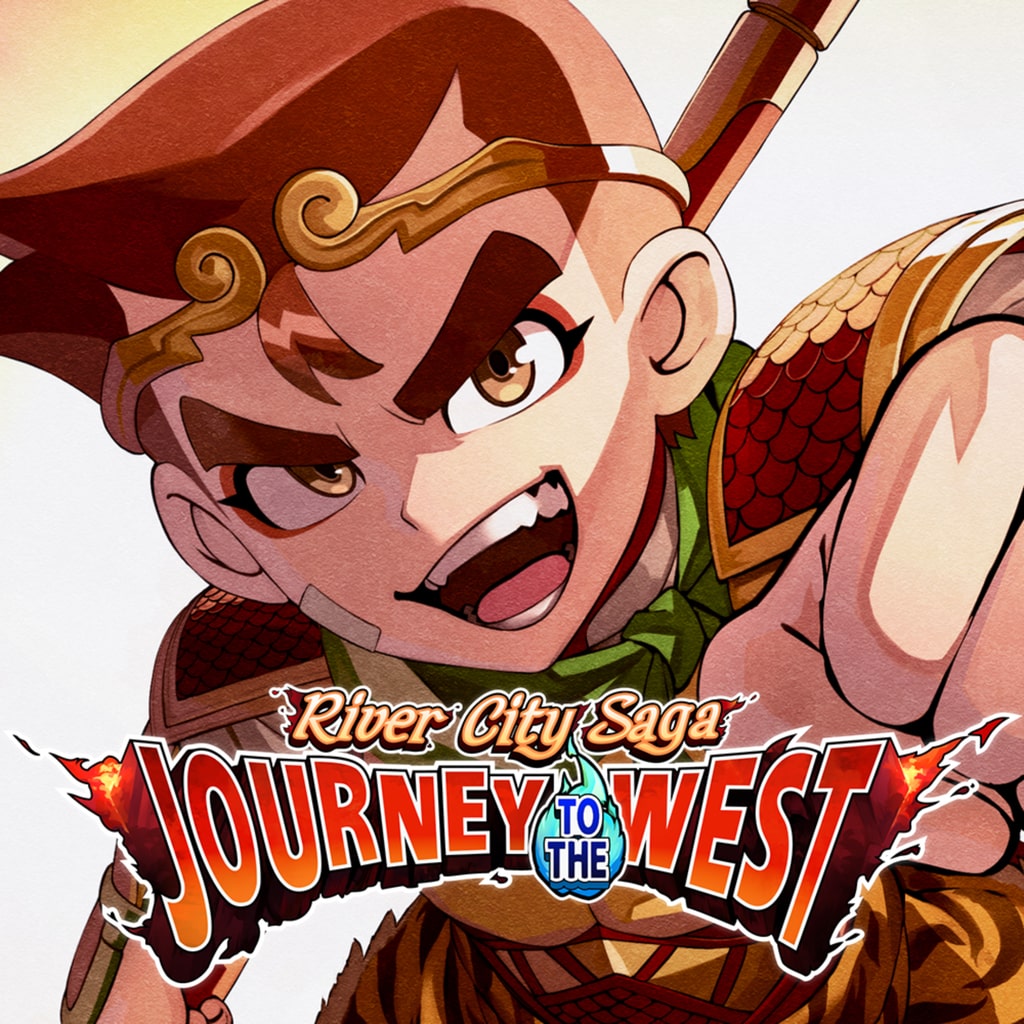
The River City series has never been particularly concerned with historical accuracy. Whether tackling high-school gang wars, fantasy adventures, or historical epics, the franchise has always approached its stories with a wink and a grin. River City Saga: Journey to the West continues that tradition in spectacular fashion.
Drawing inspiration from the classic Chinese novel Journey to the West, the game casts Kunio and a host of familiar River City faces as legendary characters. Sun Wukong, Zhu Bajie, Sha Wujing, and Tang Sanzang are all represented by the series’ signature cast, creating a wonderfully absurd take on one of literature’s most famous adventures.
The humour lands remarkably well because the developers fully commit to the joke. Characters bounce between dramatic mythological storytelling and complete nonsense without missing a beat. Long-time fans will immediately recognise familiar personalities beneath the historical costumes, while newcomers can simply enjoy the chaotic energy of it all. What could have been a simple parody instead becomes a genuinely entertaining adventure that balances comedy with surprisingly compelling action.
A New Direction for the Series
The biggest surprise is not the setting but the structure. Unlike many previous River City entries, Journey to the West embraces a roguelike framework. Each run sends players into procedurally generated battles where success depends on adapting to the upgrades and abilities that appear along the way.
At first glance, the idea seems an unusual fit. River City games traditionally thrive on progression, exploration, and gradually expanding worlds. Yet the roguelike formula works far better than expected.
Runs move at a brisk pace, constantly introducing new opportunities to strengthen your character. The loop of battling enemies, acquiring upgrades, and pushing deeper into the adventure creates an addictive rhythm that keeps momentum high. Failure rarely feels discouraging because every run contributes to future progress. There is a constant sense that the next attempt could be something special.
Secret Skills and Endless Possibilities
The star of the progression system is the collection of Secret Skills. Throughout each run, gods appear to offer powerful abilities that dramatically alter your character’s performance. With around eighty skills available, no two journeys feel exactly the same.
Some upgrades focus on increasing raw damage output, while others enhance mobility, survivability, or elemental effects. Certain combinations transform your character into an unstoppable force capable of clearing entire screens with ease, while others encourage more careful, tactical play.
The excitement comes from discovery. Every new skill offers another opportunity to experiment. Some combinations seem underwhelming at first, only to reveal unexpected synergies later in a run. Others create immediate fireworks, turning already satisfying combat into a spectacular display of destruction. The system gives the game remarkable replay value. Even after dozens of runs, there remains a temptation to see what new combinations might emerge.
Three Heroes, Three Approaches
Character variety further enriches the experience. Players begin with Sun Wukong, and additional characters gradually become available as the story progresses. Sun Wukong embodies speed and agility. His fast attacks and responsive movement make him ideal for players who enjoy aggressive, fast-paced play. He feels excellent from the very beginning, delivering the fluid combat the series is known for.
Zhu Bajie offers a markedly different experience. His slower attacks hit much harder, letting him absorb punishment while delivering devastating counterattacks. There is something deeply satisfying about charging into a crowd and sending enemies flying in every direction.
Sha Wujing rounds out the roster with a focus on range and battlefield control. His unique abilities encourage a more measured approach, rewarding players who manage positioning and spacing effectively.
The contrast between the three characters keeps the game feeling fresh. Switching between them dramatically alters how encounters unfold, adding another layer of strategic variety to every run.
Combat That Never Slows Down
Despite the systems surrounding it, combat remains the heart of the experience. Fortunately, Arc System Works clearly understands what makes River City combat enjoyable. Every punch, kick, and special move carries weight. Enemy groups swarm the screen in large numbers, creating chaotic battles that reward both aggression and smart positioning.
The roguelike structure enhances the traditional brawling formula. Rather than relying solely on memorisation, players must adapt their strategies to the abilities they acquire during each run. This creates a dynamic flow in which combat evolves naturally over time.
Boss encounters deserve particular praise. These larger confrontations often demand a genuine understanding of your character’s strengths and weaknesses. Pattern recognition is important, but so is making effective use of your chosen build. The result is a combat system that remains entertaining from beginning to end.
Pixel Art Packed with Personality
Visually, Journey to the West continues the series’ tradition of exceptional pixel art. Character animations are expressive and full of energy. Combat effects explode across the screen in vibrant colours and with exaggerated flair. Enemy designs strike a wonderful balance between mythology and comedy, reinforcing the game’s playful tone.
The environments also deserve recognition. While the roguelike structure naturally limits the sense of a fully connected world, individual stages remain visually distinct. Ancient temples, mystical landscapes, and demon-filled battlegrounds all contribute to the feeling of embarking on a legendary journey. Most importantly, the game never loses sight of its identity. Every sprite, animation, and visual effect feels unmistakably River City.
Not Quite the Adventure Some Fans Expected
The game’s greatest strength may also be its most divisive choice. Players who loved the open-ended exploration of River City Saga: Three Kingdoms may find Journey to the West somewhat restrictive by comparison. The focus here is squarely on combat and progression. Exploration, side quests, and leisurely world-building take a back seat.
That decision makes perfect sense within the context of the roguelike design. The faster pace keeps runs engaging and supports the game’s replayability. Nevertheless, some players may miss the sense of discovery that came from wandering through larger, interconnected environments. The story itself remains entertaining, but it serves primarily as a framework for the action rather than a deeply developed narrative experience.
A Fresh Step Forward
What makes River City Saga: Journey to the West so impressive is its willingness to experiment without abandoning the series’ core identity. Many long-running franchises struggle with major structural changes. Some become unrecognisable, while others play it too safe. This game finds a surprisingly comfortable middle ground. The roguelike mechanics feel fresh and modern, yet the humour, combat, and charm remain unmistakably River City. It shows that the series still has room to evolve after decades of beat ’em up adventures.
Final Verdict
River City Saga: Journey to the West is a bold and successful reinvention of the River City formula. By blending classic side-scrolling brawling with addictive roguelike progression, Arc System Works has crafted an experience that feels both familiar and refreshingly new.
The excellent combat, diverse character roster, and wide range of Secret Skills ensure every run remains engaging. Combined with sharp writing, charming pixel art, and a constant stream of hilarious reinterpretations of classic mythology, the result is one of the most entertaining spin-offs the series has produced in years.
Some fans may miss the broader exploration and slower-paced storytelling of previous saga entries, but the game’s relentless momentum and replayability more than compensate. Journey to the West embraces chaos, comedy, and creativity in equal measure, delivering an adventure that is hard to put down.