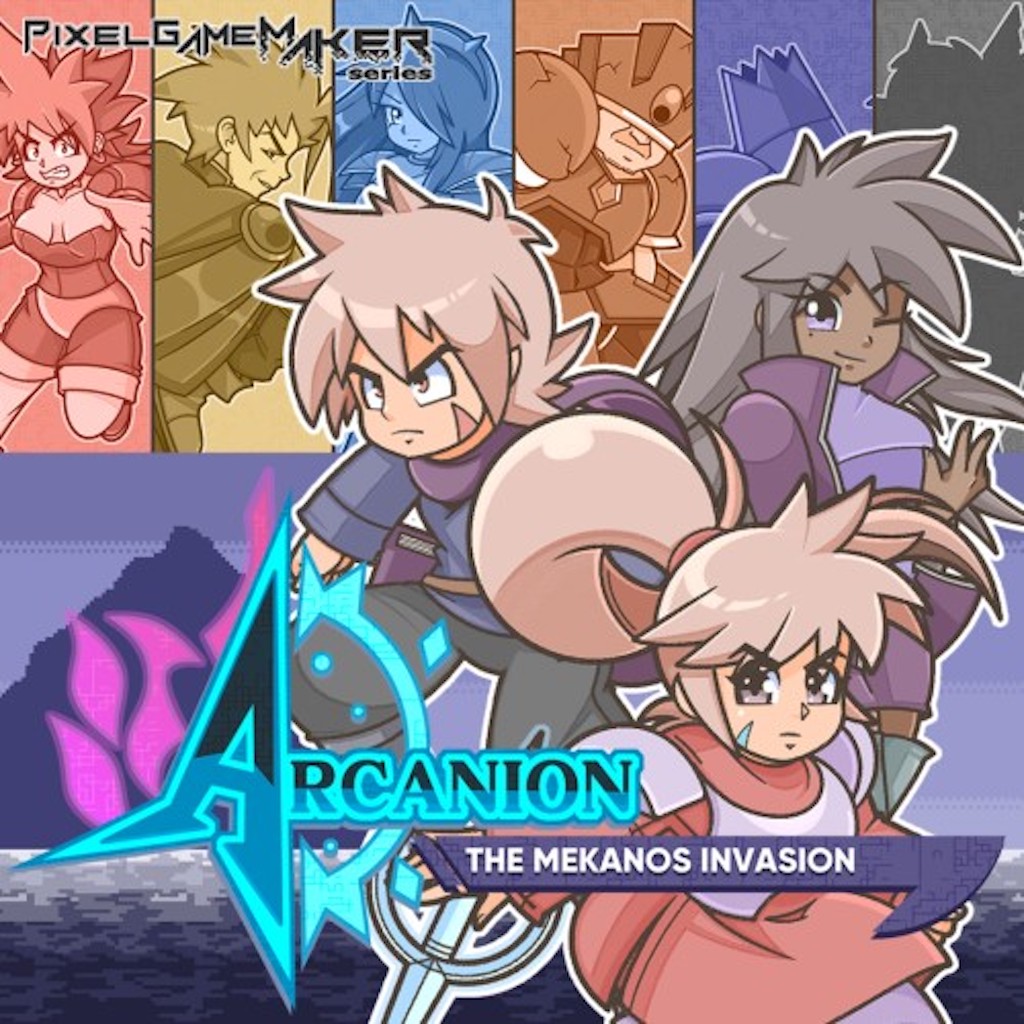
There is something wonderfully sincere about indie developers making the games they grew up loving. Rather than chasing modern trends or cinematic spectacle, some creators simply want to recapture the feeling of sitting in front of an old television with a controller in hand, determined to overcome another impossibly difficult boss before bedtime. Pixel Game Maker Series Arcanion: The Mekanos Invasion embraces that philosophy wholeheartedly, delivering a colourful action platformer that proudly wears its inspirations on its sleeve.
As the conclusion to the Arcanion trilogy, the game reunites players with Magi and her companions as they face their greatest threat yet. The mechanised forces of the Mekanos Empire arrive to reclaim the island that the Warriors of Arcanion call home, insisting the land belongs to them. Peace is never truly an option, leaving Magi and her allies to fight for both their future and the truth behind her own mysterious origins.
While the premise feels comfortably familiar to anyone raised on 16-bit adventures, it quickly becomes more engaging thanks to its charming cast. Conversations in the central hub between missions give every character room to breathe, allowing friendships to develop naturally while gradually revealing more about the world around them. It is straightforward storytelling, but it has enough heart to make the journey worthwhile.
Classic Platforming With Modern Variety
At first glance, The Mekanos Invasion appears to be a traditional side-scrolling action game. Run, jump, defeat enemies and reach the goal. Thankfully, it does not take long before the gameplay layers new mechanics onto that familiar foundation.
Across twenty selectable stages, players unlock a range of Elemental Auras that dramatically alter Magi’s abilities. Rather than functioning as simple elemental attacks, each Aura changes both offensive and defensive options while introducing entirely new passive skills. Swapping between them becomes an important tactical decision rather than a cosmetic choice, encouraging experimentation throughout the campaign.
Fire abilities offer aggressive crowd control, while other elements focus more heavily on defence, mobility or precision. Learning when to change your loadout before tackling a difficult stage adds an enjoyable layer of strategy without overwhelming players with unnecessary complexity. The system continually rewards curiosity, especially as later stages demand more specialised approaches.
Equipment and usable items further reinforce this progression. Finding stronger gear and unlocking additional abilities provide a satisfying sense of growth without ever undermining the importance of player skill. Success still comes from learning enemy patterns and mastering movement rather than simply overpowering everything through statistics.
A Welcome Change of Pace
One of the game’s biggest surprises is its willingness to step outside its comfort zone. Just as the platforming begins to feel familiar, three dedicated bullet hell stages completely change the rhythm of the adventure.
These sections transform the game into a vertical shoot-em-up filled with dense projectile patterns, enormous mechanical bosses and frantic dodging. They feel like affectionate tributes to 1990s arcade shooters and help prevent the overall campaign from becoming repetitive. They also demonstrate an impressive level of ambition, particularly given the game’s modest production values.
The shift never feels forced because the story naturally supports these dramatic changes in gameplay. Rather than interrupting the adventure, these stages make the journey feel larger in scope, reminding players that the conflict extends well beyond the forests and fortresses explored on foot.
It is this willingness to surprise the player that keeps The Mekanos Invasion consistently enjoyable. Just when you think you have seen everything it has to offer, another mechanic or stage gimmick arrives to keep things feeling fresh.
Pixel Art Full of Heart
The Pixel Game Maker Series often celebrates retro presentation, and Arcanion is no exception. Every environment is built with colourful pixel art that evokes the Super Nintendo era without simply copying it. Forests feel lush, industrial facilities are rich in mechanical detail, and each new location offers enough visual variety to maintain a strong sense of progression.
Enemy design is another highlight. The Mekanos Empire fields an impressive array of robotic soldiers and towering bosses, many of which fill huge portions of the screen. Their exaggerated animations and colourful attack patterns make each encounter memorable, particularly in the game’s climactic battles.
The soundtrack deserves equal praise. Packed with energetic chiptune melodies and soaring action themes, it accompanies every stage, perfectly matching its pace. Whether exploring quieter environments or surviving intense boss fights, the soundtrack consistently elevates the action without overpowering it.
Sound effects also contribute to the retro atmosphere. Weapons have satisfying impact, magical abilities crackle with energy, and explosions deliver exactly the kind of nostalgic feedback fans of classic platformers will appreciate.
Built With Passion Rather Than Budget
Like many games built with specialist development tools, The Mekanos Invasion occasionally reveals the limitations of its engine. Character movement can feel slightly heavier than expected, particularly during precise jumps, where momentum can take a moment to fully settle. Veterans of retro platformers will adapt quickly, but newcomers may need a little patience in the opening levels.
Menus are another area where the game’s modest production values become apparent. While perfectly functional, the interface lacks the visual polish found elsewhere in the adventure. Equipment management and skill selection remain easy to navigate, though they rarely match the personality displayed throughout the levels.
Difficulty also ramps up considerably in the latter stages. Boss encounters become longer, attack patterns grow increasingly demanding, and mistakes are punished more severely than before. While this creates satisfying victories for determined players, others may find the final stretch noticeably less forgiving than the opening hours.
Fortunately, generous checkpoints and the flexibility of the Aura system help soften the challenge. There is usually another strategy to try, encouraging experimentation rather than frustration.
A Worthy Finale
What ultimately makes The Mekanos Invasion memorable is not technical perfection but genuine enthusiasm. Every stage, every boss battle and every new ability feels crafted by someone with a deep affection for classic action games. That passion carries the adventure through its occasional rough edges and gives the entire experience an undeniable sincerity.
Fans who have followed Magi’s story across previous games will appreciate the satisfying conclusion, while newcomers can still enjoy the excellent platforming and inventive mechanics even without a full grasp of the wider narrative. It feels very much like the final chapter of a labour of love, rewarding long-time supporters while remaining welcoming enough for first-time players.
The variety introduced through elemental powers, bullet hell stages, equipment systems and hub exploration ensures the campaign rarely settles into predictable routines. There is always another ability to unlock, another challenge to overcome or another piece of the story waiting around the corner.
Final Verdict
Pixel Game Maker Series Arcanion: The Mekanos Invasion is exactly the sort of game that reminds you why the indie scene remains so exciting. It may not have blockbuster production values or cutting-edge technology, but it delivers something equally valuable: genuine creativity, backed by clear affection for the games that inspired it.
Its excellent elemental mechanics, enjoyable stage variety and charming presentation create a consistently entertaining adventure that comfortably rises above many other retro-inspired platformers. While slightly stiff movement, a basic interface and a demanding late game stop it from reaching the very top tier of the genre, they never overshadow the sheer enjoyment found across its twenty-level campaign.
For players who miss the colourful action platformers of the 16-bit era, or simply enjoy discovering passionate indie projects filled with inventive ideas, Pixel Game Maker Series Arcanion: The Mekanos Invasion proves there is still plenty of life left in old-school design philosophy. It is a fitting finale to Magi’s story and another welcome addition to the ever-growing Pixel Game Maker Series.