Some franchises feel like they were made for video games, and then there is PATLABOR, a series in which giant robots are somehow just another part of the daily commute. The brilliance of the original concept was never simply the idea of enormous machines stomping around Tokyo. It was the notion of treating those machines as police vehicles, complete with all the paperwork, accidents, arguments and very human personalities that come with the job. PATLABOR the Case Files understands that appeal, and for fans who grew up with the series, there is something genuinely lovely about climbing into an Ingram and getting back to work.
Developed by CHIME and produced under the supervision of the original creators, PATLABOR the Case Files is clearly a game made with fans in mind. It brings together familiar characters, iconic Labors and memorable situations from the franchise, while giving players the chance to experience events from both sides of the conflict. It is not the most technically sophisticated 3D action game you will play this year, and some of its mechanics feel as though they have wandered in from an earlier generation, but there is an unmistakable affection for the source material running through almost every part of it.
Welcome To Special Vehicles Section 2
For anyone unfamiliar with PATLABOR, the basic premise is wonderfully straightforward. Labors are giant robots originally designed for industrial work, particularly in construction and civil engineering. Unfortunately, once humanity has access to enormous machines, someone eventually decides that using them for criminal purposes is a splendid idea, which leads to the creation of the Tokyo Metropolitan Police’s Patrol Labor Unit.
Enter Special Vehicles Section 2, better known simply as PATLABOR. Rather than playing as a superpowered robot pilot saving the planet from alien invaders, you are effectively part of a police unit dealing with the very practical problem of people misbehaving with giant machinery.
That distinction has always been part of the franchise’s charm, and The Case Files does a good job of preserving it. There is plenty of action, but the world still feels like one where Labors are machines with a purpose rather than magical weapons. That grounded approach makes the battles strangely satisfying, as every encounter has the flavour of an industrial accident that has gone spectacularly wrong.
Climb Into The Ingram
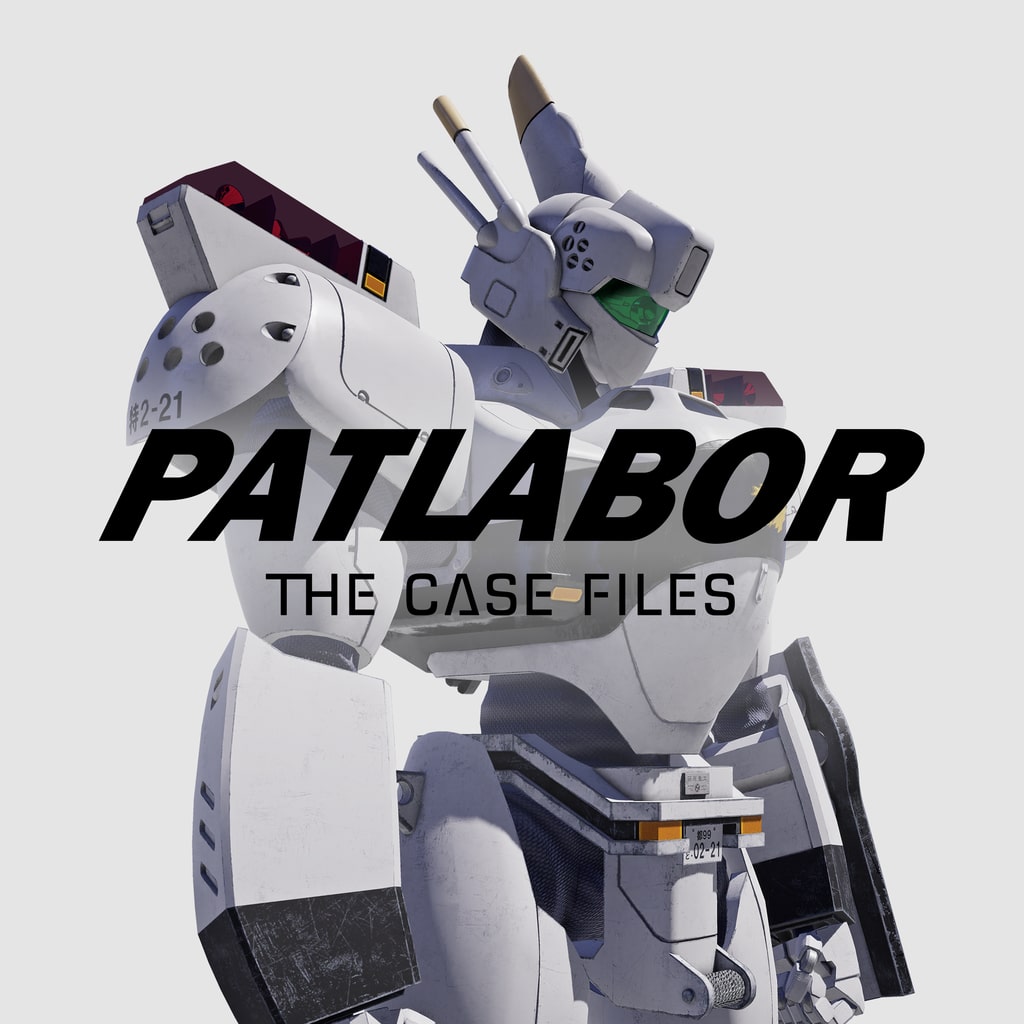
The AV 98 Ingram is clearly the star of the show, and getting behind its controls is one of those moments that will immediately put a smile on the face of anyone familiar with Noa Izumi and her trusty machine. The developers have clearly spent a great deal of time making the Labors recognisable, from their proportions and equipment to the way they move through the environments.
Combat gives you access to both ranged and close-quarters attacks. The Ingram can make use of its revolver cannon, while the stun stick and grappling attacks provide more direct ways of dealing with troublesome machines. There is something particularly satisfying about closing the distance on an enemy Labor and getting stuck into a proper mechanical scrap.
However, the combat is not especially fast or fluid. Movement can feel rigid, while the lock-on system and camera occasionally seem determined to make things more complicated than they need to be. This is where the game’s age starts to show, but there is also a certain nostalgic charm to it. It feels less like a modern character action game and more like the sort of mecha brawler you might have discovered tucked away on a PS2 shelf years ago.
Police Work Is Messy
One of the more interesting elements is the emphasis on collateral damage. These are giant robots fighting in populated areas, so simply smashing everything around you is not exactly good police procedure.
That means you have to think carefully about where you are swinging, firing and grappling. Destroying buildings or causing unnecessary damage can affect your rewards, giving you a reason to approach encounters with at least a little restraint.
Of course, restraint is easier said than done when two giant robots are throwing punches in the middle of Tokyo. There is a wonderful contradiction here, as you are effectively trying to win a mecha battle while remembering that you are supposed to be the responsible adult in the room. It gives certain encounters an amusing flavour that fits PATLABOR rather nicely.
More Than Just Noa
The main missions let you experience the story from the perspective of Special Vehicles Section 2, with Noa Izumi and the division’s familiar members taking centre stage. These sequences are clearly intended to appeal to long-time fans, and the full voice acting helps considerably.
Hearing familiar voices and seeing the characters interact again creates a sense of authenticity that a simple collection of character models could never quite achieve. The story sequences also give the action context, rather than simply sending you from one fight to another without explanation.
The inclusion of Another Side Missions is especially welcome. These missions let you experience events from opposing perspectives, giving the game a broader view of the world and its various Labors. It is not simply about making the heroes look good. Seeing things from the other side adds extra texture to the overall experience.
Griffon Enters The Building
Naturally, PATLABOR would not be PATLABOR without some iconic machines, and the game does not disappoint in that department. Alongside the Ingram, players can pilot Labors including the Griffon and Type Zero, while more than 20 machines feature across the wider experience.
For fans, this is probably one of the biggest attractions. There is real pleasure in seeing these designs recreated in 3D and then being given the chance to control them.
The differences between the machines also provide welcome variety. You are not simply swapping one skin for another and expecting the same experience. Each Labor has its own characteristics, and experimenting with the available machines becomes part of the appeal, particularly once you start exploring the simulator content.
Case Files And Another Side
The dual-perspective approach is one of the game’s strongest ideas. The main campaign offers the familiar police perspective, while the additional missions let you see situations from another angle.
It gives the game a slightly episodic feel that suits PATLABOR. Rather than being one enormous world-saving adventure, it feels like a collection of cases involving people, machines and circumstances that have somehow spiralled out of control.
That also helps the game capture some of the original series’ personality. PATLABOR was never solely about spectacular battles. It was about the people inside and around those machines, and The Case Files understands that the characters are just as important as the robots.
The Simulator Never Closes
Once you have worked through the main content, Simulator Mode gives you another reason to keep those mechanical fists swinging. Target practice offers a more straightforward test of your abilities, while Labour versus Labour battles let you put the various machines through their paces.
With more than 20 playable Labours, this mode has considerable appeal for fans who simply want to experiment. There is something wonderfully uncomplicated about choosing a machine and seeing how it performs without worrying about progressing through the story.
It also serves as a reminder that the game is ultimately a celebration of the franchise’s mechanical history. Even when the main campaign is finished, there are plenty of familiar machines waiting to be climbed into.
Straight From The Anime
Visually, PATLABOR the Case Files gets the important things right. The Labor designs are recognisable, the character presentation captures the spirit of the original series, and the overall aesthetic feels comfortably rooted in classic anime.
The environments are less impressive. They can occasionally feel rather bare, and the camera does not always do the game any favours. There are moments when the limitations of the underlying technology are quite clear, particularly when the action gets busy.
Yet I found it difficult to be too harsh on those shortcomings because the game clearly understands what fans want to see. The Ingram looks like the Ingram, the characters look like themselves, and the overall presentation feels respectful rather than as though somebody has taken the licence and tried to turn it into something completely different.
Kenji Kawai’s Sound Of PATLABOR
The audio is arguably one of the game’s most important ingredients, and having Kenji Kawai involved in a newly composed main theme is a lovely touch. Kawai’s music has long been closely associated with PATLABOR’s identity, so hearing that distinctive musical character return helps the whole package feel more authentic.
Full voice acting throughout the main story is another major plus. The dialogue gives the characters room to breathe between battles, and fans will undoubtedly appreciate hearing familiar performances.
Mechanical sound effects also carry weight. When two Labors collide, you want to hear metal meeting metal, and the game generally delivers that satisfying mechanical crunch. It is another area where the nostalgia factor works particularly well.
A Love Letter To Labor Fans
What ultimately makes PATLABOR the Case Files work is not its technical ambition. It is the sense that the people making it truly understand why the franchise remains special.
This is a game that wants you to enjoy seeing an Ingram walk into battle. It wants you to recognise the machines, hear the voices, remember the characters, and smile when a familiar moment appears on screen. There is a warmth to that approach that is easy to appreciate.
For newcomers, some of the rougher gameplay systems may make the experience harder to love. Fans, however, have a completely different reason to persevere. This is not simply another mecha game with a familiar name attached. It feels like a playable celebration of a very specific corner of anime history.
Final Verdict
PATLABOR the Case Files wears its nostalgia proudly. It is not trying to compete with the latest high-speed mecha action games, and judging it purely by modern combat standards would miss much of what makes it enjoyable. Instead, it delivers a fan-focused adventure packed with familiar characters, iconic Labors, full voice acting, and enough mechanical mayhem to make any PATLABOR enthusiast feel right at home.
The combat can be clunky, the camera occasionally fights against you, and the environments lack some of the polish found in more modern productions. Those shortcomings are difficult to ignore, particularly when you are trying to line up an attack and the lock-on system appears to have developed a mind of its own.
But then the Ingram stands in front of you, the music kicks in, a familiar voice comes over the radio, and suddenly the rough edges matter a little less. The dual-perspective campaign cleverly expands the experience, while Simulator Mode and the large selection of Labors give fans plenty of opportunities to spend more time with the machines they love.
Most importantly, PATLABOR the Case Files understands that this franchise has always been about more than giant robots. It is about the characters, the humour, the machinery, and the wonderfully mundane idea of treating a 10-metre robot like a police car. For those who have been waiting to climb into the Ingram again, that alone makes this a worthwhile trip back to Tokyo.