There is something comforting about a good old-fashioned JRPG. Give me a magical academy, a colourful cast of characters, a mysterious threat capable of destroying the world, and a ridiculous number of things to collect, craft and upgrade, and I am generally quite happy. The Alchemist of Ars Magna understands that appeal very well, though it also throws in a few of its own ideas into the bubbling cauldron. The result is a curious mixture of visual novel storytelling, turn-based dungeon crawling, board game exploration and surprisingly deep alchemy.
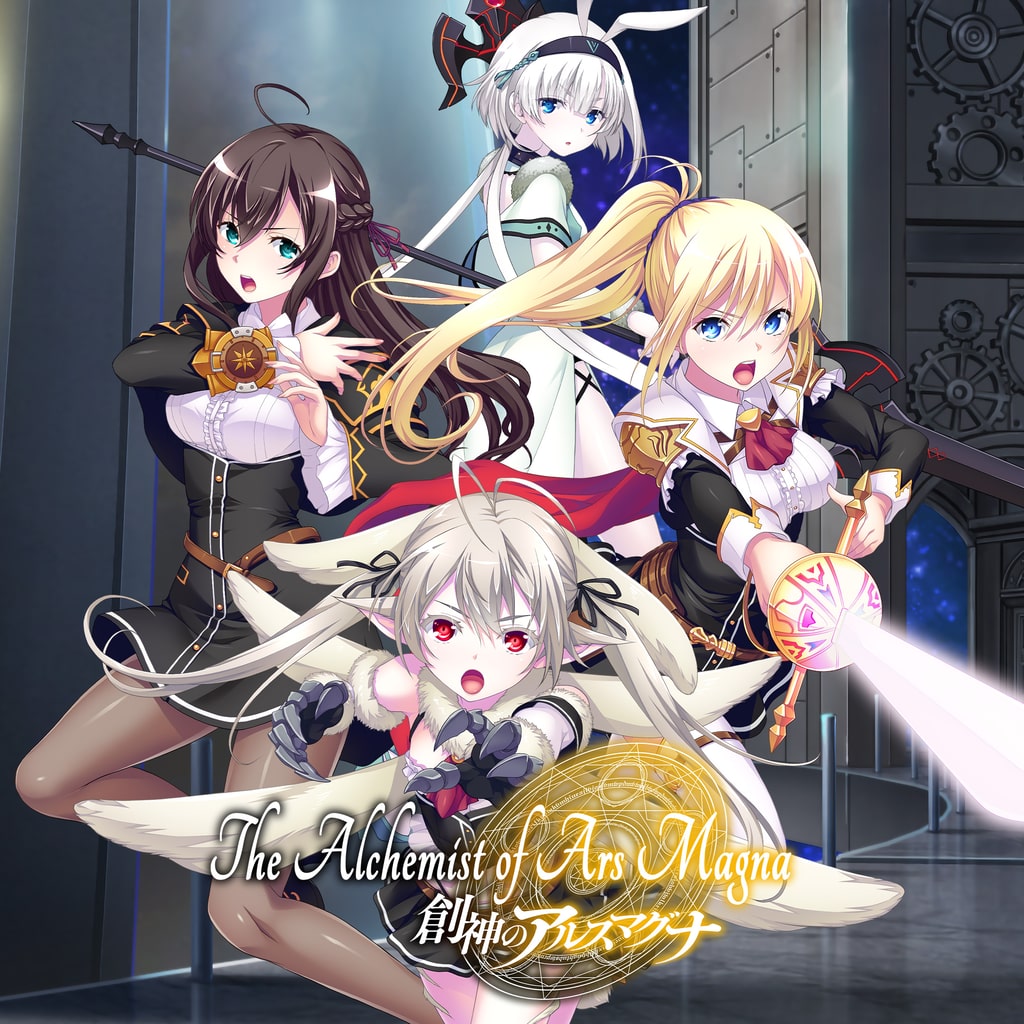
Set within the Cagliostro Academy of Magic on the continent of Archeus, the game follows Shin, a young alchemist who finds himself caught up in events surrounding the terrifying phenomenon known as Oblivion. Alongside him are Aria, his senior apprentice and effectively the person who raised him; Ceres, a princess determined to become an alchemist; and Enri, a familiar trying to understand why she exists. It is a likeable group, and much of the game’s charm comes from watching these characters grow closer as the world around them becomes increasingly dangerous.
Welcome To Cagliostro Academy
The academy is much more than a backdrop for the story. It is where the characters live, learn, argue, joke around, and gradually develop the relationships at the heart of the adventure. The visual novel elements give the game plenty of opportunity to slow things down between expeditions, allowing you to spend time with your companions and discover more about their personalities.
This is where The Alchemist of Ars Magna feels particularly different from a conventional dungeon crawler. One moment you are worrying about corrupted gods and the destruction of the world, and the next you are dealing with academy life and the personal relationships between the characters. That contrast could easily feel awkward, but it gives the adventure a nice rhythm.
Shin is also a surprisingly easy protagonist to spend time with. He is not simply there to stand in the middle of conversations while everyone else does the interesting work. His relationships with Aria, Ceres and Enri give the story a more personal dimension, particularly as each character has their own ambitions and questions about the future.
Two Sides Of The Adventure
The structure is divided into two major parts, and understanding that split is key to appreciating the game. The Adventure Part focuses on the story, relationships and academy life, while the RPG Dungeon Part is where you put all that preparation to use.
The Adventure Part provides the quieter moments. You can interact with your companions, experience character events and follow different narrative routes as relationships develop. There is a pleasant sense of progression here, as the people around Shin gradually become more than mere party members.
Then the dungeon doors open and everything becomes considerably more mechanical. This is where you start worrying about equipment, Crest crystals, alchemy, elemental abilities and whether your carefully prepared party is actually ready for whatever unpleasantness lies ahead. The two sides complement each other rather nicely, creating an adventure that constantly switches between character-driven storytelling and traditional RPG progression.
Roll The Dice
One of the more unusual aspects of The Alchemist of Ars Magna is its board-game-inspired dungeon exploration. Rather than simply walking through conventional corridors, you move across maps tile by tile, with each space potentially containing something useful, dangerous, or completely unexpected.
A tile might trigger a battle, reveal treasure, spring a trap, or provide access to a healing fountain. This adds an element of anticipation to even relatively straightforward journeys, because you never quite know what the next space will bring.
It also encourages you to think about how you move through a map rather than simply holding a direction and charging towards the next objective. There is a certain old-school charm to the system, particularly when deciding whether to take a safer route or risk another section of the map in the hope of finding something valuable.
The random elements will not appeal to everyone, particularly if you prefer complete control over dungeon exploration. For me, though, they give expeditions a slightly unpredictable quality that works well with the game’s wider progression systems.
The Power Of The Gods
Crest crystals are at the heart of the combat and customisation systems. They are linked to the Creator Gods, powerful beings who protect the world, and allow Shin and his companions to draw on that divine power.
Equipping the right Crests can have a significant impact on how your characters perform. You are not simply increasing a number and moving on. Different combinations can influence abilities, passive bonuses and a character’s overall role within the party.
That makes experimentation an important part of the experience. Finding a useful Crest is satisfying, but working out where it fits into your current build is arguably even more rewarding. As your collection grows, so does the number of possibilities, and this is where the game begins to reveal just how much depth lies beneath its colourful anime presentation.
Alchemy Is Serious Business
Naturally, an alchemy game would be rather disappointing without proper crafting, and thankfully The Alchemist of Ars Magna takes the system seriously. Expeditions provide materials that can be transformed into useful equipment and items, allowing you to prepare your party for increasingly demanding challenges.
The system gives exploration an additional purpose, as every trip into the world can yield something that improves your next expedition. You begin to look at materials differently once you realise that something that initially seems insignificant could become an important ingredient in a better piece of equipment.
There is also a satisfying sense of progression as your creations become more powerful. Crafting stops being something you occasionally do because the game tells you to and becomes part of your regular preparation routine. The best RPG crafting systems make you want to experiment, and The Alchemist of Ars Magna certainly gets close to achieving that.
Turn Based Trouble
Combat uses a familiar turn-based system, but the Crest mechanics and elemental considerations give encounters more depth than simply selecting the biggest attack available. Building a balanced team and understanding how abilities work together can make a noticeable difference, particularly during boss encounters.
Regular enemies provide a useful opportunity to experiment with your equipment and party composition. Bosses, meanwhile, are where the game expects you to have paid attention. Going into a major encounter with a poorly prepared party can result in a very quick reminder that alchemy and Crest customisation are not optional hobbies.
There is something satisfying about returning to a difficult encounter after changing your equipment and approach, only to discover that the battle suddenly feels considerably more manageable. It gives the progression system a genuine sense of purpose.
A Story About Oblivion
The threat of Oblivion gives the adventure its darker edge. Archeus is already suffering from ash and dust, while corrupted divine powers threaten to push the world towards complete destruction. It is a suitably dramatic backdrop for a game that otherwise spends a considerable amount of time enjoying the lighter side of academy life.
That mixture of serious fantasy stakes and anime-style character comedy is one of the game’s defining characteristics. It can shift from dramatic revelations to playful banter without much warning. Whether that works for you will largely depend on how comfortable you are with the conventions of visual-novel-style JRPG storytelling.
Personally, I think the contrast gives the game character. The world would feel considerably flatter if everything were doom and gloom from beginning to end. Having moments when the characters simply get to be themselves makes the more dramatic sections carry a little more weight.
Characters Worth Getting To Know
The relationships between Shin and his companions are arguably as important as the combat systems. Aria brings a sense of history and familiarity to the group, Ceres provides the ambition and determination of someone trying to forge her own identity, while Enri’s search for the meaning of her existence gives her storyline a more thoughtful quality.
The character routes add another reason to spend time with the cast. Rather than treating the party purely as a collection of statistics, the game encourages you to understand the people behind those numbers.
That is particularly important because the Adventure Part could otherwise feel like an interruption between dungeon runs. Instead, it becomes one of the reasons to keep returning to the academy. You want to see what happens next, not just because another dungeon is waiting, but because the relationships continue to develop.
A World Of Anime Charm
Visually, The Alchemist of Ars Magna leans heavily into its anime-inspired presentation. Character portraits are colourful and expressive, while the dialogue scenes make good use of detailed 2D artwork to give the cast plenty of personality.
The dungeon maps are considerably more functional, with the board-game-style presentation making it easy to understand where you are and what is happening around you. The interface generally keeps combat information clear, although the menus can feel a little rigid during longer sessions.
The Japanese voice acting is a welcome addition, particularly during important character interactions. The soundtrack also fits the game’s personality, moving comfortably between fantasy adventure and lighter academy moments. Some of the music can become familiar after extended play, but it suits the atmosphere well.
A Lot To Come Back To
If there is one area where The Alchemist of Ars Magna truly shows its ambition, it is the wealth of content beyond the main story. Collecting Crest crystals, experimenting with equipment, refining your alchemy and tackling different difficulty levels can make the post-game a considerable undertaking.
New Game Plus offers another reason to return, particularly for players who enjoy perfecting their characters and trying different approaches. The systems are deep enough that a second playthrough need not simply repeat the first.
This is also where the game’s niche appeal becomes its greatest strength. It is not trying to be a streamlined RPG that anyone can breeze through. It offers systems to learn, characters to understand and equipment to tinker with, and expects you to become invested in the process.
Final Verdict
The Alchemist of Ars Magna is a wonderfully unusual JRPG that refuses to settle into a single identity. It is part visual novel, part academy drama, part turn-based dungeon crawler and part alchemy simulator, with board-game exploration thrown in for good measure. Somehow, despite all those ingredients, the whole thing manages to hang together surprisingly well.
The strongest part of the experience is the blend of character development and RPG progression. Spending time with Shin’s companions makes the Adventure Part worthwhile, while Crest customisation, alchemy and party management give the dungeon sections plenty of depth. The board-game-style exploration will not be to everyone’s taste, particularly for players who dislike random elements, but it adds something distinctive to an otherwise familiar RPG formula.
There is also an impressive amount of content here for players who enjoy getting their teeth into a game’s systems. The end game, multiple difficulties and New Game Plus provide plenty of reasons to continue experimenting long after the main adventure has been completed.
It is not perfect. The menus could be smoother, the tile-based exploration occasionally feels more fiddly than exciting, and the sheer amount of information thrown at you can take some time to absorb. Yet there is an undeniable charm to the whole package. It feels like a game made for people who genuinely enjoy getting lost in character relationships, crafting systems and the wonderfully complicated business of making a party stronger.
The Alchemist of Ars Magna may be a niche proposition, but that is precisely why it is so enjoyable. It knows exactly what kind of RPG it wants to be and delivers its magical academy, eccentric characters and alchemical adventures with enough warmth and personality to make the journey worthwhile.