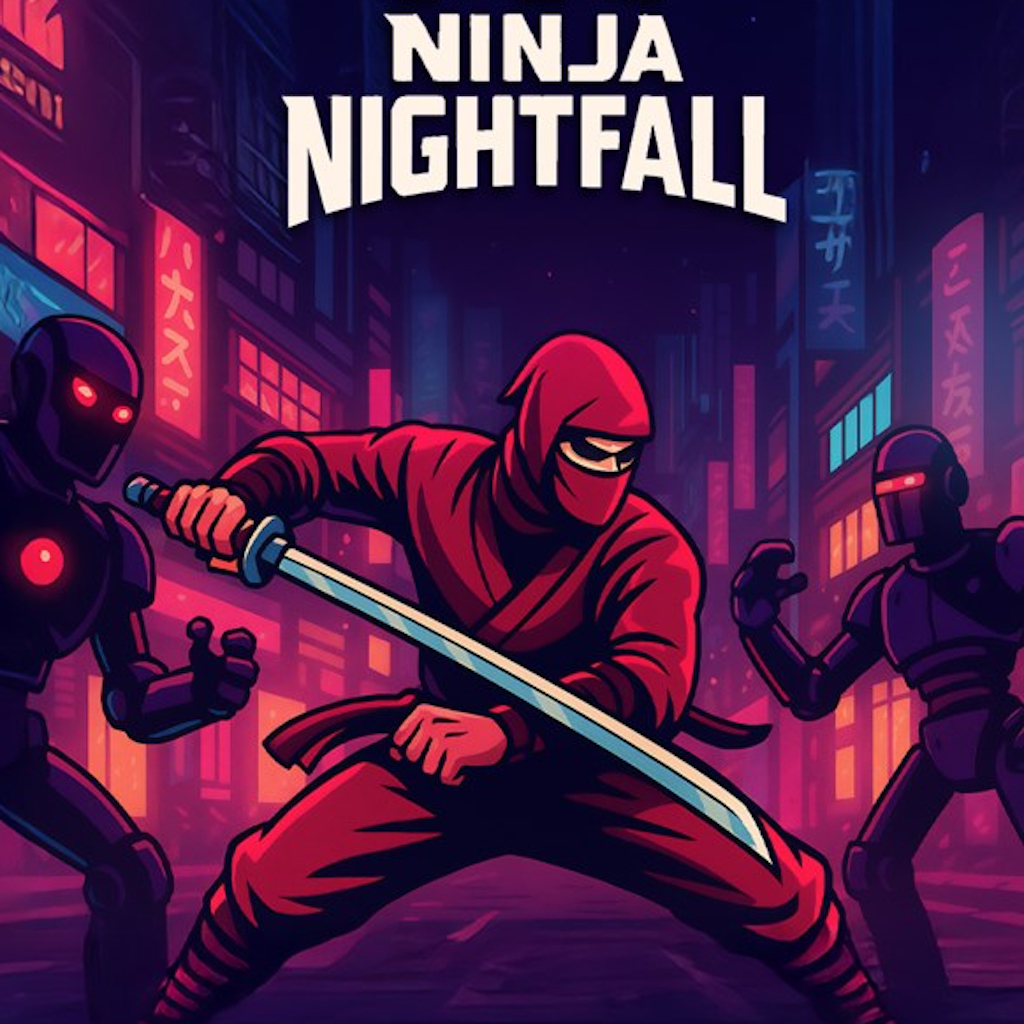
The ninja fantasy has long been a fertile playground for video games, promising speed, precision, stealth, and lethal grace under moonlit skies. Ninja Nightfall enters this crowded space with a clear goal: deliver a fast-paced action experience that blends traditional ninja tropes with modern arcade sensibilities. The result is a game that is stylish, energetic, and satisfying in bursts, even if it occasionally struggles to balance challenge, depth, and long-term engagement.
Rather than aiming for sprawling open worlds or heavy narrative ambition, Ninja Nightfall focuses on immediacy. It is a game about momentum — about chaining attacks, slipping through shadows, and mastering movement — and when everything clicks, it captures the thrilling fantasy of being an unstoppable nocturnal assassin.
Story and Setting: A Tale Told in Shadows
Ninja Nightfall adopts a minimalist approach to storytelling. The player assumes the role of a lone ninja operating under cover of darkness, tasked with dismantling an oppressive regime that has seized control of a once-peaceful land. Betrayal, lost honour, and vengeance form the backbone of the narrative, conveyed through brief cutscenes, stylised imagery, and environmental cues.
Rather than heavy dialogue or elaborate exposition, the game relies on atmosphere. Burning villages, guarded fortresses, and moonlit rooftops tell their own story, allowing players to piece together the world’s history through observation. This approach suits the ninja fantasy well, reinforcing the idea of a silent warrior acting unseen.
While the narrative lacks complexity or emotional depth, it serves its purpose effectively. Ninja Nightfall isn’t trying to tell a sprawling epic; it aims to give context to the action without distracting from it. For players who appreciate subtle storytelling, this restraint will feel appropriate, though those seeking a rich, character-driven plot may find it underwhelming.
Gameplay: Speed, Precision, and Flow
At its core, Ninja Nightfall is an action game that prioritises responsiveness and flow. Movement is fast and fluid, allowing players to sprint, wall-run, leap between platforms, and dash through environments with impressive agility. Controls are tight and intuitive, ensuring that every input feels deliberate.
Combat is where the game truly shines. Encounters reward timing and positioning rather than brute force. Light and heavy attacks can be chained into satisfying combos, while evasive manoeuvres and counterattacks encourage a rhythm-based approach to combat. Landing a perfectly timed strike or clearing a room without taking damage feels genuinely rewarding.
Stealth elements are woven into the gameplay but are not mandatory. Players can choose to silently dispatch enemies from the shadows or engage directly in fast, chaotic skirmishes. This flexibility allows different playstyles to emerge, though stealth mechanics are relatively straightforward and lack the depth seen in dedicated stealth titles.
Enemy variety is respectable, featuring standard guards, elite fighters, ranged attackers, and occasional mini-bosses. Each enemy type demands slight adjustments in approach, but overall combat patterns remain familiar. Boss encounters, while visually striking, tend to rely on memorisation rather than dynamic adaptation, slightly diminishing their impact.
Level Design: Linear but Purposeful
Levels in Ninja Nightfall are largely linear, guiding players through carefully crafted environments that support both combat and traversal. Rooftops, alleyways, temples, and fortified compounds provide varied backdrops, each designed to encourage vertical movement and swift navigation.
The level design excels at maintaining momentum. Clear visual cues guide players toward objectives without heavy-handed markers, and alternate paths often reward exploration with collectibles or tactical advantages. However, the linear structure means that replaying levels offers limited surprises once optimal routes are discovered.
Environmental interaction is modest but effective. Hanging lanterns, destructible elements, and elevated platforms add layers to combat encounters, though the game stops short of offering truly emergent gameplay opportunities.
Visual Style: Stylish Shadows and Sharp Silhouettes
Visually, Ninja Nightfall leans into a stylised aesthetic that emphasises contrast and mood over realism. Dark environments are punctuated by vibrant highlights — glowing lanterns, moonlight reflections, and flashes of steel — creating a striking visual identity.
Character designs are sleek and purposeful, with the protagonist’s animations conveying agility and precision. Enemy designs are functional rather than memorable, but they fit the game’s aesthetic and readability requirements well.
Performance remains stable throughout, with smooth frame rates reinforcing the sense of speed and control. While textures and environmental detail may not rival high-budget titles, the art direction ensures that the game remains visually cohesive and appealing.
Sound and Music: Subtle but Effective
Audio design in Ninja Nightfall is understated but well executed. The sound of footsteps, clashing blades, and distant alarms enhances immersion and provides valuable gameplay feedback. Stealth encounters benefit from subtle audio cues that alert players to enemy awareness without breaking immersion.
The soundtrack blends traditional Japanese-inspired motifs with modern electronic elements, creating an atmospheric backdrop that complements both stealth and combat. Music swells during intense encounters and recedes during quieter moments, maintaining tension without overwhelming the player.
While the soundtrack may not be particularly memorable outside of the game, it supports the experience effectively and reinforces the game’s tone.
Progression and Challenge: Skill Over Statistics
Progression in Ninja Nightfall focuses on skill rather than complex upgrade systems. New abilities and techniques are unlocked gradually, expanding combat and traversal options. These upgrades feel meaningful, allowing players to approach encounters more creatively as the game progresses.
The difficulty curve is well balanced for the most part, offering a satisfying challenge without becoming punishing. However, difficulty spikes do occur, particularly during boss encounters where patterns must be learned quickly. Checkpoints are generous, reducing frustration but also lowering the stakes.
Replay value is moderate. Completionists may enjoy mastering levels, improving performance ratings, or uncovering hidden items, but there are limited incentives for repeated playthroughs beyond personal improvement.
Overall Experience: Focused and Energetic
Ninja Nightfall succeeds by staying focused on its core strengths. It delivers fast, fluid action wrapped in a stylish presentation, capturing the fantasy of being a lethal ninja operating under the cover of darkness. Its mechanics are refined enough to feel satisfying, even if they don’t evolve significantly over time.
Where the game falls short is in depth and variety. While the experience remains enjoyable throughout, it rarely surprises, and players seeking extensive systems or narrative complexity may find it lacking. Still, its commitment to pace and polish ensures it remains entertaining from start to finish.
Final Verdict
Ninja Nightfall is a sleek, action-focused ninja adventure that excels in moment-to-moment gameplay. Its fluid movement, responsive combat, and atmospheric presentation make it a strong entry for fans of fast-paced action titles. While its story and systems are relatively straightforward, the overall experience is consistently engaging.