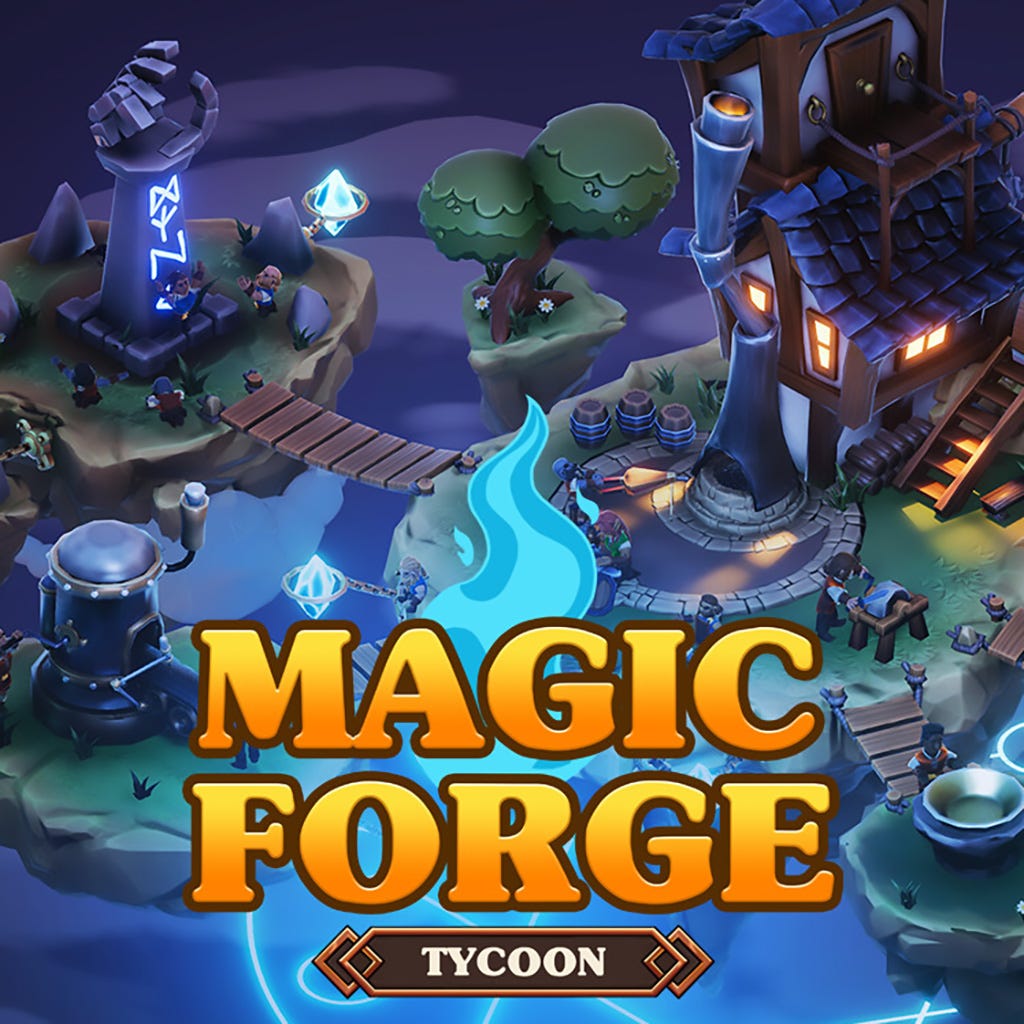
In a genre packed with urban planners, railroad magnates, and business barons, Magic Forge Tycoon stakes its claim by combining two deeply satisfying concepts: tycoon-style resource management and fantasy-themed crafting systems. It asks players to run a mystical workshop where wondrous items are forged, enchanted, and eventually sold to adventurers, wizards, and monsters alike. What sounds like a simple fantasy twist quickly reveals layers of strategic decision-making, logistical optimisation, and economic balance.
Rather than overwhelming players with endless menus or impenetrable spreadsheets, Magic Forge Tycoon strikes a careful balance between accessibility and depth. It welcomes players with a light-hearted tone and gradually reveals the complexities that make it rewarding to master over many hours. Whether you’re tending to goblin clients or juggling rare mystical ores, the title presents a tycoon experience that is both unique and addictive.
Premise and Setting
Set in the bustling magical town of Arcadia, Magic Forge Tycoon places players in the role of an apprentice forger tasked with rebuilding an old workshop into the greatest mystical production house in the realm. You begin modestly, crafting basic charms, potions, and enchanted trinkets, but soon progress to forging legendary weapons and arcane artefacts that shape the fate of kingdoms.
The world is steeped in light fantasy charm. Colourful NPCs — from dragon-slayers to eccentric spellcasters — populate the marketplace, each with distinct demands and quirks. Though the narrative framework is intentionally light, it adds flavour to your managerial tasks and reinforces the sense that you’re operating in a living, breathing world.
Core Gameplay Loop: Craft, Sell, Expand
At its heart, Magic Forge Tycoon hinges on a satisfying, multi-tiered loop:
- Gather Resources: Mine ores, collect herbs, harvest magical essences — all essential for crafting.
- Craft Items: Combine materials in forge stations, cauldrons, or enchanter tables to produce sellable goods.
- Fulfil Orders: Adventures, townsfolk, and guilds place requests that vary in complexity and reward.
- Sell and Profit: Stocks are bought or bartered in the marketplace, bringing income and reputation.
- Upgrade and Expand: Reinvest profits in better tools, faster workstations, and bigger facilities.
What makes this loop compelling is how each phase feels interconnected. Resource scarcity influences crafting decisions, which in turn affect income and future growth potential. High-value orders are tempting but may require rare materials that force careful planning or investment in new gathering tech.
Resource and Workflow Management
A notable strength of Magic Forge Tycoon lies in its resource and workflow systems. Early on, your crafting stations operate independently with limited storage and slow production times. This setup makes it easy to fall behind on demand, encouraging players to think about optimisation from the outset.
As you grow:
- Specialised Stations like Arcane Furnaces or Rune Etchers speed up production of specific item types.
- Worker Roles become available — apprentices, smiths, enchanters — each with unique skills and productivity bonuses.
- Supply Chain Options let you automate raw material input or trade for rare ingredients.
These layers give the otherwise straightforward tycoon model greater strategic tension. Deciding whether to upgrade a production line or hire a specialist smith becomes a meaningful choice with tangible consequences on output and revenue.
Order System and Economic Strategy
Orders in Magic Forge Tycoon range from simple charm requests for villagers to elaborate quests for artefacts demanded by guilds or heroic NPCs. Each order includes:
- Required materials
- Expected delivery time
- Reputation impact
- Monetary reward
Balancing high-risk, high-reward contracts with steadier, smaller tasks is a recurring strategic theme. Tight deadlines encourage you to optimise production flow or prioritise resource gathering, while bigger rewards can unlock rare upgrades or lucrative reputation bonuses that attract more elite clients.
The economy itself feels dynamic. Prices fluctuate based on supply and demand, meaning players who adapt to market trends — producing scarce but desirable items — can turn significant profits. This makes the economic layer feel more active than in many tycoons where prices are static and predictable.
Visual and Audio Design
Magic Forge Tycoon wears its fantasy theme proudly. The art style is colourful and clean, favouring readability over hyper-detailed visuals. Characters are expressive without being overly stylised, and environments evolve as your workshop expands — neat rooms open into sprawling halls filled with glowing stations and storage racks.
Visual feedback during crafting is particularly satisfying. Watching sparks fly from a forge, ethereal runes swirl around an item in an enchanter’s cauldron, or witnessing a completed artefact animate with magic adds tactile joy to routine productivity.
Audio supports this atmosphere well. A light, whimsical soundtrack accompanies gameplay, shifting subtly as orders rush in or night falls upon Arcadia. SFX cues — tool impacts, inventory dings, animated customers — all reinforce the sense of inhabiting a lively workshop.
Difficulty and Learning Curve
While accessible at first, Magic Forge Tycoon introduces climbing complexity. The early game teaches fundamental systems gradually, but mid to late-game demands efficient multitasking and a clear sense of long-term planning.
There are a few pacing and difficulty considerations:
- Complex Orders: Later contracts require precise resource combinations, forcing players to devise supply strategies far ahead of time.
- Staff Management: Hiring and placing the right workers becomes critical. Poor assignments lead to bottlenecks and stagnation.
- Resource Balancing: Rare resources can become bottlenecks if not anticipated.
These elements elevate the challenge without feeling punitive. Players willing to dive into optimisation will find satisfying strategic depth; those looking for a breezy tycoon experience may feel slightly overwhelmed at peak complexity.
Replayability and Longevity
One of Magic Forge Tycoon’s biggest assets is its replay potential. The game doesn’t lock players into a single linear path. Multiple strategies emerge:
- Focusing on high-value artefacts for elite clients
- Building a high-volume charm and trinket economy
- Specialising in rare resource production and barter
- Expanding into distant markets through caravan systems
Randomised orders and fluctuating market conditions ensure that each playthrough feels distinct. Even after a full run towards end-game content, experimenting with alternative approaches can yield fresh challenges and rewards.
Final Verdict
Pros:
- Deep, interconnected resource and workshop management
- Engaging economic systems with fluctuating market dynamics
- Charming fantasy presentation and satisfying crafting feedback
- High replay value with strategic diversity
Cons:
- Steeper learning curve as complexity grows
- Occasional balancing quirks in resource loops
- Can feel repetitive without clear mid-game narrative hooks
Summary:
Magic Forge Tycoon is a standout simulation title that blends enchanting fantasy with solid tycoon fundamentals. Its satisfying crafting systems, strategic resource loops, and engaging economic mechanics create a game that’s easy to dive into and hard to put down. While its complexity may pose a learning challenge for some players, those who enjoy thoughtful planning and iterative optimisation will find a richly rewarding experience waiting in the heart of its mystical workshop.