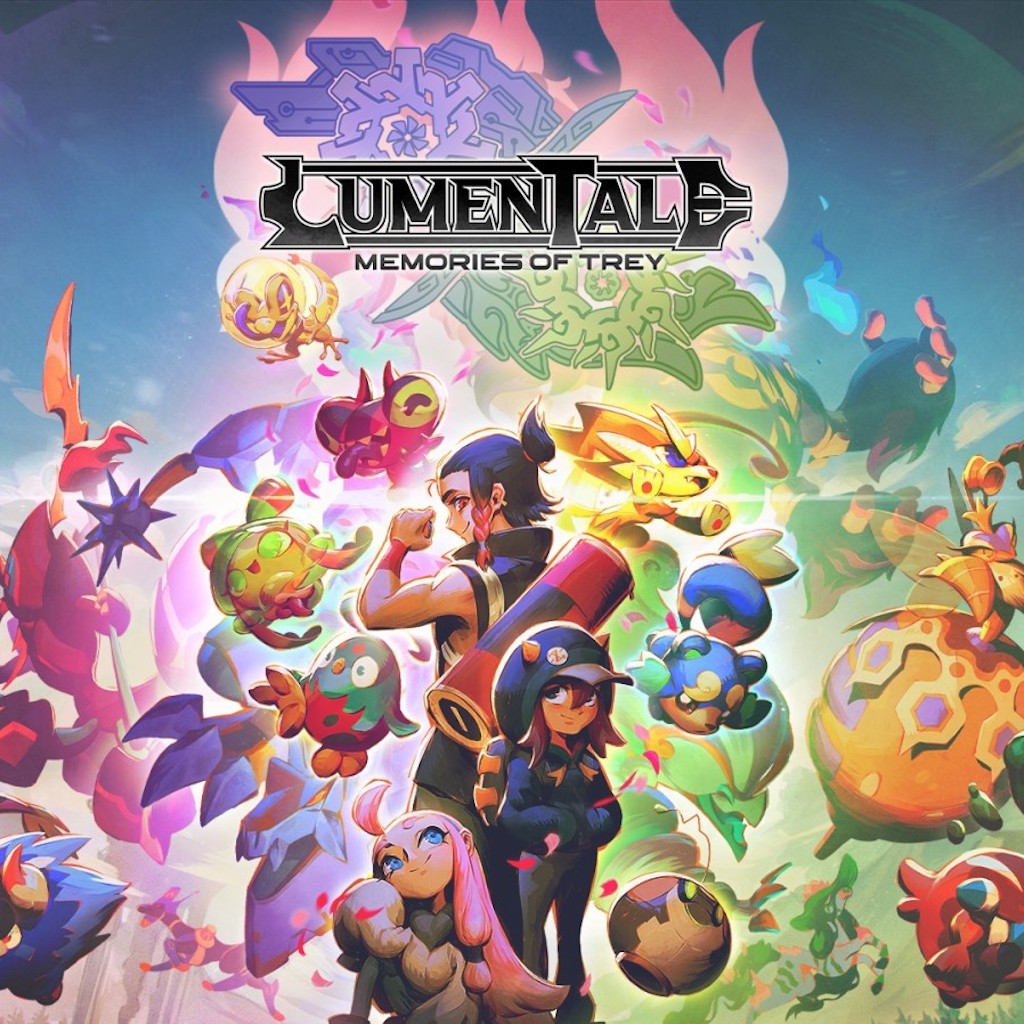
There is a certain comfort in monster-collector RPGs. They are built on familiarity, the quiet joy of discovery, and the long-term bond between player and creature. LumenTale: Memories of Trey understands that foundation well, but it does not simply replicate it. Instead, it seeks to reframe it through emotion, memory, and identity, wrapping traditional creature-catching mechanics in a narrative that is far more introspective than its genre peers. The result is a game that often feels like it asks you to slow down and sit with its world rather than rush through it.
Developed by Beehive Studios and published by Team17, LumenTale: Memories of Trey draws clear inspiration from genre classics, particularly the more reflective era of monster-collecting games, when atmosphere and storytelling were as important as battles and progression. While it wears those influences openly, it also builds its own identity through its setting, its Animon system, and its central mystery surrounding its amnesiac protagonist, Trey. It is a familiar framework, but one filtered through a softer, more emotionally grounded lens.
A World Built on Memory and Division
The world of Talea is defined by its history as much as its present. Once unified under a peaceful empire, it fractured into two ideological regions after a civil war between the northern Logos and southern Mythos territories. This divide is not merely political background detail. It shapes the cultures, the environments, and even how people interact with Animon, the elemental creatures that inhabit the world.
At the centre of this fractured landscape is Trey, an android who awakens without memory or identity. Found and reactivated by a young prodigy and his mentor, Trey is quickly drawn into the wider conflict while trying to piece together fragments of his lost past. His connection to the Animon is immediate and unusual, setting him apart and positioning him as both participant and observer in Talea’s ongoing struggles.
The narrative does not rush its revelations. Instead, it unfolds gradually through travel, encounters, and emotional fragments collected along the way. This slower pace allows the world to breathe, giving weight to smaller interactions and letting the broader mystery develop naturally in the background.
Catching Creatures with Intention
At its core, LumenTale remains a monster-collector RPG, and its Animon system is where much of the moment-to-moment engagement lies. With around 140 species spread across 13 elemental types, there is a satisfying sense of breadth without overwhelming complexity. Each Animon is tied not only to elemental strengths and weaknesses but also to emotional resonance, which subtly influences their behaviour and thematic role in the world.
The catching system using the Holoken is particularly well executed. Rather than relying solely on traditional random encounters, players can actively throw the device at roaming creatures in the overworld. This creates a more immediate sense of interaction, reducing downtime and making exploration feel more dynamic. Encounters feel like part of the world rather than interruptions.
Battles themselves are built around 1v1 and 4v4 structures, with the latter offering significantly more strategic depth. The shared SP system across your entire party is one of the more interesting mechanical decisions. Instead of managing individual resource pools, you are constantly thinking about group efficiency, weighing whether to spend heavily on a powerful ability or conserve energy for future turns. It introduces a layer of tension that rewards planning over impulse.
This system can, at times, feel punishing when paired with the game’s early difficulty spikes. Some encounters demand a level of optimisation that may surprise players expecting a gentler introduction. However, once understood, the mechanics offer a satisfying rhythm that encourages thoughtful team composition and careful resource management.
A Strong Sense of Place Through Systems
One of LumenTale’s most impressive achievements is that its systems extend beyond combat. The Anispace, a surreal pocket dimension where captured Animon reside, serves as both sanctuary and a gameplay extension. It is highly customisable, allowing players to design environments for their creatures, arrange furniture, and build bonds that can unlock passive benefits in battle.
This space fosters a sense of ownership that goes beyond simple collection. Your Animon do not feel like entries in a database. They feel like residents in a living environment that reflects your choices. The comparison to life-simulation elements is not accidental and adds a welcome layer of warmth to an otherwise combat-focused structure.
Similarly, the crafting and cooking systems offer moments of calm between battles. Resting at the Fountain and experimenting with ingredients provide both practical benefits and a sense of grounding. These quieter systems help balance the game’s more demanding combat encounters, giving the experience a natural ebb and flow.
Presentation That Carries Emotional Weight
Visually, LumenTale strikes a strong balance between expressive 2D character art and detailed 3D environments. The contrast works in its favour, giving characters a hand-crafted feel while allowing the world to feel expansive and tangible. Environments shift between lush natural regions and more industrial, conflict-worn areas, reinforcing the ideological divide at the heart of Talea.
The Animon designs are particularly effective, each with a distinct visual identity that reflects both elemental type and emotional tone. There is a subtle layer of storytelling embedded in their designs that reinforces the game’s central theme of the connection between emotion and energy.
The soundtrack also deserves recognition for its emotional restraint and occasional intensity. It does not overwhelm scenes but instead supports them, allowing quieter moments to linger while giving battles a sense of urgency when needed. Together, the audiovisual presentation helps elevate what might otherwise have been a mechanically familiar experience.
A Few Rough Edges in an Otherwise Thoughtful Journey
Despite its strengths, LumenTale: Memories of Trey is not without its issues. The early-game difficulty curve can feel abrupt, with certain bosses demanding grinding sessions that temporarily interrupt the narrative flow. While this encourages engagement with the battle system, it can also create pacing inconsistencies in the opening hours.
There are also technical inconsistencies across platforms, particularly on less powerful hardware, where loading times and performance dips can occasionally disrupt immersion. These issues do not define the experience, but they are noticeable enough to affect rhythm during longer play sessions.
However, these shortcomings are balanced by the game’s commitment to quality-of-life design in other areas. Extensive tracking systems, detailed battle information, and streamlined mechanics such as auto-clearing weaker encounters all demonstrate a clear respect for the player’s time.
Final Verdict
LumenTale: Memories of Trey is a monster-collector RPG that understands what makes the genre enduring, yet is not content to simply replicate it without thought. It builds its identity through emotional storytelling, mechanical refinement, and a world that feels shaped by memory as much as by conflict.
Its strongest moments come from connection, whether that is forming bonds with Animon, exploring Talea’s fractured history, or slowly uncovering Trey’s lost identity. Even when its difficulty spikes or its pacing stumbles, an underlying sincerity keeps the experience grounded. It may not redefine the genre, but it enriches it. And in doing so, it offers a journey that feels thoughtful, warm, and quietly meaningful from beginning to end.